Notice: تابع WP_Block_Type_Registry::register به طورنادرست فراخوانی شد. نامهای نوع بلوک نباید حروف بزرگ داشته باشند. لطفاً برای اطلاعات بیشتر، اشکال زدایی در وردپرس را مشاهده کنید. (این پیام در نگارش 5.0.0 افزوده شده است.) in /home/ethicsho/public_html/wp-includes/functions.php on line 5313
Warning: Use of undefined constant TDC_PATH_LEGACY - assumed 'TDC_PATH_LEGACY' (this will throw an Error in a future version of PHP) in /home/ethicsho/public_html/wp-content/plugins/td-composer/td-composer.php on line 109
Warning: Use of undefined constant TDSP_THEME_PATH - assumed 'TDSP_THEME_PATH' (this will throw an Error in a future version of PHP) in /home/ethicsho/public_html/wp-content/plugins/td-composer/td-composer.php on line 113 بایگانیهای Wadsworth - خانه اخلاق پژوهان جوان Notice: Trying to access array offset on value of type bool in /home/ethicsho/public_html/wp-content/plugins/wp-ulike/inc/general-functions.php on line 807
The Nineteenth Century provides a broad, scholarly introduction to nineteenth-century philosophy. It also contains a glossary of philosophical terms and a chronological table of philosophical and cultural events.
Legal Ethics employs a variety of techniques to breathe life into a topic that can be sometimes tedious to study. Readers will be attracted to current and classic case law, hypothetical situations, many real-life examples of lawyer and nonlawyer instances of misconduct and discussions of famous and infamous people as their situations relate to the topic. Examples of this material include a discussion of the disbarment proceedings against President Bill Clinton and F. Lee Bailey and news events involving Hillary Clinton, Bill Gates, Newt Gingrich, Patty Hearst and Timothy McVeigh. Supporting material features more than 70 legal ethics Web sites, a complete glossary and significant ethics codes designed for paralegal and legal assistants. The book also boasts an exceptional instructor’s manual featuring chapter outlines, teaching suggestions, full case briefs for all case law in the text, chapter review questions and complete test banks for each chapter. Benefits: • dozens of real-life examples and cases bring the topic of legal ethics to life • thorough explanations teach the reader the how’s and why’s of the material • fully supported citations enable readers to conduct their own research from the text • the many devices used to impart the material enhance the reader’s interest and retention
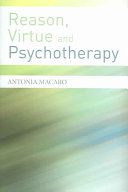
In recent years philosophy has become increasingly popular as an alternative source of inspiration in helping people to lead a good life. Ancient Greek philosophy in particular was conceived as a practical endeavour intended to have an impact on how people lived.This book, loosely organised around the structure of Aristotle’s Nicomachean Ethics, draws on Aristotle’s ideas about virtue and on contemporary virtue ethics to create a framework that can be used by psychotherapists and counsellors in helping their clients – or themselves – to live flourishing lives. It provides a clear discussion of Aristotle’s key ideas about virtue and the good life and places these within the context of other philosophical and psychological theories, both ancient and contemporary. It goes on to address the practical relevance of these ideas to the everyday work of the therapist, providing suggestions for practice and a number of useful exercises. These will be particularly helpful for practitioners working with issues such as finding value and meaning in life, making difficult decisions, developing helpful character traits, managing disruptive emotions and increasing self-control.Reason, Virtue and Psychotherapy bridges the gap between academic philosophy and real life. It will be of interest to practising counsellors and psychotherapists as well as students and trainees in these areas. Since it is written in a clear, jargon-free style, it is also appropriate for all those who are curious about how ancient understandings can improve their life.
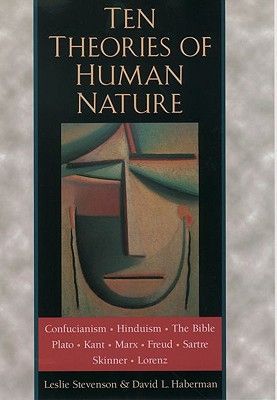
Ten Theories of Human Nature compresses into a small space the essence of such thinkers as Plato, Karl Marx, Sigmund Freud, Jean-Paul Sartre, B.F. Skinner, and Konrad Lorenz. Moreover, the authors juxtapose the ideas of these and other thinkers in a way that helps us to understand how humanity has struggled to comprehend its nature.
ما از اخلاق چه انتظاری داریم؟ این سوال شاید تاحدودی برای عموم مردم و یا متخصصان این رشته قابل پاسخ باشد؛ اینکه خوب بودن را به ما بیاموزد و در تنظیم روابط فردی م...

جشن کتاب تهران به ایستگاه سی و یکم رسیده است. حال و احوال نشر کتاب خوب نیست و باید فرهنگدوستان را به خرید و هدیه دادن کتاب ترغیب نمود. خانه اخلاقپژوهان جوان ب...

بنیاد کتابهای اخلاق اسلامی عمدتا پالایش جان از آلودگیها و آراستن آن به زیباییها است. اندیشه محوری این قبیل کتابها آن است که انسان فعلی آنی نیست که باید باشد...

-
0 Comments