Notice: تابع WP_Block_Type_Registry::register به طورنادرست فراخوانی شد. نامهای نوع بلوک نباید حروف بزرگ داشته باشند. لطفاً برای اطلاعات بیشتر، اشکال زدایی در وردپرس را مشاهده کنید. (این پیام در نگارش 5.0.0 افزوده شده است.) in /home/ethicsho/public_html/wp-includes/functions.php on line 5313
Warning: Use of undefined constant TDC_PATH_LEGACY - assumed 'TDC_PATH_LEGACY' (this will throw an Error in a future version of PHP) in /home/ethicsho/public_html/wp-content/plugins/td-composer/td-composer.php on line 109
Warning: Use of undefined constant TDSP_THEME_PATH - assumed 'TDSP_THEME_PATH' (this will throw an Error in a future version of PHP) in /home/ethicsho/public_html/wp-content/plugins/td-composer/td-composer.php on line 113 بایگانیهای New Age International (P) Ltd., Publishers - خانه اخلاق پژوهان جوان Notice: Trying to access array offset on value of type bool in /home/ethicsho/public_html/wp-content/plugins/wp-ulike/inc/general-functions.php on line 807
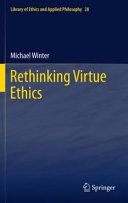
Rethinking Virtue Ethics offers a model of Aristotelian virtue ethics based on a deductive paradigm. This book argues that, contrary to what many contemporary thinkers are inclined to believe, Aristotelian virtue ethics is consistent with at least some action-guiding moral principles being true unconditionally, and that a justification for general moral principles can be grounded in fundamental concepts within Aristotle’s theory. An analysis of ethical propositions that hold for the most part is proposed that fits well within the deductive paradigm developed. This unique interpretation of virtue ethics has implications for recent discussions of the virtues in social psychology, issues about how fundamental moral principles are known, questions about the justification of inalienable rights, debates about moral particularism and generalism, and discussions of moral realism and anti-realism.
The twentieth century was one of the most significant and exciting periods ever witnessed in philosophy, characterised by intellectual change and development on a massive scale. The Routledge Companion to Twentieth Century Philosophy is an outstanding and authoritative survey and assessment of the century as a whole. Twenty-two chapters written by leading international scholars examine and assess the central topics, themes, and philosophers of the twentieth century, presenting a comprehensive picture of the period for the first time:Early Analytic PhilosophyMichael PotterAnalytic Philosophy: Wittgenstein and After Hans-Johann GlockGerman Philosophy since 1900 Karl-Otto ApelFrench Philosophy in the 20th Century Gary GuttingAmerican Philosophy James O’SheaMetaphysics E. J. LoweEpistemology Matthias SteupPhilosophy of Mind Sarah PattersonPhilosophical Logic Mark SainsburyMoral Philosophy Rowland StoutPolitical Philosophy Chandran KukathasPhenomenology Dan ZahaviHegel in the Twentieth Century Terry PinkardCritical Theory Alex HonnethNaturalism Geert KeilFeminism in Philosophy Andrea NyeKant in Twentieth-Century Bob HannaAesthetics Paul GuyerHermeneutics Nick DaveyPhilosophy of Language Jason StanleyPhilosophy of Psychology Stephen StichPhilosophy of Science Stathis PsillosFeaturing annotated further reading and a comprehensive glossary, The Routledge Companion to Twentieth Century Philosophy is indispensable for anyone interested in philosophy over the last one hundred years, suitable for both expert and novice alike.
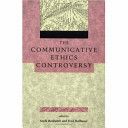
This timely reader in moral philosophy addresses a controversy that strongly affected recent European reflections on the relevance of ethics for theories of democratic institutions and democratic legitimacy. The debate centers around the idea of a communicative ethics as articulated by Jurgen Habermas and Karl-Otto Apel, and it is representative both of recent attempts to bridge the gap between Continental and Anglo-American philosophy and of the turn to language that has characterized much of recent philosophy.The Communicative Ethics Controversy illustrates philosophical dialogue in action, moving from theses to counterarguments to rejoinders. Theoretical statements by Habermas, Apel, and two of their leading students, Dietrich Bohler and Robert Alexy, are followed by a series of five arguments by their leading critics, who represent viewpoints ranging from Kantian idealism to Wittgensteinian ordinary-language theory. Fred Dallmayr’s introduction and Seyla Benhabib’s incisive conclusion place the debate in perspective, bringing it up to date and relating it to the Anglo-American context.Seyla Benhabib is Associate Professor of Philosophy and Women’s Studies at the State University of New York, Stony Brook. Fred Dallmayr is Packey Dee Professor of Government at the University of Notre Dame.Contributors: Robert Alexy. Karl-Otto Apel. Seyla Benhabib. Dietrich Bohler. Jurgen Habermas. Otfried Hoffe. KarlHeinz Ilting. Hermann Lubbe. Herbert Schnadelbach. Albrecht Wellmer.
It’s been more than two decades since the first edition of this landmark book garnered public accolades for its sensitive yet honest and forthright approach to the many disquieting questions surrounding the emotional debate over animal rights. Is moral concern something owed by human beings only to human beings? Drawing upon his philosophical expertise, his extensive experience of working with animal issues all over the world, and his knowledge of biological science, Bernard E Rollin – now widely recognised as the father of veterinary ethics – develops a compelling analysis of animal rights as it is emerging in society.The result is a sound basis for rational discussion and social policy development in this area of rapidly growing concern. He believes that society must elevate the moral status of animals and protect their rights as determined by their natures. His public speaking and published works have contributed to passage of major federal legislation designed to increase the well-being of laboratory animals. This new Third Edition is greatly expanded and includes a new chapter on animal agriculture, plus additional discussions of animal law, companion animal issues, genetic engineering, animal pain, animal research, and many other topics.
ما از اخلاق چه انتظاری داریم؟ این سوال شاید تاحدودی برای عموم مردم و یا متخصصان این رشته قابل پاسخ باشد؛ اینکه خوب بودن را به ما بیاموزد و در تنظیم روابط فردی م...

جشن کتاب تهران به ایستگاه سی و یکم رسیده است. حال و احوال نشر کتاب خوب نیست و باید فرهنگدوستان را به خرید و هدیه دادن کتاب ترغیب نمود. خانه اخلاقپژوهان جوان ب...

بنیاد کتابهای اخلاق اسلامی عمدتا پالایش جان از آلودگیها و آراستن آن به زیباییها است. اندیشه محوری این قبیل کتابها آن است که انسان فعلی آنی نیست که باید باشد...

-
0 Comments