Notice: تابع WP_Block_Type_Registry::register به طورنادرست فراخوانی شد. نامهای نوع بلوک نباید حروف بزرگ داشته باشند. لطفاً برای اطلاعات بیشتر، اشکال زدایی در وردپرس را مشاهده کنید. (این پیام در نگارش 5.0.0 افزوده شده است.) in /home/ethicsho/public_html/wp-includes/functions.php on line 5313
Warning: Use of undefined constant TDC_PATH_LEGACY - assumed 'TDC_PATH_LEGACY' (this will throw an Error in a future version of PHP) in /home/ethicsho/public_html/wp-content/plugins/td-composer/td-composer.php on line 109
Warning: Use of undefined constant TDSP_THEME_PATH - assumed 'TDSP_THEME_PATH' (this will throw an Error in a future version of PHP) in /home/ethicsho/public_html/wp-content/plugins/td-composer/td-composer.php on line 113 بایگانیهای Human Rights Watch - خانه اخلاق پژوهان جوان Notice: Trying to access array offset on value of type bool in /home/ethicsho/public_html/wp-content/plugins/wp-ulike/inc/general-functions.php on line 807
A witty and insightful investigation into the green-eyed monster’s role in our lives Compete, acquire, succeed, enjoy: the pressures of living in today’s materialistic world seem predicated upon jealousy–the feelings of rivalry and resentment for possession of whatever the other has. But while our newspapers abound with stories of the sometimes droll, sometimes deadly consequences of sexual jealousy, Peter Toohey argues in this charmingly provocative book that jealousy is much more than the destructive emotion it is commonly assumed to be. It helps as much as it harms. Examining the meaning, history, and value of jealousy, Toohey places the emotion at the core of modern culture, creativity, and civilization–not merely the sexual relationship. His eclectic approach weaves together psychology, art and literature, neuroscience, anthropology, and a host of other disciplines to offer fresh and intriguing contemporary perspectives on violence, the family, the workplace, animal behavior, and psychopathology. Ranging from the streets of London to Pacific islands, and from the classical world to today, this is an elegant, smart, and beautifully illustrated defense of a not-always-deadly sin.
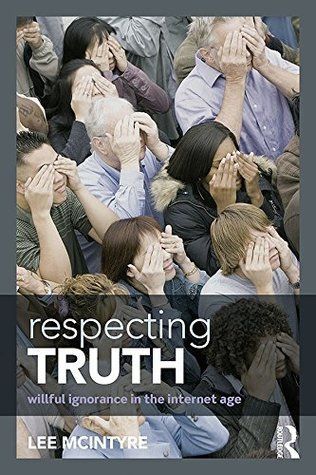
Throughout history, humans have always indulged in certain irrationalities and held some fairly wrong-headed beliefs. But in his newest book, philosopher Lee McIntyre shows how we’ve now reached a watershed moment for ignorance in the modern era, due to the volume of misinformation, the speed with which it can be digitally disseminated, and the savvy exploitation of our cognitive weaknesses by those who wish to advance their ideological agendas. In Respecting Truth: Willful Ignorance in the Internet Age, McIntyre issues a call to fight back against this slide into the witless abyss. In the tradition of Galileo, the author champions the importance of using tested scientific methods for arriving at true beliefs, and shows how our future survival is dependent on a more widespread, reasonable world.
Virtue ethics has attracted a lot of attention over the past few decades, and more recently there has been considerable interest in virtue epistemology as an alternative to traditional approaches in that field. Ironically, although virtue epistemology got its inspiration from virtue ethics, this is the first book that brings virtue epistemologists and virtue ethicists together to contribute their particular expertise, and the first that is devoted to the topic of intellectual virtue. All new and right up to date, the papers collected here by Zagzebski and DePaul demonstrate the benefit of each branch of philosophy to the other. Intellectual Virtue will be required reading for anyone working in either field.
Lust, says Simon Blackburn, is furtive, headlong, always sizing up opportunities. It is a trail of clothing in the hallway, the trashy cousin of love. But be that as it may, the aim of this delightful book is to rescue lust “from the denunciations of old men of the deserts, to deliver it from the pallid and envious confessor and the stocks and pillories of the Puritans, to drag it from the category of sin to that of virtue.” Blackburn, author of such popular philosophy books as Think and Being Good, here offers a sharp-edged probe into the heart of lust, blending together insight from some of the world’s greatest thinkers on sex, human nature, and our common cultural foibles. Blackburn takes a wide ranging, historical approach, discussing lust as viewed by Aristophanes and Plato, lust in the light of the Stoic mistrust of emotion, and the Christian fear of the flesh that catapulted lust to the level of deadly sin. He describes how philosophical pessimists like Schopenhauer and Sartre contributed to our thinking about lust and explores the false starts in understanding lust represented by Freud, Kinsey, and modern “evolutionary psychology.” But most important, Blackburn reminds us that lust is also life-affirming, invigorating, fun. He points to the work of David Hume (Blackburn’s favorite philosopher) who saw lust not only as a sensual delight but also “a joy of the mind.” Written by one of the most eminent living philosophers, attractively illustrated and colorfully packaged, Lust is a book that anyone would lust over.
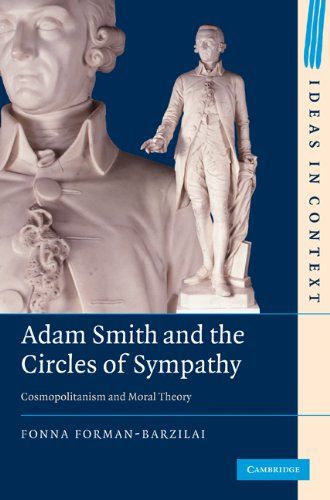
Adam Smith and the Circles of Sympathy pursues Adam Smith’s views on moral judgement, humanitarian care, commerce, justice and international law both in historical context and through a twenty-first century cosmopolitan lens, making this a major and timely contribution not only to Smith studies but also to the history of cosmopolitan thought and to contemporary cosmopolitan discourse itself. Forman-Barzilai breaks new ground, demonstrating the spatial texture of Smith’s moral psychology and the ways he believed that physical, affective and cultural distance constrain the identities, connections and ethical obligations of modern commercial people. Forman-Barzilai emphasises his resistance to the sort of relativism, moral insularity and cultural chauvinism that too often accompany localist critiques of cosmopolitan thought today. This is a timely, revisionist study that integrates the perspectives of intellectual history, moral philosophy, political theory, cultural theory, international relations theory and political economy, and will appeal across the humanities and social sciences.
ما از اخلاق چه انتظاری داریم؟ این سوال شاید تاحدودی برای عموم مردم و یا متخصصان این رشته قابل پاسخ باشد؛ اینکه خوب بودن را به ما بیاموزد و در تنظیم روابط فردی م...

جشن کتاب تهران به ایستگاه سی و یکم رسیده است. حال و احوال نشر کتاب خوب نیست و باید فرهنگدوستان را به خرید و هدیه دادن کتاب ترغیب نمود. خانه اخلاقپژوهان جوان ب...

بنیاد کتابهای اخلاق اسلامی عمدتا پالایش جان از آلودگیها و آراستن آن به زیباییها است. اندیشه محوری این قبیل کتابها آن است که انسان فعلی آنی نیست که باید باشد...

-
0 Comments