Notice: تابع WP_Block_Type_Registry::register به طورنادرست فراخوانی شد. نامهای نوع بلوک نباید حروف بزرگ داشته باشند. لطفاً برای اطلاعات بیشتر، اشکال زدایی در وردپرس را مشاهده کنید. (این پیام در نگارش 5.0.0 افزوده شده است.) in /home/ethicsho/public_html/wp-includes/functions.php on line 5313
Warning: Use of undefined constant TDC_PATH_LEGACY - assumed 'TDC_PATH_LEGACY' (this will throw an Error in a future version of PHP) in /home/ethicsho/public_html/wp-content/plugins/td-composer/td-composer.php on line 109
Warning: Use of undefined constant TDSP_THEME_PATH - assumed 'TDSP_THEME_PATH' (this will throw an Error in a future version of PHP) in /home/ethicsho/public_html/wp-content/plugins/td-composer/td-composer.php on line 113 بایگانیهای Allworth Press - خانه اخلاق پژوهان جوان Notice: Trying to access array offset on value of type bool in /home/ethicsho/public_html/wp-content/plugins/wp-ulike/inc/general-functions.php on line 807
An easy-to-grasp guide to addressing the principles of ethics and applying them to daily lifeHow do you define “good” versus “evil?” Do you know the difference between moral “truth” and moral relativity? Whether or not you know Aristotle from Hume, Ethics For Dummies will get you comfortable with the centuries-old study of ethical philosophy quickly and effectively! Ethics For Dummies is a practical, friendly guide that takes the headache out of the often-confusing subject of ethics. In plain English, it examines the controversial facets of ethical thought, explores the problem of evil, demystifies the writings and theories of such great thinkers through the ages as Aristotle, Confucius, Descartes, Kant, Nietzsche, and so much more. Provides the tools to tackle and understand today’s important questions and ethical dilemmas Shows you how to apply the concepts and theories of ethical philosophy to your everyday life Other title by Panza: Existentialism For DummiesWhether you’re currently enrolled in an ethics course or are interested in living a good life but are vexed with ethical complexities, Ethics For Dummies has you covered!9780470601600The fast and easy way to learn the art of fashion drawingIf you’re an aspiring fashion designer, you know it’s essential to be able to draw, prepare, and present a fashion drawing. Whether you have little or no prior drawing experience, Fashion Drawing For Dummies gives you easy-to-follow, non-intimidating instructions for mastering the drawing skills you need to design like a pro.This fun guide gives you dozens of step-by-step diagrams that walk you through the process of preparing creative illustrations that you can later develop into dynamic presentations for your design portfolio. Plus, you’ll not only learn how to draw clothes and fabric, but also how to show details that make up the total look: faces and hairstyles, fashion accents, and a wide variety of textures. Learn the rules and techniques of fashion drawing Draw the human figure in different poses from multiple angles Discover how to complement your drawings with accessories, clothing, and styleIf you’re a fledgling designer looking for non-intimidating guidance on learning the ins and outs of fashion drawing, this friendly guide has you covered!
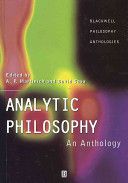
Introduction.Part I: Philosophy of Language.1. On Sense and Reference. (Gottlob Frege).2. Thought. (Gottlob Frege).3. On Denoting. (Bertrand Russell).4. On Referring. (P. F. Strawson).5. Meaning. (H. P. Grice).6. Truth and Meaning. (Donald Davidson).7. Identity and Necessity. (Saul Kripke).8. Meaning and Reference. (Hilary Putnam).Further Reading in Philosophy of Language.Part II: Metaphysics.9. On the Relations of Universals and Particulars. (Bertrand Russell).10. From the Tractatus Logico-Philosophicus. (Ludwig Wittgenstein).11. Particular and General. (P. F. Strawson).12. On What There Is. (W. V. Quine).13. The Identity of Indiscernibles. (Max Black).Further Reading in Metaphysics.Part III: Epistemology.14. Four Forms of Skepticism. (G. E. Moore).15. From On Certainty. (Ludwig Wittgenstein).16. Knowledge by Acquaintance and Knowledge by Description. (Bertrand Russell).17. The Problem of the Criterion. (Roderick Chisholm).18. Is Knowledge Justified True Belief? (Edmund Gettier).19. Aspects of Scientific Explanation. (Carl Hempel).20. The New Riddle of Induction. (Nelson Goodman).21. Epistemology Naturalized. (W. V. Quine).Further Reading in Epistemology.Part IV: Philosophy of Mind.22. The Nature of Mind. (David Armstrong).23. The Nature of Mental States. (Hilary Putnam).24. Mental Events. (Donald Davidson).25. What is it Like to Be a Bat? (Thomas Nagel).26. Mad Pain and Martian Pain. (David Lewis).27. Can Computers Think? (John Searle).Further Reading in Philosophy of Mind.Part V: Freedom and Personal Identity.28. The Conceivability of Mechanism. (Norman Malcolm).29. Freedom and Resentment. (P. F. Strawson).30. Human Freedom and the Self. (Roderick Chisholm).31. The Self and the Future. (Bernard Williams).32. Action, Reasons, and Causes. (Donald Davidson).Further Reading in Freedom and Personal Identity.Part VI: Ethics.33. The Subject Matter of Ethics. (G. E. Moore).34. The Emotive Meaning of Ethical Terms. (C. L. Stevenson).35. Justice as Fairness. (John Rawls).36. Modern Moral Philosophy. (G. E. M. Anscombe).37. Morality as a System of Hypothetical Imperatives. (Philippa Foot).Further Reading in Ethics.Part VII: Methodology.38. The Notion of Analysis in Moore’s Philosophy. (C. H. Langford).39. Reply to Langford. (G. E. Moore).40. The Elimination of Metaphysics. (A. J. Ayer).41. Empiricism, Semantics, and Ontology. (Rudolf Carnap).42. A Plea for Excuses. (J. L. Austin).43. Two Dogmas of Empiricism. (W. V. Quine).44. In Defense of a Dogma. (H. P. Grice and P. F. Strawson.45. Philosophy and the Scientific Image of Man. (Wilfrid Sellars).46. From The Blue and the Brown Books. (Ludwig Wittgenstein).Further Reading in Methodology.Index.
“This important book…is really the first of its kind….There is no doubt that [it] will become a standard work in the literature for some years to come….[and] it will be required reading for anyone working in the fields of ancient ethics and psychology.”–The Philosophical Review
“The best work in English on the moral psychology of the early Stoics….Detailed and scholarly….An important book for serious studients of Stoic ethics and philosophy of action.”–Religious Studies Review
“This is a detailed and masterly account of early Stoic psychology and its relation to Stoic ethics…a major contribution which will be indispensable for serious students.” –The Classical Review
Metaethics occupies a central place in analytical philosophy, and the last forty years has seen an upsurge of interest in questions about the nature and practice of morality. This collection presents original and ground-breaking research on metaethical issues from some of the very best of a new generation of philosophers working in this field.
ما از اخلاق چه انتظاری داریم؟ این سوال شاید تاحدودی برای عموم مردم و یا متخصصان این رشته قابل پاسخ باشد؛ اینکه خوب بودن را به ما بیاموزد و در تنظیم روابط فردی م...

جشن کتاب تهران به ایستگاه سی و یکم رسیده است. حال و احوال نشر کتاب خوب نیست و باید فرهنگدوستان را به خرید و هدیه دادن کتاب ترغیب نمود. خانه اخلاقپژوهان جوان ب...

بنیاد کتابهای اخلاق اسلامی عمدتا پالایش جان از آلودگیها و آراستن آن به زیباییها است. اندیشه محوری این قبیل کتابها آن است که انسان فعلی آنی نیست که باید باشد...

-
0 Comments