Notice: تابع WP_Block_Type_Registry::register به طورنادرست فراخوانی شد. نامهای نوع بلوک نباید حروف بزرگ داشته باشند. لطفاً برای اطلاعات بیشتر، اشکال زدایی در وردپرس را مشاهده کنید. (این پیام در نگارش 5.0.0 افزوده شده است.) in /home/ethicsho/public_html/wp-includes/functions.php on line 5313
Warning: Use of undefined constant TDC_PATH_LEGACY - assumed 'TDC_PATH_LEGACY' (this will throw an Error in a future version of PHP) in /home/ethicsho/public_html/wp-content/plugins/td-composer/td-composer.php on line 109
Warning: Use of undefined constant TDSP_THEME_PATH - assumed 'TDSP_THEME_PATH' (this will throw an Error in a future version of PHP) in /home/ethicsho/public_html/wp-content/plugins/td-composer/td-composer.php on line 113 بایگانیهای 2000 - صفحه 8 از 8 - خانه اخلاق پژوهان جوان Notice: Trying to access array offset on value of type bool in /home/ethicsho/public_html/wp-content/plugins/wp-ulike/inc/general-functions.php on line 807
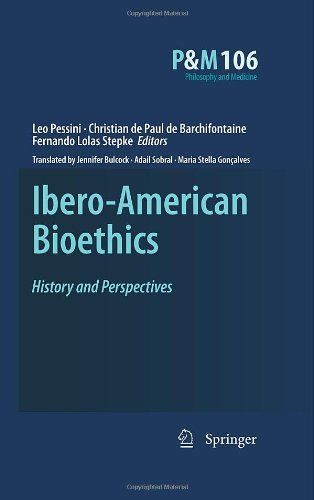
This volume is the first English-language book-length text to trace the development of bioethics in the Ibero-American context. Coverage is given to many particular countries within Latin America with an aim to present the historical development of bioethics therein. This history takes place against the backdrop of a tumultuous period of time in the history of Latin America. The volume also discusses the relationship of bioethics in Latin America to questions and issues in Roman Catholic moral theology and philosophy. Moreover, it specifically touches on how these issues affect women in the region.”Ibero-American Bioethics: History and Perspectives” is a landmark work, collecting the voices of those who participated in the founding and development of bioethics in Latin America, the Caribbean, and the Iberian Peninsula. The volume offers the reader a cluster of perspectives on the various births of bioethics in this region. The essays in part are irreplaceable first-person voices that give an account of how bioethics took shape within the Spanish and Portuguese cultures both in Europe and in the Americas. As such, the volume is a collection of primary sources, otherwise not available in English, that presents historical panoramas and explores the new perspectives born of the different phases of bioethics in Ibero-America – from its assimilation of bioethics to its creation of its own authentic voices. The volume also encompasses critical reflections from this region on the quite different ways in which its local bioethics have taken shape. As such, this volume also offers an introduction into the quite different concerns that frame and direct bioethics in the cultural context of Ibero-America.The book gives a rich, deep, broad, and pluralist presentation of Ibero-American bioethics and its contribution to the international phenomenon of bioethics. It is a volume for all readers interested in bioethics, Ibero-American studies, and international approaches to health care policy.
Art, Emotion, and Ethics is a systematic investigation of the relation of art to morality, a topic that has been of central and recurring interest to the philosophy of art since Plato. Berys Gaut explores the various positions that have been taken in this debate, and argues that an artwork is always aesthetically flawed insofar as it possesses a moral defect that is aesthetically relevant. Three main arguments are developed for this view; these involve showing how moral goodness is itself a kind of beauty, that artworks can teach us about morality and that this is often an aesthetic merit in them, and that our emotional responses to works of art are properly guided in part by moral considerations. Art, Emotion, and Ethics also contains detailed interpretations of a wide range of artworks, including Rembrandt’s Bathsheba and Nabokov’s Lolita, which show that ethical criticism can yield rich and plausible accounts of individual works. Gaut develops a new theory of the nature of aesthetic value, explores how art can teach us about the world and what we morally ought to do by guiding our imaginings, and argues that we can have genuine emotions towards people and events that we know are merely fictional. Characterised by its clarity and sustained argument, this book will be of interest to anyone who wants to understand the relation of art to morality.
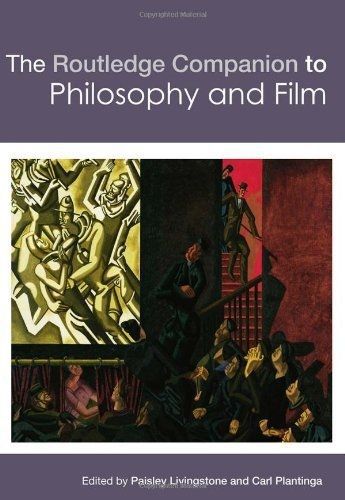
The Routledge Companion to Philosophy and Filmis the first comprehensive volume to explore the main themes, topics, thinkers and issues in philosophy and film. The Companionfeatures sixty specially commissioned chapters from international scholars and is divided into four clear parts: ⬢ issues and concepts ⬢ authors and trends ⬢ genres ⬢ film as philosophy. Part one is a comprehensive section examining key concepts, including chapters on acting, censorship, character, depiction, ethics, genre, interpretation, narrative, reception and spectatorship and style. Part two covers authors and scholars of film and significant theories Part three examines genres such as documentary, experimental cinema, horror, comedy and tragedy. Part four includes chapters on key directors such as Tarkovsky, Bergman and Terrence Malick and on particular films including Memento. Each chapter includes a section of annotated further reading and is cross-referenced to related entries. The Routledge Companion to Philosophy and Filmis essential reading for anyone interested in philosophy of film, aesthetics and film and cinema studies.
ما از اخلاق چه انتظاری داریم؟ این سوال شاید تاحدودی برای عموم مردم و یا متخصصان این رشته قابل پاسخ باشد؛ اینکه خوب بودن را به ما بیاموزد و در تنظیم روابط فردی م...

جشن کتاب تهران به ایستگاه سی و یکم رسیده است. حال و احوال نشر کتاب خوب نیست و باید فرهنگدوستان را به خرید و هدیه دادن کتاب ترغیب نمود. خانه اخلاقپژوهان جوان ب...

بنیاد کتابهای اخلاق اسلامی عمدتا پالایش جان از آلودگیها و آراستن آن به زیباییها است. اندیشه محوری این قبیل کتابها آن است که انسان فعلی آنی نیست که باید باشد...

-
0 Comments