
Notice: تابع WP_Block_Type_Registry::register به طورنادرست فراخوانی شد. نامهای نوع بلوک نباید حروف بزرگ داشته باشند. لطفاً برای اطلاعات بیشتر، اشکال زدایی در وردپرس را مشاهده کنید. (این پیام در نگارش 5.0.0 افزوده شده است.) in /home/ethicsho/public_html/wp-includes/functions.php on line 5313
Warning: Use of undefined constant TDC_PATH_LEGACY - assumed 'TDC_PATH_LEGACY' (this will throw an Error in a future version of PHP) in /home/ethicsho/public_html/wp-content/plugins/td-composer/td-composer.php on line 109
Warning: Use of undefined constant TDSP_THEME_PATH - assumed 'TDSP_THEME_PATH' (this will throw an Error in a future version of PHP) in /home/ethicsho/public_html/wp-content/plugins/td-composer/td-composer.php on line 113 بایگانیهای 2000 - صفحه 6 از 8 - خانه اخلاق پژوهان جوان Notice: Trying to access array offset on value of type bool in /home/ethicsho/public_html/wp-content/plugins/wp-ulike/inc/general-functions.php on line 807
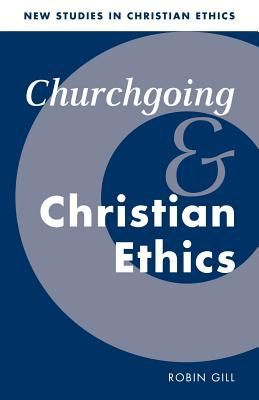
Robin Gill argues that once moral communities (such as churchgoers) take centre stage in ethics – as they do in virtue ethics – then there should be a greater interest in sociological evidence about these communities. This book examines recent evidence, gathered from social attitude surveys, about church communities, in particular their views on faith, moral order and love. It shows that churchgoers are distinctive in their attitudes and behaviour. Some of their attitudes change over time, and there are a number of obvious moral disagreements between different groups of churchgoers. Nonetheless, there are broad patterns of Christian beliefs, teleology and altruism which distinguish churchgoers as a whole from non-churchgoers. However, the values, virtues, moral attitudes and behaviour of churchgoers are shared by many other people as well. The distinctiveness of church communities in the modern world is thus real but relative, and is crucial for the task of Christian ethics.
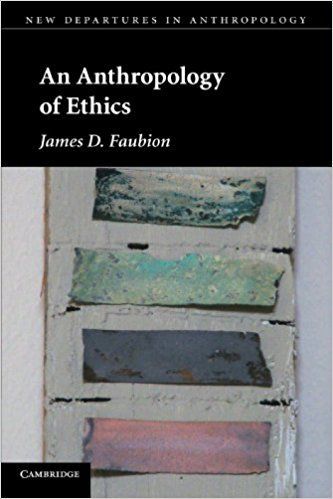
“Through an ambitious and critical revision of Michel Foucault’s investigation of ethics, James Faubion develops an original program of empirical inquiry into the ethical domain. From an anthropological perspective, Faubion argues that Foucault’s specification of the analytical parameters of this domain is the most productive point of departure in conceptualizing its distinctive features. He further argues that Foucault’s framework is in need of substantial revision to be of genuinely anthropological scope. In making this revision, Faubion illustrates his program with two extended case studies: one of a Portuguese marquis and the other of a dual subject made up of the author and a millenarian prophetess. The result is a conceptual apparatus that is able to accommodate ethical pluralism and yield an account of the limits of ethical variation, providing a novel resolution of the problem of relativism that has haunted anthropological inquiry into ethics since its inception”–
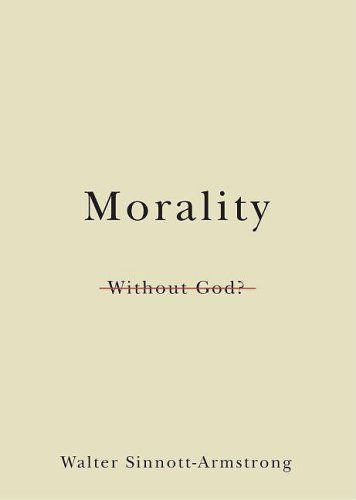
Some argue that atheism must be false, since without God, no values are possible, and thus “everything is permitted.” Walter Sinnott-Armstrong argues that God is not only not essential to morality, but that our moral behavior should be utterly independent of religion. He attacks several core ideas: that atheists are inherently immoral people; that any society will sink into chaos if it is becomes too secular; that without morality, we have no reason to be moral; that absolute moral standards require the existence of God; and that without religion, we simply couldn’t know what is wrong and what is right. Sinnott-Armstrong brings to bear convincing examples and data, as well as a lucid, elegant, and easy to understand writing style. This book should fit well with the debates raging over issues like evolution and intelligent design, atheism, and religion and public life as an example of a pithy, tightly-constructed argument on an issue of great social importance.
ما از اخلاق چه انتظاری داریم؟ این سوال شاید تاحدودی برای عموم مردم و یا متخصصان این رشته قابل پاسخ باشد؛ اینکه خوب بودن را به ما بیاموزد و در تنظیم روابط فردی م...

جشن کتاب تهران به ایستگاه سی و یکم رسیده است. حال و احوال نشر کتاب خوب نیست و باید فرهنگدوستان را به خرید و هدیه دادن کتاب ترغیب نمود. خانه اخلاقپژوهان جوان ب...

بنیاد کتابهای اخلاق اسلامی عمدتا پالایش جان از آلودگیها و آراستن آن به زیباییها است. اندیشه محوری این قبیل کتابها آن است که انسان فعلی آنی نیست که باید باشد...

-
0 Comments