Notice: تابع WP_Block_Type_Registry::register به طورنادرست فراخوانی شد. نامهای نوع بلوک نباید حروف بزرگ داشته باشند. لطفاً برای اطلاعات بیشتر، اشکال زدایی در وردپرس را مشاهده کنید. (این پیام در نگارش 5.0.0 افزوده شده است.) in /home/ethicsho/public_html/wp-includes/functions.php on line 5313
Warning: Use of undefined constant TDC_PATH_LEGACY - assumed 'TDC_PATH_LEGACY' (this will throw an Error in a future version of PHP) in /home/ethicsho/public_html/wp-content/plugins/td-composer/td-composer.php on line 109
Warning: Use of undefined constant TDSP_THEME_PATH - assumed 'TDSP_THEME_PATH' (this will throw an Error in a future version of PHP) in /home/ethicsho/public_html/wp-content/plugins/td-composer/td-composer.php on line 113 بایگانیهای Art - Moral And Ethical Aspects - خانه اخلاق پژوهان جوان Notice: Trying to access array offset on value of type bool in /home/ethicsho/public_html/wp-content/plugins/wp-ulike/inc/general-functions.php on line 807
John Kane argues that, despite appearances, politicians and governments care deeply about people’s moral judgments, for these provide the moral capital they depend on for survival and effective functioning. Some famous leaders–Lincoln, de Gaulle, Mandela–illustrate the workings of moral capital in politics, and a study of the American presidency from Kennedy to Clinton shows how the moral capital of the United States has been eroded, with severe consequences for the nation’s morale.
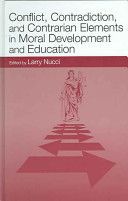
Publisher description: The premise of this book is that individuals and societies have an inexorable urge to morally develop by challenging the assumptions of the previous generation in terms of what is right and wrong. The focus is on the nature and functional value of conflicts and challenges to the dominant moral and social values framework. Through this analysis, individuals develop moral character through conflict with their local authority figures, including parents. The moral structure of societies evolves through intergenerational challenges to and contradictions with the dominant social order. The book is divided into three parts to help frame this discussion. Part I directly takes up the issue of resistance as it occurs at a cultural level, andthe implications of such resistance for moral education and socialization. Part II explores the normative forms of adolescent resistance and contrarian behavior that vex parents and teachers alike. Part III brings back the issue of societal structure andculture to illustrate how negative features of society–such as racial discrimination and economic disparity–can feed into the construction of negative moral identity in youth posing challenges to moral education.
Oxford Studies in Metaethics is the only publication devoted exclusively to original philosophical work in the foundations of ethics. It provides an annual selection of much of the best new scholarship being done in the field. Its broad purview includes work being done at the intersection of ethical theory and metaphysics, epistemology, philosophy of language, and philosophy of mind. The essays included in the series provide an excellent basis for understanding recent developments in the field; those who would like to acquaint themselves with the current state of play in metaethics would do well to start here.
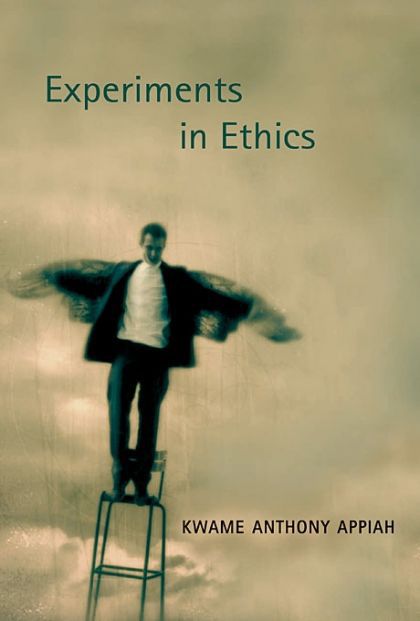
In the past few decades, scientists of human nature–including experimental and cognitive psychologists, neuroscientists, evolutionary theorists, and behavioral economists–have explored the way we arrive at moral judgments. They have called into question commonplaces about character and offered troubling explanations for various moral intuitions. Research like this may help explain what, in fact, we do and feel. But can it tell us what we ought to do or feel? In Experiments in Ethics, the philosopher Kwame Anthony Appiah explores how the new empirical moral psychology relates to the age-old project of philosophical ethics.Some moral theorists hold that the realm of morality must be autonomous of the sciences; others maintain that science undermines the authority of moral reasons. Appiah elaborates a vision of naturalism that resists both temptations. He traces an intellectual genealogy of the burgeoning discipline of “experimental philosophy,” provides a balanced, lucid account of the work being done in this controversial and increasingly influential field, and offers a fresh way of thinking about ethics in the classical tradition.Appiah urges that the relation between empirical research and morality, now so often antagonistic, should be seen in terms of dialogue, not contest. And he shows how experimental philosophy, far from being something new, is actually as old as philosophy itself. Beyond illuminating debates about the connection between psychology and ethics, intuition and theory, his book helps us to rethink the very nature of the philosophical enterprise.
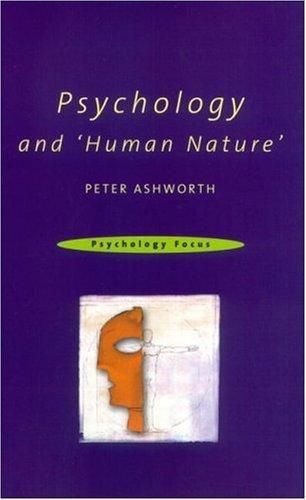
Psychology and ‘Human Nature’ problematizes what psychology usually takes for granted – the meaning of the psyche or ‘human nature’. Peter Ashworth provides a coherent account of many of the major schools of thought in psychology and its related disciplines, including: sociobiology and evolutionary psychology, psychoanalysis, cognitive psychology, radical behaviourism, existentialism, discursive psychology and postmodernism. For each approach he considers the claims or assumptions being made about ‘human nature’, especially regarding issues of consciousness, the self, the body, other people and the physical world.Psychology and ‘Human Nature’ will be essential reading for all students of psychology.Series Details; The Psychology Focus Series provides students with a new focus on key topic areas in psychology.Each short book: * presents clear, in-depth coverage of a discrete area with many applied examples* assumes no prior knowlede of psychology* has been written by an experienced teacher* has chapter summaries, annotated further reading and a glossary of key terms
ما از اخلاق چه انتظاری داریم؟ این سوال شاید تاحدودی برای عموم مردم و یا متخصصان این رشته قابل پاسخ باشد؛ اینکه خوب بودن را به ما بیاموزد و در تنظیم روابط فردی م...

جشن کتاب تهران به ایستگاه سی و یکم رسیده است. حال و احوال نشر کتاب خوب نیست و باید فرهنگدوستان را به خرید و هدیه دادن کتاب ترغیب نمود. خانه اخلاقپژوهان جوان ب...

بنیاد کتابهای اخلاق اسلامی عمدتا پالایش جان از آلودگیها و آراستن آن به زیباییها است. اندیشه محوری این قبیل کتابها آن است که انسان فعلی آنی نیست که باید باشد...

-
0 Comments