Notice: تابع WP_Block_Type_Registry::register به طورنادرست فراخوانی شد. نامهای نوع بلوک نباید حروف بزرگ داشته باشند. لطفاً برای اطلاعات بیشتر، اشکال زدایی در وردپرس را مشاهده کنید. (این پیام در نگارش 5.0.0 افزوده شده است.) in /home/ethicsho/public_html/wp-includes/functions.php on line 5313
Warning: Use of undefined constant TDC_PATH_LEGACY - assumed 'TDC_PATH_LEGACY' (this will throw an Error in a future version of PHP) in /home/ethicsho/public_html/wp-content/plugins/td-composer/td-composer.php on line 109
Warning: Use of undefined constant TDSP_THEME_PATH - assumed 'TDSP_THEME_PATH' (this will throw an Error in a future version of PHP) in /home/ethicsho/public_html/wp-content/plugins/td-composer/td-composer.php on line 113 بایگانیهای 1958 - خانه اخلاق پژوهان جوان Notice: Trying to access array offset on value of type bool in /home/ethicsho/public_html/wp-content/plugins/wp-ulike/inc/general-functions.php on line 807
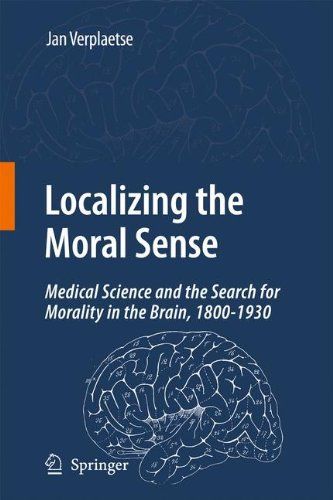
Due to the current revolution in brain research the search for the a oemoral braina became a serious endeavour. Nowadays, neural circuits that are indispensable for moral and social behaviour are discovered and the brains of psychopaths and criminals – the classical anti-heroes of morality – are scanned with curiosity, even enthusiasm. How revolutionary this current research might be, the quest for a localisable ethical centre or moral organ is far from new. The moral brain was a recurrent theme in the works of neuroscientists during the 19th and 20th century. From the phrenology era to the encephalitis pandemic in the 1920s a wide range of European and American scientists (neurologists, psychiatrists, anthropologists and criminologists) speculated about and discussed the location of a moral sense in the human cortex. Encouraged by medical discoveries and concerned by terrifying phenomena like crime or a oemoral insanitya (psychopathy) even renowned and outstanding neurologists, including Moritz Benedikt, Paul Flechsig, Arthur Van Gehuchten, Oskar Vogt or Constantin von Monakow, had the nerve to make their speculations public. This book presents the first overview of believers and disbelievers in a cerebral seat of human morality, their positions and arguments and offers an explanation for these historical attempts to localise our moral sense, in spite of the massive disapproving commentary launched by colleagues.
Poverty, inequality, violence, environmental degradation, and tyranny continue to afflict the world. Ethics of Global Development offers a moral reflection on the ends and means of local, national, and global efforts to overcome these five scourges. After emphasizing the role of ethics in development studies, policy-making, and practice, David A. Crocker analyzes and evaluates Amartya Sen’s philosophy of development in relation to alternative ethical outlooks. He argues that Sen’s turn to robust ideals of human agency and democracy improves on both Sen’s earlier emphasis on ‘capabilities and functionings’ and Martha Nussbaum’s version of the capability orientation. This agency-focused capability approach is then extended and strengthened by applying it to the challenges of consumerism and hunger, the development responsibilities of affluent individuals and nations, and the dilemmas of globalization. Throughout the book the author argues for the importance of more inclusive and deliberative democratic institutions.
It’s been more than two decades since the first edition of this landmark book garnered public accolades for its sensitive yet honest and forthright approach to the many disquieting questions surrounding the emotional debate over animal rights. Is moral concern something owed by human beings only to human beings? Drawing upon his philosophical expertise, his extensive experience of working with animal issues all over the world, and his knowledge of biological science, Bernard E Rollin – now widely recognised as the father of veterinary ethics – develops a compelling analysis of animal rights as it is emerging in society.The result is a sound basis for rational discussion and social policy development in this area of rapidly growing concern. He believes that society must elevate the moral status of animals and protect their rights as determined by their natures. His public speaking and published works have contributed to passage of major federal legislation designed to increase the well-being of laboratory animals. This new Third Edition is greatly expanded and includes a new chapter on animal agriculture, plus additional discussions of animal law, companion animal issues, genetic engineering, animal pain, animal research, and many other topics.
“Anne Margaret Baxley offers a systematic interpretation of Kant’s theory of virtue, whose most distinctive features have not been properly understood. She explores the rich moral psychology in Kant’s later and less widely read works on ethics, and argues that the key to understanding his account of virtue is the concept of autocracy, a form of moral self-government in which reason rules over sensibility. Although certain aspects of Kant’s theory bear comparison to more familiar Aristotelian claims about virtue, Baxley contends that its most important aspects combine to produce something different – a distinctively modern, egalitarian conception of virtue which is an important and overlooked alternative to the more traditional Greek views which have dominated contemporary virtue ethics”–
ما از اخلاق چه انتظاری داریم؟ این سوال شاید تاحدودی برای عموم مردم و یا متخصصان این رشته قابل پاسخ باشد؛ اینکه خوب بودن را به ما بیاموزد و در تنظیم روابط فردی م...

جشن کتاب تهران به ایستگاه سی و یکم رسیده است. حال و احوال نشر کتاب خوب نیست و باید فرهنگدوستان را به خرید و هدیه دادن کتاب ترغیب نمود. خانه اخلاقپژوهان جوان ب...

بنیاد کتابهای اخلاق اسلامی عمدتا پالایش جان از آلودگیها و آراستن آن به زیباییها است. اندیشه محوری این قبیل کتابها آن است که انسان فعلی آنی نیست که باید باشد...

-
0 Comments