Notice: تابع WP_Block_Type_Registry::register به طورنادرست فراخوانی شد. نامهای نوع بلوک نباید حروف بزرگ داشته باشند. لطفاً برای اطلاعات بیشتر، اشکال زدایی در وردپرس را مشاهده کنید. (این پیام در نگارش 5.0.0 افزوده شده است.) in /home/ethicsho/public_html/wp-includes/functions.php on line 5313
Warning: Use of undefined constant TDC_PATH_LEGACY - assumed 'TDC_PATH_LEGACY' (this will throw an Error in a future version of PHP) in /home/ethicsho/public_html/wp-content/plugins/td-composer/td-composer.php on line 109
Warning: Use of undefined constant TDSP_THEME_PATH - assumed 'TDSP_THEME_PATH' (this will throw an Error in a future version of PHP) in /home/ethicsho/public_html/wp-content/plugins/td-composer/td-composer.php on line 113 بایگانیهای RA418 - خانه اخلاق پژوهان جوان Notice: Trying to access array offset on value of type bool in /home/ethicsho/public_html/wp-content/plugins/wp-ulike/inc/general-functions.php on line 807
Art, Emotion, and Ethics is a systematic investigation of the relation of art to morality, a topic that has been of central and recurring interest to the philosophy of art since Plato. Berys Gaut explores the various positions that have been taken in this debate, and argues that an artwork is always aesthetically flawed insofar as it possesses a moral defect that is aesthetically relevant. Three main arguments are developed for this view; these involve showing how moral goodness is itself a kind of beauty, that artworks can teach us about morality and that this is often an aesthetic merit in them, and that our emotional responses to works of art are properly guided in part by moral considerations. Art, Emotion, and Ethics also contains detailed interpretations of a wide range of artworks, including Rembrandt’s Bathsheba and Nabokov’s Lolita, which show that ethical criticism can yield rich and plausible accounts of individual works. Gaut develops a new theory of the nature of aesthetic value, explores how art can teach us about the world and what we morally ought to do by guiding our imaginings, and argues that we can have genuine emotions towards people and events that we know are merely fictional. Characterised by its clarity and sustained argument, this book will be of interest to anyone who wants to understand the relation of art to morality.
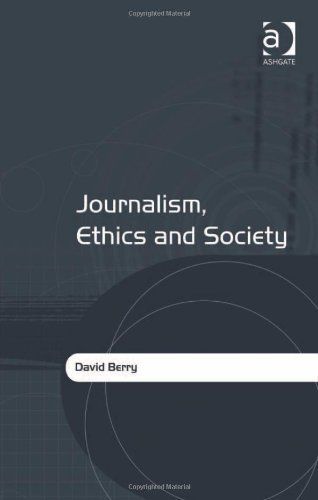
“Journalism, Ethics and Society provides a comprehensive overview and critical analysis of debates within media ethics in relation to the purpose of news and journalism for society. It assesses how the meaning of news and journalism is central to a discourse in ethics and further evaluates the continuing role of liberalism in helping to define both theory and practice.” “A timely and topical book, providing new ways of thinking about media ethics, Journalism, Ethics and Society will be of interest to students and researchers working within the field of media, cultural studies and journalism, as well as to scholars of philosophy.”–BOOK JACKET.
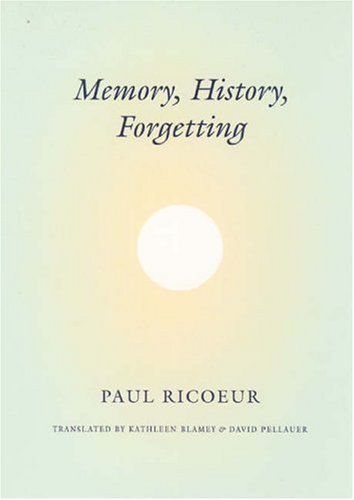
Why do major historical events such as the Holocaust occupy the forefront of the collective consciousness, while profound moments such as the Armenian genocide, the McCarthy era, and France’s role in North Africa stand distantly behind? Is it possible that history “overly remembers” some events at the expense of others? A landmark work in philosophy, Paul Ricoeur’s Memory, History, Forgetting examines this reciprocal relationship between remembering and forgetting, showing how it affects both the perception of historical experience and the production of historical narrative.Memory, History, Forgetting, like its title, is divided into three major sections. Ricoeur first takes a phenomenological approach to memory and mnemonical devices. The underlying question here is how a memory of present can be of something absent, the past. The second section addresses recent work by historians by reopening the question of the nature and truth of historical knowledge. Ricoeur explores whether historians, who can write a history of memory, can truly break with all dependence on memory, including memories that resist representation. The third and final section is a profound meditation on the necessity of forgetting as a condition for the possibility of remembering, and whether there can be something like happy forgetting in parallel to happy memory. Throughout the book there are careful and close readings of the texts of Aristotle and Plato, of Descartes and Kant, and of Halbwachs and Pierre Nora.A momentous achievement in the career of one of the most significant philosophers of our age, Memory, History, Forgetting provides the crucial link between Ricoeur’s Time and Narrative and Oneself as Another and his recent reflections on ethics and the problems of responsibility and representation. “His success in revealing the internal relations between recalling and forgetting, and how this dynamic becomes problematic in light of events once present but now past, will inspire academic dialogue and response but also holds great appeal to educated general readers in search of both method for and insight from considering the ethical ramifications of modern events. . . . It is indeed a master work, not only in Ricoeur’s own vita but also in contemporary European philosophy.”—Library Journal “Ricoeur writes the best kind of philosophy—critical, economical, and clear.”— New York Times Book Review
ما از اخلاق چه انتظاری داریم؟ این سوال شاید تاحدودی برای عموم مردم و یا متخصصان این رشته قابل پاسخ باشد؛ اینکه خوب بودن را به ما بیاموزد و در تنظیم روابط فردی م...

جشن کتاب تهران به ایستگاه سی و یکم رسیده است. حال و احوال نشر کتاب خوب نیست و باید فرهنگدوستان را به خرید و هدیه دادن کتاب ترغیب نمود. خانه اخلاقپژوهان جوان ب...

بنیاد کتابهای اخلاق اسلامی عمدتا پالایش جان از آلودگیها و آراستن آن به زیباییها است. اندیشه محوری این قبیل کتابها آن است که انسان فعلی آنی نیست که باید باشد...

-
0 Comments