Notice: تابع WP_Block_Type_Registry::register به طورنادرست فراخوانی شد. نامهای نوع بلوک نباید حروف بزرگ داشته باشند. لطفاً برای اطلاعات بیشتر، اشکال زدایی در وردپرس را مشاهده کنید. (این پیام در نگارش 5.0.0 افزوده شده است.) in /home/ethicsho/public_html/wp-includes/functions.php on line 5313
Warning: Use of undefined constant TDC_PATH_LEGACY - assumed 'TDC_PATH_LEGACY' (this will throw an Error in a future version of PHP) in /home/ethicsho/public_html/wp-content/plugins/td-composer/td-composer.php on line 109
Warning: Use of undefined constant TDSP_THEME_PATH - assumed 'TDSP_THEME_PATH' (this will throw an Error in a future version of PHP) in /home/ethicsho/public_html/wp-content/plugins/td-composer/td-composer.php on line 113 بایگانیهای R724 .S585 2008 - خانه اخلاق پژوهان جوان Notice: Trying to access array offset on value of type bool in /home/ethicsho/public_html/wp-content/plugins/wp-ulike/inc/general-functions.php on line 807
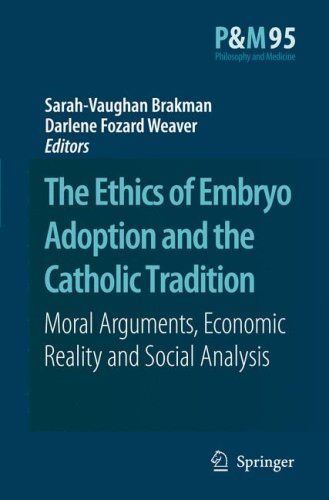
At last, a comprehensive collection of essays that examines and advances ethical evaluations of the controversial and increasingly popular practice of embryo adoption. In the United States alone, 400,000 frozen embryos created for in vitro fertilization exist but are no longer desired for that purpose. What are we morally obliged or permitted to do about these “spare” embryos? More of their genetic parents are considering donating these embryos to others to gestate and raise. This practice is politically volatile (figuring in debates about embryonic stem cells) and medically and morally complex. At the present time within the Roman Catholic Church there is no official teaching on embryo adoption. Catholic ethical analyses grapple with the way embryo adoption comports with respect for embryonic human life yet challenges Catholic moral critiques of assisted reproductive technologies. This volume is the first to bring together leading philosophers and theologians to engage Catholic debates about embryo adoption in an interactive format. The editors, a philosopher bioethicist and a moral theologian, provide a helpful overview of the practice and the arguments surrounding embryo adoption. They engage neglected Catholic ethical resources and issues to advance the current debate and chart new directions in Catholic moral thinking about this intriguing practice. The volume also includes a description of embryo adoption from a physician practitioner along with reflections from a couple who successfully adopted an embryo.
This book is a systematic and constructive treatment of a number of traditional issues at the foundations of ethics. These issues concern the objectivity of ethics, the possibility and nature of moral knowledge, the relationship between the moral point of view and a scientific or naturalist world-view, the nature of moral value and obligation, and the role of morality in a person’s rational lifeplan. In striking contrast to traditional and more recent work in the field, David Brink offers an integrated defense of the objectivity of ethics.
How should we respond when some of our basic beliefs are put into question? What makes a human body distinctively human? Why is truth an important good? These are among the questions explored in this collection of essays by Alasdair MacIntyre, one of the most creative and influential philosophers working today. Ten of MacIntyre’s most influential essays written over almost thirty years are collected together here for the first time. They range over such topics as the issues raised by different types of relativism, what it is about human beings that cannot be understood by the natural sciences, the relationship between the ends of life and the ends of philosophical writing, and the relationship of moral philosophy to contemporary social practice. They will appeal to a wide range of readers across philosophy and especially in moral philosophy, political philosophy, and theology.
Art and Moralityis a collection of groundbreaking new papers on the theme of aesthetics and ethics, and the link between the two subjects. A group of world-class contributors tackle the important question that arise when one thinks about the moral dimensions of art and the aesthetic dimension of moral life. The volume is a significant contribution to the philosophical literature, opening up unexplored questions and shedding new light on more traditional debates in aesthetics. The topics explored include the relation of aesthetic to ethical judgment; the relation of artistic experience to moral consciousness; the moral status of fiction; the concepts of sentimentality and decadence; the moral dimension of critical practice, pictorial art and music; the moral significance of tragedy; and the connections between artistic and moral issues elaborated in the writings of central figures in modern philosophy such as Kant, Schopenhauer and Nietzsche.
ما از اخلاق چه انتظاری داریم؟ این سوال شاید تاحدودی برای عموم مردم و یا متخصصان این رشته قابل پاسخ باشد؛ اینکه خوب بودن را به ما بیاموزد و در تنظیم روابط فردی م...

جشن کتاب تهران به ایستگاه سی و یکم رسیده است. حال و احوال نشر کتاب خوب نیست و باید فرهنگدوستان را به خرید و هدیه دادن کتاب ترغیب نمود. خانه اخلاقپژوهان جوان ب...

بنیاد کتابهای اخلاق اسلامی عمدتا پالایش جان از آلودگیها و آراستن آن به زیباییها است. اندیشه محوری این قبیل کتابها آن است که انسان فعلی آنی نیست که باید باشد...

-
0 Comments