Notice: تابع WP_Block_Type_Registry::register به طورنادرست فراخوانی شد. نامهای نوع بلوک نباید حروف بزرگ داشته باشند. لطفاً برای اطلاعات بیشتر، اشکال زدایی در وردپرس را مشاهده کنید. (این پیام در نگارش 5.0.0 افزوده شده است.) in /home/ethicsho/public_html/wp-includes/functions.php on line 5313
Warning: Use of undefined constant TDC_PATH_LEGACY - assumed 'TDC_PATH_LEGACY' (this will throw an Error in a future version of PHP) in /home/ethicsho/public_html/wp-content/plugins/td-composer/td-composer.php on line 109
Warning: Use of undefined constant TDSP_THEME_PATH - assumed 'TDSP_THEME_PATH' (this will throw an Error in a future version of PHP) in /home/ethicsho/public_html/wp-content/plugins/td-composer/td-composer.php on line 113 بایگانیهای Q175.35 .E53 2005 - خانه اخلاق پژوهان جوان Notice: Trying to access array offset on value of type bool in /home/ethicsho/public_html/wp-content/plugins/wp-ulike/inc/general-functions.php on line 807
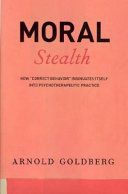
“In Moral Stealth, Goldberg explores and explains that problem of “correct behavior.” He demonstrates that the inflated and official expectations that are part of an analyst’s training – that therapists be universally curious, hopeful, kind, and purposeful, for example – are often of less help than simple empathy amid the ambiguous morality of actual patient interactions. Being a good therapist and being a good person, he argues, are not necessarily the same.” “Drawing on case studies from his own practice and from the experiences of others, as well as on philosophers such as John Dewey, Slavoj Zizek, and Jurgen Habermas, Goldberg breaks new ground and leads the way for therapists to understand the relationship between private morality and clinical practice.”–BOOK JACKET.
There is now a renewed concern for moral psychology among moral philosophers. Moreover, contemporary philosophers interested in virtue, moral responsibility and moral progress regularly refer to Plato and Aristotle, the two founding fathers of ancient ethics. The book contains eleven chapters by distinguished scholars which showcase current research in Greek ethics. Four deal with Plato, focusing on the Protagoras, Euthydemus, Symposium and Republic, and discussing matters of literary presentation alongside the philosophical content. The four chapters on Aristotle address problems such as the doctrine of the mean, the status of rules, equity and the tension between altruism and egoism in Aristotelian eudaimonism. A contrast to classical Greek ethics is presented by two chapters reconstructing Epicurus’ views on the emotions and moral responsibility as well as on moral development. The final chapter on personal identity in Empedocles shows that the concern for moral progress is already palpable in Presocratic philosophy.
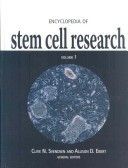
What is a stem cell? We have a basic working definition, but the way we observe a stem cell function in a dish may not represent how it functions in a living organism. Only this is clear: Stem cells are the engine room of multicelluar organisms-both plants and animals. However, controversies, breakthroughs, and frustration continue to swirl in eternal storms through this rapidly moving area of research. But what does the average person make of all this, and how can an interested scholar probe this vast sea of information?The Encyclopedia of Stem Cell Research provides a clear understanding of the basic concepts in stem cell biology and addresses the politics, ethics, and challenges currently facing the field. While stem cells are exciting alone, they are also clearly fueling the traditional areas of developmental biology and the field of regenerative medicine. These two volumes present more than 320 articles that explore major topics related to the emerging science of stem cell research and therapy. Key Features· Describes the different types of stem cells that have been reported so far and, where possible, tries to explain for each age, tissue, and species what is known about the biology of the cells and their history· Captures a strong sense of stem cell biology as it stands today and provides the reader with a reference manual to probe the mysteries of the field· Considers various religious, legal, and political perspectives· Includes selected reprints of major journal articles that pertain to the milestones achieved in stem cell research· Elucidates stem cell terminology for the nonscientist.Key Themes· Biology· Clinical Trials· Countries· Diseases· Ethics· History and Technology· Industry· Institutions · Legal· Organizations· People· Politics· Religion· StatesWith contributions from scholars and institutional experts in the stem cell and social sciences, this Encyclopedia provides a primarily nonscientific resource to understanding the complexities of stem cell research for academic and public libraries.
ما از اخلاق چه انتظاری داریم؟ این سوال شاید تاحدودی برای عموم مردم و یا متخصصان این رشته قابل پاسخ باشد؛ اینکه خوب بودن را به ما بیاموزد و در تنظیم روابط فردی م...

جشن کتاب تهران به ایستگاه سی و یکم رسیده است. حال و احوال نشر کتاب خوب نیست و باید فرهنگدوستان را به خرید و هدیه دادن کتاب ترغیب نمود. خانه اخلاقپژوهان جوان ب...

بنیاد کتابهای اخلاق اسلامی عمدتا پالایش جان از آلودگیها و آراستن آن به زیباییها است. اندیشه محوری این قبیل کتابها آن است که انسان فعلی آنی نیست که باید باشد...

-
0 Comments