The dual-use dilemma arises in the context of research in the biological and other sciences as a consequence of the fact that one and the same piece of scientific research sometimes has the potential to be used for harmful as well as good purposes. Discoveries that may lead to important advances in science and medicine might therefore also facilitate development of biological weapons of mass destruction. Scientists should be aware of the ways in which their well-intentioned research could be misused by others – and they should sometimes avoid research projects when the potential for harmful misuse is great. Policy makers must make tough choices about the extent to which the dual-use nature of research might justify increased oversight, regulation, and perhaps even censorship of science. This book examines the kinds of life-science experiments that give rise to the dual-use dilemma and provides philosophical analysis of the ethical issues and policy options surrounding dual-use research. Though the dual-use dilemma is an ethical issue, the vast majority of literature on the topic thus far has been written by scientists and security experts: this is the first book-length treatment of the topic by professional ethicists. It also challenges, and offers an alternative perspective to, the hugely influential U.S. National Research Council position on the dual-use dilemma.
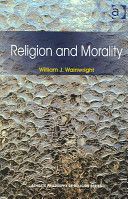
Religion and Morality addresses central issues arising from religion’s relation to morality. Part one offers a sympathetic but critical appraisal of the claim that features of morality provide evidence for the truth of religious belief. Part two examines divine command theories, objections to them, and positive arguments in their support. Part three explores tensions between human morality, as ordinarily understood, and religious requirements by discussing such issues as the conflict between Buddhist and Christian pacifism and requirements of justice, whether virtue without a love of God is really a vice, whether the God of the Abrahamic religions could require us to do something that seems clearly immoral, and the ambiguous relations between religious mysticism and moral behavior.Covering a broad range of topics, this book draws on both historical and contemporary literature, and explores afresh central issues of morality and religion offering new insights for students, academics and the general reader interested in philosophy and religion.
This scarce antiquarian book is included in our special Legacy Reprint Series. In the interest of creating a more extensive selection of rare historical book reprints, we have chosen to reproduce this title even though it may possibly have occasional imperfections such as missing and blurred pages, missing text, poor pictures, markings, dark backgrounds and other reproduction issues beyond our control. Because this work is culturally important, we have made it available as a part of our commitment to protecting, preserving and promoting the world’s literature.
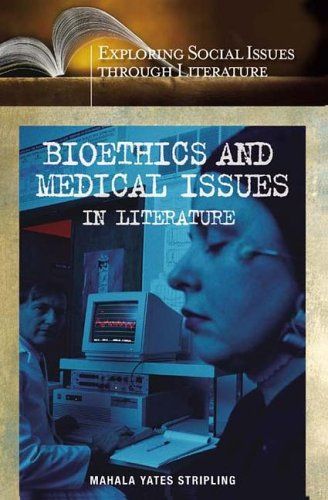
A timely investigation of the interplay between literature and medical ethics, this book ponders AIDS, stem cell research and other topics through such works as Frankenstein, Brave New World, and One Flew over the Cuckoo’s Nest.
ما از اخلاق چه انتظاری داریم؟ این سوال شاید تاحدودی برای عموم مردم و یا متخصصان این رشته قابل پاسخ باشد؛ اینکه خوب بودن را به ما بیاموزد و در تنظیم روابط فردی م...

جشن کتاب تهران به ایستگاه سی و یکم رسیده است. حال و احوال نشر کتاب خوب نیست و باید فرهنگدوستان را به خرید و هدیه دادن کتاب ترغیب نمود. خانه اخلاقپژوهان جوان ب...

بنیاد کتابهای اخلاق اسلامی عمدتا پالایش جان از آلودگیها و آراستن آن به زیباییها است. اندیشه محوری این قبیل کتابها آن است که انسان فعلی آنی نیست که باید باشد...

-
0 Comments