Notice: تابع WP_Block_Type_Registry::register به طورنادرست فراخوانی شد. نامهای نوع بلوک نباید حروف بزرگ داشته باشند. لطفاً برای اطلاعات بیشتر، اشکال زدایی در وردپرس را مشاهده کنید. (این پیام در نگارش 5.0.0 افزوده شده است.) in /home/ethicsho/public_html/wp-includes/functions.php on line 5313
Warning: Use of undefined constant TDC_PATH_LEGACY - assumed 'TDC_PATH_LEGACY' (this will throw an Error in a future version of PHP) in /home/ethicsho/public_html/wp-content/plugins/td-composer/td-composer.php on line 109
Warning: Use of undefined constant TDSP_THEME_PATH - assumed 'TDSP_THEME_PATH' (this will throw an Error in a future version of PHP) in /home/ethicsho/public_html/wp-content/plugins/td-composer/td-composer.php on line 113 بایگانیهای Biological Warfare - Moral And Ethical Aspects - خانه اخلاق پژوهان جوان Notice: Trying to access array offset on value of type bool in /home/ethicsho/public_html/wp-content/plugins/wp-ulike/inc/general-functions.php on line 807
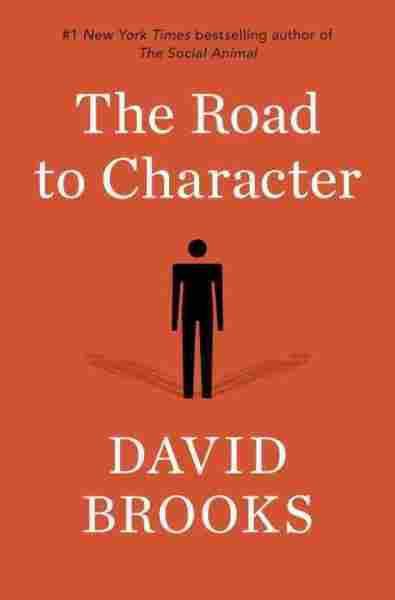
#۱ NEW YORK TIMES BESTSELLER • David Brooks challenges us to rebalance the scales between the focus on external success—“résumé virtues”—and our core principles. NAMED ONE OF THE BEST BOOKS OF THE YEAR BY THE ECONOMIST With the wisdom, humor, curiosity, and sharp insights that have brought millions of readers to his New York Times column and his previous bestsellers, David Brooks has consistently illuminated our daily lives in surprising and original ways. In The Social Animal, he explored the neuroscience of human connection and how we can flourish together. Now, in The Road to Character, he focuses on the deeper values that should inform our lives. Looking to some of the world’s greatest thinkers and inspiring leaders, Brooks explores how, through internal struggle and a sense of their own limitations, they have built a strong inner character. Labor activist Frances Perkins understood the need to suppress parts of herself so that she could be an instrument in a larger cause. Dwight Eisenhower organized his life not around impulsive self-expression but considered self-restraint. Dorothy Day, a devout Catholic convert and champion of the poor, learned as a young woman the vocabulary of simplicity and surrender. Civil rights pioneers A. Philip Randolph and Bayard Rustin learned reticence and the logic of self-discipline, the need to distrust oneself even while waging a noble crusade. Blending psychology, politics, spirituality, and confessional, The Road to Character provides an opportunity for us to rethink our priorities, and strive to build rich inner lives marked by humility and moral depth. “Joy,” David Brooks writes, “is a byproduct experienced by people who are aiming for something else. But it comes.”Praise for The Road to Character“A hyper-readable, lucid, often richly detailed human story.”—The New York Times Book Review “This profound and eloquent book is written with moral urgency and philosophical elegance.”—Andrew Solomon, author of Far from the Tree and The Noonday Demon “A powerful, haunting book that works its way beneath your skin.”—The Guardian“Original and eye-opening . . . Brooks is a normative version of Malcolm Gladwell, culling from a wide array of scientists and thinkers to weave an idea bigger than the sum of its parts.”—USA Today
At a time when age-old political structures are crumbling, civil strife abounds, and economic uncertainty permeates the air, loyalty offers us security in our relationships with associates, friends, and family. Yet loyalty is a suspect virtue. It is not impartial. It is not blind. Itviolates the principles of morality that have dominated Western thought for the last two hundred years.Loyalties are also thought to be irrational and contrary to the spirit of Capitalism. In a free market society, we are encouraged to move to the competition when we are not happy. This way of thinking has invaded our personal relationships and undermined our capacities for friendship and loyaltyto those who do not serve our immediate interests. As George P. Fletcher writes, it is time for loyal bonds, born of history and experience, to prevail both over impartial morality and the self-interested thinking of the market trader.In this extended essay, George P. Fletcher offers an account of loyalty that illuminates its role in our relationships with family and friends, our ties to country, and the commitment of the religious to God and their community. Fletcher opposes the traditional view of the moral self as detachedfrom context and history. He argues instead that loyalty, not impartial detachment, should be the central feature of our moral and political lives. Writing as a political “liberal,” he claims that a commitment to country is necessary to improve the lot of the poor and disadvantaged. This commitmentto country may well require greater reliance on patriotic rituals in education and a reconsideration of the Supreme Court’s extending the First Amendment to protect flag burning. Given the worldwide currents of parochialism and political decentralization, the task for us, Fletcher argues, is torenew our commitment to a single nation united in its diversity.Bringing to bear his expertise as a law professor, Fletcher reasons that the legal systems should defer to existing relationships of loyalty. Familial, professional, and religious loyalties should be respected as relationships beyond the limits of the law. Thus surrogate mothers should not beforced to surrender and betray their children, spouses should not be required to testify against each other in court, parents should not be prevented from willing their property to their children, and the religiously committed should not be forced to act contrary to conscience.Yet the question remains: Aren’t loyalty, and particularly patriotism, dangerously one-sided? Indeed, they are, but no more than are love and friendship. The challenge, Fletcher maintains, is to overcome the distorting effects of impartial morality and to develop a morality of loyalty properlysuited to our emotional and spiritual lives. Justice has its sphere, as do loyalties. In this book, Fletcher provides the first step toward a new way of thinking that recognizes the complexity of our moral and political lives.
The central aim of this book is to analyze whether (or not) the global constitutes a fundamental challenge to the social-scientific study of politics, including the structure of disciplines and the division of labor between them.
Volume: 3 Publisher: London, Sonnenschein Subjects: Ethics Notes: This is an OCR reprint. There may be numerous typos or missing text. There are no illustrations or indexes. When you buy the General Books edition of this book you get free trial access to Million-Books.com where you can select from more than a million books for free. You can also preview the book there.
ما از اخلاق چه انتظاری داریم؟ این سوال شاید تاحدودی برای عموم مردم و یا متخصصان این رشته قابل پاسخ باشد؛ اینکه خوب بودن را به ما بیاموزد و در تنظیم روابط فردی م...

جشن کتاب تهران به ایستگاه سی و یکم رسیده است. حال و احوال نشر کتاب خوب نیست و باید فرهنگدوستان را به خرید و هدیه دادن کتاب ترغیب نمود. خانه اخلاقپژوهان جوان ب...

بنیاد کتابهای اخلاق اسلامی عمدتا پالایش جان از آلودگیها و آراستن آن به زیباییها است. اندیشه محوری این قبیل کتابها آن است که انسان فعلی آنی نیست که باید باشد...

-
0 Comments