Notice: تابع WP_Block_Type_Registry::register به طورنادرست فراخوانی شد. نامهای نوع بلوک نباید حروف بزرگ داشته باشند. لطفاً برای اطلاعات بیشتر، اشکال زدایی در وردپرس را مشاهده کنید. (این پیام در نگارش 5.0.0 افزوده شده است.) in /home/ethicsho/public_html/wp-includes/functions.php on line 5313
Warning: Use of undefined constant TDC_PATH_LEGACY - assumed 'TDC_PATH_LEGACY' (this will throw an Error in a future version of PHP) in /home/ethicsho/public_html/wp-content/plugins/td-composer/td-composer.php on line 109
Warning: Use of undefined constant TDSP_THEME_PATH - assumed 'TDSP_THEME_PATH' (this will throw an Error in a future version of PHP) in /home/ethicsho/public_html/wp-content/plugins/td-composer/td-composer.php on line 113 بایگانیهای HQ1190 .L58 1994 - خانه اخلاق پژوهان جوان Notice: Trying to access array offset on value of type bool in /home/ethicsho/public_html/wp-content/plugins/wp-ulike/inc/general-functions.php on line 807
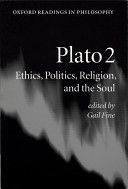
These two volumes, edited by the distinguished Cornell University Plato scholar Gail Fine, contain some 37 articles on various aspects of Plato’s philosophy. Most of the articles have been previously published, although some have been revised for these volumes. None dates from before 1970 and almost all are by scholars from the English-speaking world. These volumes will be widely understood to be doing for Plato scholarship in the last thirty years what the three well-known volumes edited by Gregory Vlastos (two on Plato, one on Socrates) did for Plato scholarship in the period between the end of World War II and 1970. Just as Vlastos attempted to assemble the best of Anglo-American scholarship to provide a snapshot of the contemporary ‘state-of-the-art,’ so Fine’s volumes will no doubt be taken to have done the same. Remarkably, most of the essays in Fine’s volumes cover a range of topics and employ a method strikingly similar to those in Vlastos’ volumes.
The quality of the essays is uniformly very high. A number of them will become or already have become standard starting-points for further discussion of a topic. A re-reading of the essays in the Vlastos volumes after reading these would no doubt be illuminating. Having said this much, it is truly remarkable that in roughly 1000 pages of material there is hardly even a mention of approaches to Plato in the last generation other than that of what can best be termed the Anglo-American analytic tradition.
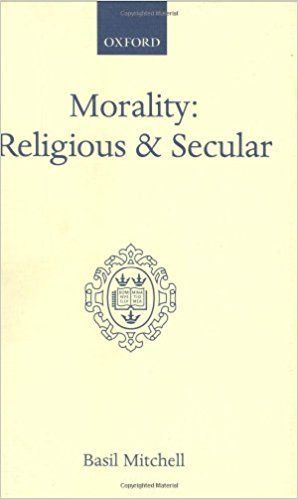
This book analyzes the moral confusion of contemporary society, relating rival conceptions of morality with a wide variety of views about the nature and predicament of man. Mitchell argues that many secular thinkers possess a traditional “Christian” conscience which they find hard to defend in terms of an entirely secular world-view, but which is more in line with a Christian understanding of man.
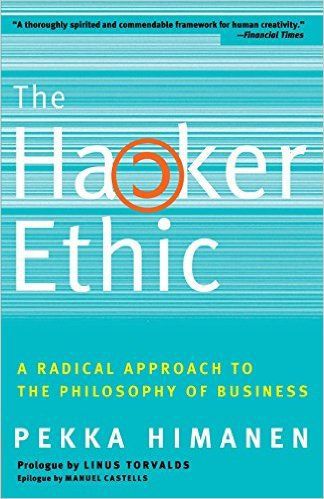
Max Weber’s The Protestant Ethic and the Spirit of Capitalism articulated the animating spirit of the Industrial Age, known ever since as the Protestant work ethic. Now, Pekka Himanen articulates a new, opposing cultural logic, born of the Information Age and rapidly gaining force. The Internet, e-mail, the first personal computers — all were created by hackers. As more of our work becomes hacker work, hacker values — faith in the power of free and open information, rejection of rigid time divisions, and propagation of a new social model organized around the spirit of play and the economy of free exchange — bleed out into the world and change consciousness in radical ways, as this epochal book so brilliantly explains.
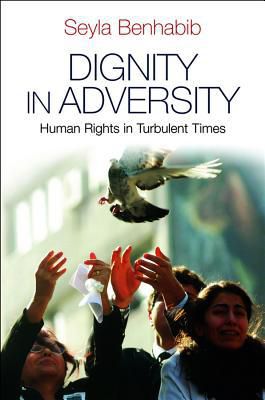
The language of human rights has become the public vocabulary of our contemporary world. Ironically, as the political influence of human rights has grown, their philosophical justification has become ever more controversial. Building on a theory of discourse ethics and communicative rationality, this book addresses the politics and philosophy of human rights against the background of the broader social transformations that are shaping the modern world. Rejecting the reduction of international human rights to the Trojan horse of a neo-liberal empire’s bid for world power, as well as the conservative objections to legal cosmopolitanism as encroachments upon democratic sovereignty, Benhabib develops two key concepts to move beyond these false antitheses. International human rights norms need contextualization in specific polities through processes of what she calls ‘democratic iterations.’ Furthermore, such norms have a ‘jurisgenerative power, ‘ in that they enable new actors to enter fields of social and political contestation; they promote new vocabularies for public claim-making and anticipate a justice to come. — Book Description.
ما از اخلاق چه انتظاری داریم؟ این سوال شاید تاحدودی برای عموم مردم و یا متخصصان این رشته قابل پاسخ باشد؛ اینکه خوب بودن را به ما بیاموزد و در تنظیم روابط فردی م...

جشن کتاب تهران به ایستگاه سی و یکم رسیده است. حال و احوال نشر کتاب خوب نیست و باید فرهنگدوستان را به خرید و هدیه دادن کتاب ترغیب نمود. خانه اخلاقپژوهان جوان ب...

بنیاد کتابهای اخلاق اسلامی عمدتا پالایش جان از آلودگیها و آراستن آن به زیباییها است. اندیشه محوری این قبیل کتابها آن است که انسان فعلی آنی نیست که باید باشد...

-
0 Comments