Notice: تابع WP_Block_Type_Registry::register به طورنادرست فراخوانی شد. نامهای نوع بلوک نباید حروف بزرگ داشته باشند. لطفاً برای اطلاعات بیشتر، اشکال زدایی در وردپرس را مشاهده کنید. (این پیام در نگارش 5.0.0 افزوده شده است.) in /home/ethicsho/public_html/wp-includes/functions.php on line 5313
Warning: Use of undefined constant TDC_PATH_LEGACY - assumed 'TDC_PATH_LEGACY' (this will throw an Error in a future version of PHP) in /home/ethicsho/public_html/wp-content/plugins/td-composer/td-composer.php on line 109
Warning: Use of undefined constant TDSP_THEME_PATH - assumed 'TDSP_THEME_PATH' (this will throw an Error in a future version of PHP) in /home/ethicsho/public_html/wp-content/plugins/td-composer/td-composer.php on line 113 بایگانیهای HN25 .Q33 1993 - خانه اخلاق پژوهان جوان Notice: Trying to access array offset on value of type bool in /home/ethicsho/public_html/wp-content/plugins/wp-ulike/inc/general-functions.php on line 807
(۳)۴z(BThis book is a comprehensive and comprehensible coverage of the philosophical underpinning of the integrity construct as reflected in the Western literature—a must read for researchers and scholars interested in integrity assessments. The authors have integrated insights from several disciplines, and have written in a clear and engaging style. The Czech historical sketch gives an interesting background to these discussions.(3)4y (BProfessor Vish C. Viswesvaran, Florida International University, USA This book discusses outcomes of a study by the National Institute of Mental Health, Czech Republic, examining moral integrity in the post-communist Czech-speaking environment. Chapters map the history of the Euro-Atlantic ethical disciplines from moral philosophy and psychology to evolutionary neuroscience and socio-biology. The authors emphasize the biological and social conditionality of ethics and call for greater differentiation of both research and applied psychological standards in today’s globalised world. Using a non-European ethical system – Theravada Buddhism – as a case study, the authors explore the differences in English and Czech interpretations of the religion. They analyse cognitive styles and language as central variables in formatting and interpreting moral values, with important consequences for cultural transferability of psychological instruments. This book will appeal to academics and other specialists in psychology, psychiatry, sociology and related fields, as well as to readers interested in the psychology of ethics. .
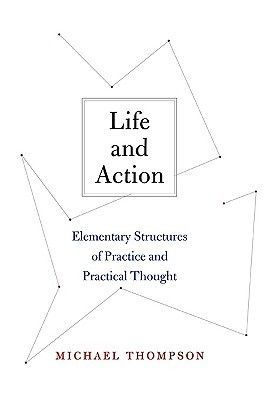
Any sound practical philosophy must be clear on practical concepts—concepts, in particular, of life, action, and practice. This clarity is Michael Thompson’s aim in his ambitious work. In Thompson’s view, failure to comprehend the structures of thought and judgment expressed in these concepts has disfigured modern moral philosophy, rendering it incapable of addressing the larger questions that should be its focus.In three investigations, Thompson considers life, action, and practice successively, attempting to exhibit these interrelated concepts as pure categories of thought, and to show how a proper exposition of them must be Aristotelian in character. He contends that the pure character of these categories, and the Aristotelian forms of reflection necessary to grasp them, are systematically obscured by modern theoretical philosophy, which thus blocks the way to the renewal of practical philosophy. His work recovers the possibility, within the tradition of analytic philosophy, of hazarding powerful generalities, and of focusing on the larger issues—like “life”—that have the power to revive philosophy.As an attempt to relocate crucial concepts from moral philosophy and the theory of action into what might be called the metaphysics of life, this original work promises to reconfigure a whole sector of philosophy. It is a work that any student of contemporary philosophy must grapple with.
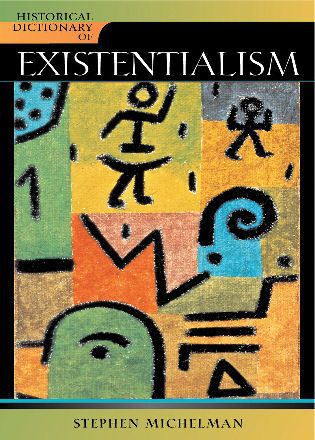
Existentialism is the philosophy of human existence, which flourished first in Germany in the 1920s and 1930s and then in France in the decade following the end of World War II. The operative meaning of existentialism here is thus broader than it was circa 1945 when the term first gained currency in France as a label for the philosophy of Jean-Paul Sartre. However, it is considerably less broad than the view proposed by commentators in the 1950s and 1960s who, in an attempt to overcome Sartre’s hegemony, discovered the seeds of existentialism far and wide: in Shakespeare, Saint Augustine, and the Old Testament prophets. In this dictionary, existentialism is understood as a decidedly 20th-century phenomenon, though with roots in the 19th century. Effort has been made to understand the philosophy of existentialism, as all philosophies should be understood, as part of an ongoing intellectual tradition: an evolving history of problems, concepts, and arguments. The A to Z of Existentialism explains the central claims of existentialist philosophy and the contexts in which it developed into one of the most influential intellectual trends of the 20th century. This is done through a chronology, an introductory essay, a bibliography, and more than 300 cross-referenced dictionary entries offering clear, accessible accounts of the life and thought of major existentialists like Jean-Paul Sartre, Martin Heidegger, Martin Buber, Karl Jaspers, Gabriel Marcel, Simone de Beauvoir, Albert Camus, and Maurice Merleau-Ponty, as well as thinkers influential to its development such as Wilhelm Dilthey, Henri Bergson, Edmund Husserl, and Max Scheler. This book affords readers an integrated, critical, and historically-sensitive understanding of this important philosophical movement.
ما از اخلاق چه انتظاری داریم؟ این سوال شاید تاحدودی برای عموم مردم و یا متخصصان این رشته قابل پاسخ باشد؛ اینکه خوب بودن را به ما بیاموزد و در تنظیم روابط فردی م...

جشن کتاب تهران به ایستگاه سی و یکم رسیده است. حال و احوال نشر کتاب خوب نیست و باید فرهنگدوستان را به خرید و هدیه دادن کتاب ترغیب نمود. خانه اخلاقپژوهان جوان ب...

بنیاد کتابهای اخلاق اسلامی عمدتا پالایش جان از آلودگیها و آراستن آن به زیباییها است. اندیشه محوری این قبیل کتابها آن است که انسان فعلی آنی نیست که باید باشد...

-
0 Comments