Notice: تابع WP_Block_Type_Registry::register به طورنادرست فراخوانی شد. نامهای نوع بلوک نباید حروف بزرگ داشته باشند. لطفاً برای اطلاعات بیشتر، اشکال زدایی در وردپرس را مشاهده کنید. (این پیام در نگارش 5.0.0 افزوده شده است.) in /home/ethicsho/public_html/wp-includes/functions.php on line 5313
Warning: Use of undefined constant TDC_PATH_LEGACY - assumed 'TDC_PATH_LEGACY' (this will throw an Error in a future version of PHP) in /home/ethicsho/public_html/wp-content/plugins/td-composer/td-composer.php on line 109
Warning: Use of undefined constant TDSP_THEME_PATH - assumed 'TDSP_THEME_PATH' (this will throw an Error in a future version of PHP) in /home/ethicsho/public_html/wp-content/plugins/td-composer/td-composer.php on line 113 بایگانیهای HD82 .M548 2003 - خانه اخلاق پژوهان جوان Notice: Trying to access array offset on value of type bool in /home/ethicsho/public_html/wp-content/plugins/wp-ulike/inc/general-functions.php on line 807
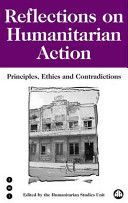
Humanitarian action has become a subject for serious debate in light of recent conflicts across the globe. The debacle in Somalia, the policy of intervention in Bosnia, and domestic conflicts in the West over intervention in Kosovo have given rise to many complex questions surrounding humanitarian action. The contributors to this volume provide a systematic overview of the issues involved from a wide range of viewpoints.The book examines the central problems of humanitarian action: the judicial question and the right to humanitarian assistance; the ethical framework of humanitarian action; the challenge of coordination of all the actors involved in humanitarian action; the recipients in the aid chain; the link between aid, development and emergency action; the role of the media; and a practical evaluation of Operation Lifeline Sudan.
Recent scientific advances have placed many traditional philosophical concepts under great stress. In this pathbreaking book, the eminent philosopher Robert Nozick rethinks and transforms the concepts of truth, objectivity, necessity, contingency, consciousness, and ethics. Using an original method, he presents bold new philosophical theories that take account of scientific advances in physics, evolutionary biology, economics, and cognitive neuroscience, and casts current cultural controversies (such as whether all truth is relative and whether ethics is objective) in a wholly new light. Throughout, the book is open to, and engages in, the bold exploration of new philosophical possibilities.Philosophy will never look the same. Truth is embedded in space-time and is relative to it. However, truth is not socially relative among human beings (extraterrestrials are another matter). Objective facts are invariant under specified transformations; objective beliefs are arrived at by a process in which biasing factors do not play a significant role. Necessity’s domain is contracted (there are no important metaphysical necessities; water is not necessarily H2O) while the important and useful notion of degrees of contingency is elaborated. Gradations of consciousness (based upon “common registering”) yield increasing capacity to fit actions to the world. The originating function of ethics is cooperation to mutual benefit, and evolution has instilled within humans a “normative module”: the capacities to learn, internalize, follow norms, and make evaluations. Ethics has normative force because of the connection between ethics and conscious self-awareness. Nozick brings together the book’s novel theories to show the extent to which there are objective ethical truths.
This introduction to ethics judiciously combines moral theory with applied ethics to give an opportunity for students to develop acute thinking About Ethical Matters.; The Author Begins Motivating A Concern For moral discourse by dispelling often met objections over relativism and subjectivity. interweaving normative and meta-ethical considerations, a convincing modern account of moral thinking emerges.; Moral theories – consequentialism, Kantianism, contractualism – are explained and illustrated in a way that holds the reader’s attention, and students of ethics will take away a perceptive and practical understanding of the nature of moral reasoning and an ability, on such matters, to think afresh for themselves.
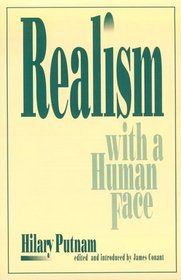
The time has come to reform philosophy, says Hilary Putnam, one of America’s great philosophers. He calls upon philosophers to attend to the gap between the present condition of their subject and the human aspirations that philosophy should and once did claim to represent. Putnam’s goal is to embed philosophy in social life.The first part of this book is dedicated to metaphysical questions. Putnam rejects the contemporary metaphysics that insists on describing both the mind and the world from a God’s-eye view. In its place he argues for pluralism, for a philosophy that is not a closed systematic method but a human practice connected to real life. Philosophy has a task, to be sure, but it is not to provide an inventory of the basic furniture of the universe or to separate reality in itself from our own projections. Putnam makes it clear that science is not in the business of describing a ready-made world, and philosophy should not be in that business either.The author moves on to show that the larger human context in which science matters is a world of values animated by ethics and aesthetic judgments. No adequate philosophy should try to explain away ethical facts. The dimension of history is added in the third part of the book. Here Putnam takes up a set of American philosophers, some firmly within and others outside the canon of analytic philosophy, such as William James and C. S. Peirce, and he explores the pragmatist contribution to philosophy from James to Quine and Goodman.This book connects issues in metaphysics with cultural and literary issues and argues that the collapse of philosophical realism does not entail a fall into the abyss of relativism and postmodern skepticism. It is aimed primarily at philosophers but should appeal to a wide range of humanists and social scientists.
Must good deeds be rewarded and wrongdoers punished? Would God be unjust if He failed to punish and reward? And what is it about good or evil actions and moral identity that might generate such necessities? These were some of the vital religious and philosophical questions that eighth- and ninth-century Mu’tazilite theologians and their sophisticated successors attempted to answer, giving rise to a distinctive ethical position and one of the most prominent and controversial intellectual trends in medieval Islam. The Mu’tazilites developed a view of ethics whose distinguishing features were its austere moral objectivism and the crucial role it assigned to reason in the knowledge of moral truths. Central to this ethical vision was the notion of moral desert, and of the good and evil consequences–reward or punishment–deserved through a person’s acts. Moral Agents and Their Desertsis the first book-length study of this central theme in Mu’tazilite ethics, and an attempt to grapple with the philosophical questions it raises. At the same time, it is a bid to question the ways in which modern readers, coming to medieval Islamic thought with a philosophical interest, seek to read and converse with Mu’tazilite theology.Moral Agents and Their Desertstracks the challenges and rewards involved in the pursuit of the right conversation at the seams between modern and medieval concerns.
ما از اخلاق چه انتظاری داریم؟ این سوال شاید تاحدودی برای عموم مردم و یا متخصصان این رشته قابل پاسخ باشد؛ اینکه خوب بودن را به ما بیاموزد و در تنظیم روابط فردی م...

جشن کتاب تهران به ایستگاه سی و یکم رسیده است. حال و احوال نشر کتاب خوب نیست و باید فرهنگدوستان را به خرید و هدیه دادن کتاب ترغیب نمود. خانه اخلاقپژوهان جوان ب...

بنیاد کتابهای اخلاق اسلامی عمدتا پالایش جان از آلودگیها و آراستن آن به زیباییها است. اندیشه محوری این قبیل کتابها آن است که انسان فعلی آنی نیست که باید باشد...

-
0 Comments