Notice: تابع WP_Block_Type_Registry::register به طورنادرست فراخوانی شد. نامهای نوع بلوک نباید حروف بزرگ داشته باشند. لطفاً برای اطلاعات بیشتر، اشکال زدایی در وردپرس را مشاهده کنید. (این پیام در نگارش 5.0.0 افزوده شده است.) in /home/ethicsho/public_html/wp-includes/functions.php on line 5313
Warning: Use of undefined constant TDC_PATH_LEGACY - assumed 'TDC_PATH_LEGACY' (this will throw an Error in a future version of PHP) in /home/ethicsho/public_html/wp-content/plugins/td-composer/td-composer.php on line 109
Warning: Use of undefined constant TDSP_THEME_PATH - assumed 'TDSP_THEME_PATH' (this will throw an Error in a future version of PHP) in /home/ethicsho/public_html/wp-content/plugins/td-composer/td-composer.php on line 113 بایگانیهای War Victims - Services For - خانه اخلاق پژوهان جوان Notice: Trying to access array offset on value of type bool in /home/ethicsho/public_html/wp-content/plugins/wp-ulike/inc/general-functions.php on line 807
Defending Life is arguably the most comprehensive defense of the prolife position on abortion – morally, legally, and politically – that has ever been published in an academic monograph. It offers a detailed and critical analysis of Roe v. Wade and Planned Parenthood v. Casey as well as arguments by those who defend a Rawlsian case for abortion-choice, such as J. J. Thomson. The author defends the substance view of persons as the view with the most explanatory power. The substance view entails that the unborn is a subject of moral rights from conception. While defending this view, the author responds to the arguments of thinkers such as Boonin, Dworkin, Stretton, Ford, and Brody. He also critiques Thomson’s famous violinist argument and its revisions by Boonin and McDonagh. Defending Life includes chapters critiquing arguments found in popular politics and the controversy over cloning and stem cell research.
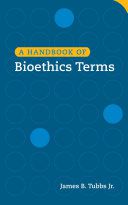
The term bioethics was first used in the early 1970s by biologists who were concerned about ethical implications of genetic and ecological interventions, but was soon applied to all aspects of biomedical ethics, including health care delivery, research, and public policy. Its literature draws from disciplines as varied as clinical medicine and nursing, scientific research, theology and philosophy, law, and the social sciences?each with its own distinctive vocabulary and expressions. A Handbook of Bioethics Terms is a handy and concise glossary-style reference featuring over 400 entries on the significant terms, expressions, titles, and court cases that are most important to the field. Most entries are cross-referenced, making this handbook a valuable addition to the bookshelves of undergraduate and graduate students in health care ethics, physicians and nurses, members of institutional ethics committees, and others interested in bioethics.
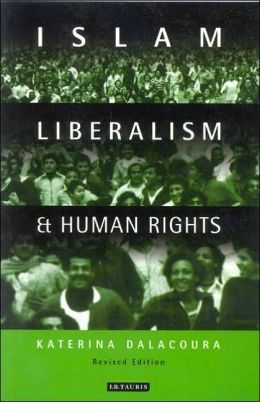
In Islam, Liberalism and Human Rights, Katerina Dalacoura explores the concept of human rights, and debate between understanding them as a simply universal norm, or a ‘Western’ value, and therefore inappropriate and irrelevant for other cultures. She examines Islam’s influence on the understanding of human rights in Muslim societies, and whether there is an inherent antithesis between Islam as a religion and the value of human rights.
ما از اخلاق چه انتظاری داریم؟ این سوال شاید تاحدودی برای عموم مردم و یا متخصصان این رشته قابل پاسخ باشد؛ اینکه خوب بودن را به ما بیاموزد و در تنظیم روابط فردی م...

جشن کتاب تهران به ایستگاه سی و یکم رسیده است. حال و احوال نشر کتاب خوب نیست و باید فرهنگدوستان را به خرید و هدیه دادن کتاب ترغیب نمود. خانه اخلاقپژوهان جوان ب...

بنیاد کتابهای اخلاق اسلامی عمدتا پالایش جان از آلودگیها و آراستن آن به زیباییها است. اندیشه محوری این قبیل کتابها آن است که انسان فعلی آنی نیست که باید باشد...

-
0 Comments