Notice: تابع WP_Block_Type_Registry::register به طورنادرست فراخوانی شد. نامهای نوع بلوک نباید حروف بزرگ داشته باشند. لطفاً برای اطلاعات بیشتر، اشکال زدایی در وردپرس را مشاهده کنید. (این پیام در نگارش 5.0.0 افزوده شده است.) in /home/ethicsho/public_html/wp-includes/functions.php on line 5313
Warning: Use of undefined constant TDC_PATH_LEGACY - assumed 'TDC_PATH_LEGACY' (this will throw an Error in a future version of PHP) in /home/ethicsho/public_html/wp-content/plugins/td-composer/td-composer.php on line 109
Warning: Use of undefined constant TDSP_THEME_PATH - assumed 'TDSP_THEME_PATH' (this will throw an Error in a future version of PHP) in /home/ethicsho/public_html/wp-content/plugins/td-composer/td-composer.php on line 113 بایگانیهای HD58.7 .J612 2003 - خانه اخلاق پژوهان جوان Notice: Trying to access array offset on value of type bool in /home/ethicsho/public_html/wp-content/plugins/wp-ulike/inc/general-functions.php on line 807
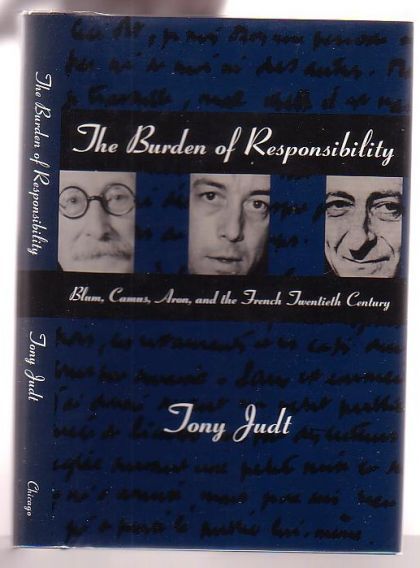
Using the lives of the three outstanding French intellectuals of the twentieth century, renowned historian Tony Judt offers a unique look at how intellectuals can ignore political pressures and demonstrate a heroic commitment to personal integrity and moral responsibility unfettered by the difficult political exigencies of their time.Through the prism of the lives of Leon Blum, Albert Camus, and Raymond Aron, Judt examines pivotal issues in the history of contemporary French societyantisemitism and the dilemma of Jewish identity, political and moral idealism in public life, the Marxist moment in French thought, the traumas of decolonization, the disaffection of the intelligentsia, and the insidious quarrels rending Right and Left. Judt focuses particularly on Blum’s leadership of the Popular Front and his stern defiance of the Vichy governments, on Camus’s part in the Resistance and Algerian War, and on Aron’s cultural commentary and opposition to the facile acceptance by many French intellectuals of communism’s utopian promise. Severely maligned by powerful critics and rivals, each of these exemplary figures stood fast in their principles and eventually won some measure of personal and public redemption.Judt constructs a compelling portrait of modern French intellectual life and politics. He challenges the conventional account of the role of intellectuals precisely because they mattered in France, because they could shape public opinion and influence policy. In Blum, Camus, and Aron, Judt finds three very different men who did not simply play the role, but evinced a courage and a responsibility in public life that far outshone their contemporaries.
Separated by millennia, Aristotle and Sigmund Freud gave us disparate but compelling pictures of the human condition. But if, with Jonathan Lear, we scrutinize these thinkers’ attempts to explain human behavior in terms of a higher principle–whether happiness or death–the pictures fall apart. Aristotle attempted to ground ethical life in human striving for happiness, yet he didn’t understand what happiness is any better than we do. Happiness became an enigmatic, always unattainable, means of seducing humankind into living an ethical life. Freud fared no better when he tried to ground human striving, aggression, and destructiveness in the death drive, like Aristotle attributing purpose where none exists. Neither overarching principle can guide or govern “the remainder of life,” in which our inherently disruptive unconscious moves in breaks and swerves to affect who and how we are. Lear exposes this tendency to self-disruption for what it is: an opening, an opportunity for new possibilities. His insights have profound consequences not only for analysis but for our understanding of civilization and its discontent.
Few philosophers have had a more profound influence on the course of modern philosophy than Bertrand Russell. The Basic Writings of Bertrand Russell is a comprehensive anthology of Russell’s most definitive essays written between 1903 and 1959. First published in 1961, this remarkable collection is a testament to a philosopher whom many consider to be one of the most influential thinkers of the twentieth century. This is an essential introduction to the brilliance of Bertrand Russell.
In the corporate jungle inhabited by Enrons and WorldComs, a lack of transparency is the root of all scandal, yet delivering transparency seems immensely difficult with the often competing interests of shareholders, corporate boards, government regulators, and other stakeholders. Written by noted corporate social responsibility practitioner Adrian Henriques and drawing on a vast wealth of real-life examples from the commercial world, this lively business book goes in search of the appropriate limits of transparency. From commercial confidentiality to the ethics of marketing to lobbying and corporate corruption, the author addresses the position, significance, and limits of transparency in modern corporate life and works through the dilemmas that the increasing calls for transparency present. From the secrets of the board room to the struggles of NGOs, transparency is a persistent challenge-how much is enough? How much do we need? How do we do it? This book, ideally suited to business leaders and managers, consultants and business students alike addresses these questions and more.
ما از اخلاق چه انتظاری داریم؟ این سوال شاید تاحدودی برای عموم مردم و یا متخصصان این رشته قابل پاسخ باشد؛ اینکه خوب بودن را به ما بیاموزد و در تنظیم روابط فردی م...

جشن کتاب تهران به ایستگاه سی و یکم رسیده است. حال و احوال نشر کتاب خوب نیست و باید فرهنگدوستان را به خرید و هدیه دادن کتاب ترغیب نمود. خانه اخلاقپژوهان جوان ب...

بنیاد کتابهای اخلاق اسلامی عمدتا پالایش جان از آلودگیها و آراستن آن به زیباییها است. اندیشه محوری این قبیل کتابها آن است که انسان فعلی آنی نیست که باید باشد...

-
0 Comments