Notice: تابع WP_Block_Type_Registry::register به طورنادرست فراخوانی شد. نامهای نوع بلوک نباید حروف بزرگ داشته باشند. لطفاً برای اطلاعات بیشتر، اشکال زدایی در وردپرس را مشاهده کنید. (این پیام در نگارش 5.0.0 افزوده شده است.) in /home/ethicsho/public_html/wp-includes/functions.php on line 5313
Warning: Use of undefined constant TDC_PATH_LEGACY - assumed 'TDC_PATH_LEGACY' (this will throw an Error in a future version of PHP) in /home/ethicsho/public_html/wp-content/plugins/td-composer/td-composer.php on line 109
Warning: Use of undefined constant TDSP_THEME_PATH - assumed 'TDSP_THEME_PATH' (this will throw an Error in a future version of PHP) in /home/ethicsho/public_html/wp-content/plugins/td-composer/td-composer.php on line 113 بایگانیهای BT695.5 .R68 1989 - خانه اخلاق پژوهان جوان Notice: Trying to access array offset on value of type bool in /home/ethicsho/public_html/wp-content/plugins/wp-ulike/inc/general-functions.php on line 807
The past decade has seen an explosion of writing about media ethics and accountability. Most of the work has been focused on the normative side of the subject: ethical philosophies, ethics codes, suggestions for how journalists (and other media workers) can make justifiable decisions when faced with tough ethical questions.Empirical research into media ethics and accountability, by contrast, is hard to find. Relatively little of the past decade’s work–and virtually none of the book-length treatments of the subject–focus on how media accountability works in practice. The gap in practical knowledge is somewhat puzzling, given that most faculty who teach media ethics and accountability work in academic departments that have professional training as part of their academic mission.The underlying assumption of Holding the Media Accountable is that systems of norms such as media law and journalism ethics have meaning only in the context of the actual workings of mechanisms of accountability. No other volume has adopted such an approach.
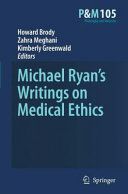
Michael Ryan (d. 1840) remains one of the most mysterious figures in the history of medical ethics, despite the fact that he was the only British physician during the middle years of the 19th century to write about ethics in a systematic way. Michael Ryan s Writings on Medical Ethics offers both an annotated reprint of his key ethical writings, and an extensive introductory essay that fills in many previously unknown details of Ryan s life, analyzes the significance of his ethical works, and places him within the historical trajectory of the field of medical ethics.
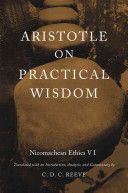
Nicomachean Ethics VI is considered one of classical philosophy’s greatest achievements. Aristotle on Practical Wisdom is the first full-scale commentary on this work to be issued in over a century, and is the most comprehensive and philosophically illuminating to date. A meticulous translation coupled with facing-page analysis enables readers to engage directly with the account of phronêsis or practical wisdom that Aristotle is developing, while a full introduction locates that account in the context of his ethical thought and of later ethical thought more generally.The commentary discusses the text line by line, illuminating obscure passages, explaining technical ones, and providing a new overall interpretation of the work and the nature of practical reason. A companion volume, Action, Contemplation, and Happiness, expands on this interpretation to provide a startling new picture of Aristotle’s thought as a whole. Although the two books can be approached separately, together they constitute one of the most daring and original contemporary readings of Aristotle’s philosophy. Aimed at committed students of these notoriously difficult writings, C. D. C. Reeve’s engaging and lucid books should find a wide audience among philosophers, classicists, and all readers willing to wrestle with a thinker of unparalleled subtlety, depth, and scope.
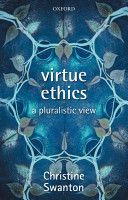
Christine Swanton offers a new, comprehensive theory of virtue ethics which addresses the major concerns of modern ethical theory from a character-based perspective. Discussion of many problems in moral theory, such as moral constraints, rightness of action, the good life, the demandingness ofethics, the role of the subjective, and the practicality of ethics, has been dominated by Kantian and Consequentialist theories, with their own distinctive conceptual apparatus. Virtue Ethics shows how a different framework can shed new light on these intractable issues. Swanton’s approach is distinctive in departing in siginificant ways from classical versions of virtue ethics derived primarily from Aristotle. Employing insights from Nietzsche and other sources, she argues against both eudaimonistic virtue ethics and traditional virtue ethical conceptions ofrightness. In developing a pluralistic view, she shows how different ‘modes of moral acknowledgement’ such as love, respect, appreciation, and creativity, are embedded in the very fabric of virtue, the moral life, and the good life.
ما از اخلاق چه انتظاری داریم؟ این سوال شاید تاحدودی برای عموم مردم و یا متخصصان این رشته قابل پاسخ باشد؛ اینکه خوب بودن را به ما بیاموزد و در تنظیم روابط فردی م...

جشن کتاب تهران به ایستگاه سی و یکم رسیده است. حال و احوال نشر کتاب خوب نیست و باید فرهنگدوستان را به خرید و هدیه دادن کتاب ترغیب نمود. خانه اخلاقپژوهان جوان ب...

بنیاد کتابهای اخلاق اسلامی عمدتا پالایش جان از آلودگیها و آراستن آن به زیباییها است. اندیشه محوری این قبیل کتابها آن است که انسان فعلی آنی نیست که باید باشد...

-
0 Comments