Notice: تابع WP_Block_Type_Registry::register به طورنادرست فراخوانی شد. نامهای نوع بلوک نباید حروف بزرگ داشته باشند. لطفاً برای اطلاعات بیشتر، اشکال زدایی در وردپرس را مشاهده کنید. (این پیام در نگارش 5.0.0 افزوده شده است.) in /home/ethicsho/public_html/wp-includes/functions.php on line 5313
Warning: Use of undefined constant TDC_PATH_LEGACY - assumed 'TDC_PATH_LEGACY' (this will throw an Error in a future version of PHP) in /home/ethicsho/public_html/wp-content/plugins/td-composer/td-composer.php on line 109
Warning: Use of undefined constant TDSP_THEME_PATH - assumed 'TDSP_THEME_PATH' (this will throw an Error in a future version of PHP) in /home/ethicsho/public_html/wp-content/plugins/td-composer/td-composer.php on line 113 بایگانیهای BL2525 .F35 2003 - خانه اخلاق پژوهان جوان Notice: Trying to access array offset on value of type bool in /home/ethicsho/public_html/wp-content/plugins/wp-ulike/inc/general-functions.php on line 807
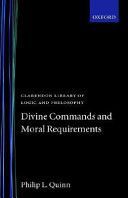
In this wide-ranging study, Quinn argues that human moral autonomy is compatible with unqualified obedience to divine commands. He formulates several versions of the crucial assumptions of divine command ethics, defending them against a battery of objections often expressed in the philosophical literature.
In this multi-faceted volume, Christian and other religiously committed theorists find themselves at an uneasy point in history — between premodernity, modernity, and postmodernity — where disciplines and methods, cultural and linguistic traditions, and religious commitments tangle and cross. Here, leading theorists explore the state of the art of the contemporary hermeneutical terrain. As they address the work of Gadamer, Ricoeur, and Derrida, the essays collected in this wide-ranging work engage key themes in philosophical hermeneutics, hermeneutics and religion, hermeneutics and the other arts, hermeneutics and literature, and hermeneutics and ethics. Readers will find lively exchanges and reflections that meet the intellectual and philosophical challenges posed by hermeneutics at the crossroads.Contributors are Bruce Ellis Benson, Christina Bieber Lake, John D. Caputo, Eduardo J. Echeverria, Benne Faber, Norman Lillegard, Roger Lundin, Brian McCrea, James K. A. Smith, Michael VanderWeele, Kevin Vanhoozer, and Nicholas Wolterstorff.
In THE CRITIQUE OF JUDGMENT (1790), Immanuel Kant (1724-1804) seeks to establish the a priori principles underlying the faculty of judgement, just as he did in his previous critiques of pure and practical reason. The first part deals with the subject of our aesthetic sensibility; we respond to certain natural phenomena as beautiful, says Kant, when we recognise in nature a harmonious order that satisfies the mind’s own need for order. The second half of the critique concentrates on the apparent teleology in nature’s design of organisms. Kant argues that our minds are inclined to see purpose and order in nature and this is the main principle underlying all of our judgements. Although this might imply a super sensible Designer, Kant insists that we cannot prove a supernatural dimension or the existence of God. Such considerations are beyond reason and are solely the province of faith.
InProfessional Ethics and Civic Morals, Emile Durkheim outlined the core of his theory of morality and social rights which was to dominate his work throughout the course of his life. In Durkheim’s view, sociology is a science of morals which are objective social facts, and these moral regulations form the basis of individual rights and obligations. This book is crucial to an understanding of Durkheim’s sociology because it contains his much-neglected theory of the state as a moral institution, and it provides an understanding of his critique of anomie and egoistic individualism. The growing interest in cultural revolution and moral regulation make this edition of Durkheim’s classic work especially timely. The new preface by Bryan Turner sets the book in its intellectual and historical context, and illustrates the relevance of this work to present day debates on the state, society, and moral regulation.
ما از اخلاق چه انتظاری داریم؟ این سوال شاید تاحدودی برای عموم مردم و یا متخصصان این رشته قابل پاسخ باشد؛ اینکه خوب بودن را به ما بیاموزد و در تنظیم روابط فردی م...

جشن کتاب تهران به ایستگاه سی و یکم رسیده است. حال و احوال نشر کتاب خوب نیست و باید فرهنگدوستان را به خرید و هدیه دادن کتاب ترغیب نمود. خانه اخلاقپژوهان جوان ب...

بنیاد کتابهای اخلاق اسلامی عمدتا پالایش جان از آلودگیها و آراستن آن به زیباییها است. اندیشه محوری این قبیل کتابها آن است که انسان فعلی آنی نیست که باید باشد...

-
0 Comments