Notice: تابع WP_Block_Type_Registry::register به طورنادرست فراخوانی شد. نامهای نوع بلوک نباید حروف بزرگ داشته باشند. لطفاً برای اطلاعات بیشتر، اشکال زدایی در وردپرس را مشاهده کنید. (این پیام در نگارش 5.0.0 افزوده شده است.) in /home/ethicsho/public_html/wp-includes/functions.php on line 5313
Warning: Use of undefined constant TDC_PATH_LEGACY - assumed 'TDC_PATH_LEGACY' (this will throw an Error in a future version of PHP) in /home/ethicsho/public_html/wp-content/plugins/td-composer/td-composer.php on line 109
Warning: Use of undefined constant TDSP_THEME_PATH - assumed 'TDSP_THEME_PATH' (this will throw an Error in a future version of PHP) in /home/ethicsho/public_html/wp-content/plugins/td-composer/td-composer.php on line 113 بایگانیهای BJ71 .V57 2005 - خانه اخلاق پژوهان جوان Notice: Trying to access array offset on value of type bool in /home/ethicsho/public_html/wp-content/plugins/wp-ulike/inc/general-functions.php on line 807
Dealing with a diverse set of problems in practical and theoretical ethics, these fourteen essays, three of them previously unpublished, reconfirm Joel Feinberg’s leading position in the field of legal philosophy. With a clarity and humor that will be familiar to readers of his other works, Feinberg writes on topics including “wrongful life” suits in the law of torts, or whether there is any sense in the remark that a person is so badly off that he would be better off not existing at all; the morality of abortion; educational options; free expression; civil disobedience; and the duty of easy rescue in criminal law. He continues with a three-part defense of moral rights in the abstract, a discussion of voluntary euthanasia, and an inquiry into arguments of various kinds for not granting legal rights in enforcement of a person’s acknowledged moral rights. This collection concludes with two essays dealing with concepts used in appraising the whole of a person’s life: absurdity and self-fulfillment, and their interplay.Dealing with a diverse set of problems in practical and theoretical ethics, these fourteen essays, three of them previously unpublished, reconfirm Joel Feinberg’s leading position in the field of legal philosophy. With a clarity and humor that will be familiar to readers of his other works, Feinberg writes on topics including “wrongful life” suits in the law of torts, or whether there is any sense in the remark that a person is so badly off that he would be better off not existing at all; the morality of abortion; educational options; free expression; civil disobedience; and the duty of easy rescue in criminal law. He continues with a three-part defense of moral rights in theabstract, a discussion of voluntary euthanasia, and an inquiry into arguments of various kinds for not granting legal rights in enforcement of a person’s acknowledged moral rights. This collection concludes with two essays dealing with concepts used in appraising the whole of a person’s life: absurdity and self-fulfillment, and their interplay.
Conservative columnist David Brooks explores the four commitments that define a life of meaning and purpose: to a spouse and family, to a vocation, to a philosophy or faith, and to a community. Our personal fulfillment depends on how well we choose and execute these commitments. Brooks looks at a range of people who have lived joyous, committed lives, and who have embraced the necessity and beauty of dependence. He gathers their wisdom on how to choose a partner, how to pick a vocation, how to live out a philosophy, and how we can begin to integrate our commitments into one overriding purpose.
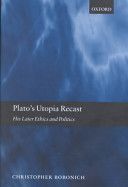
Plato’s Utopia Recast is an illuminating reappraisal of Plato’s later works, which reveals radical changes in his ethical and political theory. Christopher Bobonich examines later dialogues, with a special emphasis upon the Laws, and argues that in these late works, Plato both rethinks and revises the basic ethical and political positions that he held in his better-known earlier works, such as the Republic. This book will change our understanding of Plato. His controversial moral and political theory, so influential in Western thought, will henceforth be seen in a new light.
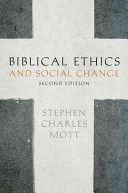
This scholarly synthesis of biblical studies and Christian social ethics is designed to provide a biblical argument for intentional institutional change on behalf of social justice. Stephen Charles Mott provides a biblical and ethical guide on ways to implement that change.The first part of the book, providing the biblical theology of intentional social change, deals with the central concepts in biblical and theological ethics: grace, evil, love, justice, and the Reign of God. Christian social change must be rooted not only in justice, but in the grace received through the death and resurrection of Christ. The second part evaluates ethical and theological methods for carrying out that intentional social change. It offers a study of evangelism, counter community, civil disobedience, armed revolution, and political reform. It shows the contribution of each as well as the strong limitations of each used in isolation.A recurring theme of the book is the scriptural insistence on the priority of justice as taking upon oneself the cause of the oppressed. Justice is understood on bringing back into the community those who are near to falling out of it. Political authority has a vital role in social change for justice. It is essential that a Christian use all available and legitimate means of meeting basic needs by providing for all what is essential for inclusion in society.In this revised edition, Mott updates the contemporary illustrations and includes his own further reflections in the last thirty years on this topic.
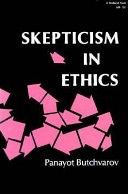
Through thorough metaphysical, epistemological, and phenomenological investigation, Butchvarov develops a substantive ethical theory that withstands the challenge of moral skepticism. In rich detail he traces the roots of his theory to classical Greek and medieval ethics, twentieth-century British intuitionism, and continental phenomenology.
ما از اخلاق چه انتظاری داریم؟ این سوال شاید تاحدودی برای عموم مردم و یا متخصصان این رشته قابل پاسخ باشد؛ اینکه خوب بودن را به ما بیاموزد و در تنظیم روابط فردی م...

جشن کتاب تهران به ایستگاه سی و یکم رسیده است. حال و احوال نشر کتاب خوب نیست و باید فرهنگدوستان را به خرید و هدیه دادن کتاب ترغیب نمود. خانه اخلاقپژوهان جوان ب...

بنیاد کتابهای اخلاق اسلامی عمدتا پالایش جان از آلودگیها و آراستن آن به زیباییها است. اندیشه محوری این قبیل کتابها آن است که انسان فعلی آنی نیست که باید باشد...

-
0 Comments