Notice: تابع WP_Block_Type_Registry::register به طورنادرست فراخوانی شد. نامهای نوع بلوک نباید حروف بزرگ داشته باشند. لطفاً برای اطلاعات بیشتر، اشکال زدایی در وردپرس را مشاهده کنید. (این پیام در نگارش 5.0.0 افزوده شده است.) in /home/ethicsho/public_html/wp-includes/functions.php on line 5313
Warning: Use of undefined constant TDC_PATH_LEGACY - assumed 'TDC_PATH_LEGACY' (this will throw an Error in a future version of PHP) in /home/ethicsho/public_html/wp-content/plugins/td-composer/td-composer.php on line 109
Warning: Use of undefined constant TDSP_THEME_PATH - assumed 'TDSP_THEME_PATH' (this will throw an Error in a future version of PHP) in /home/ethicsho/public_html/wp-content/plugins/td-composer/td-composer.php on line 113 بایگانیهای BJ1251 .B47 1990 - خانه اخلاق پژوهان جوان Notice: Trying to access array offset on value of type bool in /home/ethicsho/public_html/wp-content/plugins/wp-ulike/inc/general-functions.php on line 807
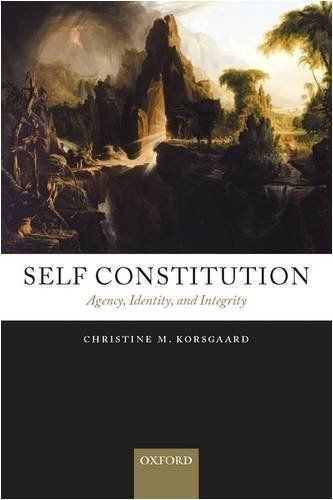
Christine M. Korsgaard presents an account of the foundation of practical reason and moral obligation. Moral philosophy aspires to understand the fact that human actions, unlike the actions of the other animals, can be morally good or bad, right or wrong. Few moral philosophers, however, have exploited the idea that actions might be morally good or bad in virtue of being good or bad of their kind – good or bad as actions. Just as we need to know that it is the function of the heart to pump blood to know that a good heart is one that pumps blood successfully, so we need to know what the function of an action is in order to know what counts as a good or bad action. Drawing on the work of Plato, Aristotle, and Kant, Korsgaard proposes that the function of an action is to constitute the agency and therefore the identity of the person who does it. As rational beings, we are aware of, and therefore in control of, the principles that govern our actions. A good action is one that constitutes its agent as the autonomous and efficacious cause of her own movements. These properties correspond, respectively, to Kant’s two imperatives of practical reason. Conformity to the categorical imperative renders us autonomous, and conformity to the hypothetical imperative renders us efficacious. And in determining what effects we will have in the world, we are at the same time determining our own identities. Korsgaard develops a theory of action and of interaction, and of the form interaction must take if we are to have the integrity that, she argues, is essential for agency. On the basis of that theory, she argues that only morally good action can serve the function of action, which is self-constitution.
This exceptional book examines and explains Plato’s answer to the normative question, “How ought we to live?” It discusses Plato’s conception of the virtues; his views about the connection between the virtues and happiness; and the account of reason, desire, and motivation that underlies his arguments about the virtues. Plato’s answer to the epistemological question, “How can we know how we ought to live?” is also discussed. His views on knowledge, belief, and inquiry, and his theory of Forms, are examined, insofar as they are relevant to his ethical view. Terence Irwin traces the development of Plato’s moral philosophy, from the Socratic dialogues to its fullest exposition in the Republic. Plato’s Ethics discusses Plato’s reasons for abandoning or modifying some aspects of Socratic ethics, and for believing that he preserves Socrates’ essential insights. A brief and selective discussion of the Statesmen, Philebus, and Laws is included. Replacing Irwin’s earlier Plato’s Moral Theory (Oxford, 1977), this book gives a clearer and fuller account of the main questions and discusses some recent controversies in the interpretation of Plato’s ethics. It does not presuppose any knowledge of Greek or any extensive knowledge of Plato.
“Epistemology had to come to terms with “the social” on two different occasions. The first was represented by the dispute about the epistemological status of the “social” sciences, and in this case the already well established epistemology of the natural sciences seemed to have the right to dictate the conditions for a discipline to be a science. But the social sciences could successfully vindicate the legitimacy of their specific criteria for scientificity. More recently, the impact of social factors on the construction of our knowledge (including scientific knowledge) has reversed … the old position and promoted social inquiry to the role of a criterion for evaluating the purport of cognitive (including scientific) statements”–P. 4 of cover.
ما از اخلاق چه انتظاری داریم؟ این سوال شاید تاحدودی برای عموم مردم و یا متخصصان این رشته قابل پاسخ باشد؛ اینکه خوب بودن را به ما بیاموزد و در تنظیم روابط فردی م...

جشن کتاب تهران به ایستگاه سی و یکم رسیده است. حال و احوال نشر کتاب خوب نیست و باید فرهنگدوستان را به خرید و هدیه دادن کتاب ترغیب نمود. خانه اخلاقپژوهان جوان ب...

بنیاد کتابهای اخلاق اسلامی عمدتا پالایش جان از آلودگیها و آراستن آن به زیباییها است. اندیشه محوری این قبیل کتابها آن است که انسان فعلی آنی نیست که باید باشد...

-
0 Comments