Notice: تابع WP_Block_Type_Registry::register به طورنادرست فراخوانی شد. نامهای نوع بلوک نباید حروف بزرگ داشته باشند. لطفاً برای اطلاعات بیشتر، اشکال زدایی در وردپرس را مشاهده کنید. (این پیام در نگارش 5.0.0 افزوده شده است.) in /home/ethicsho/public_html/wp-includes/functions.php on line 5313
Warning: Use of undefined constant TDC_PATH_LEGACY - assumed 'TDC_PATH_LEGACY' (this will throw an Error in a future version of PHP) in /home/ethicsho/public_html/wp-content/plugins/td-composer/td-composer.php on line 109
Warning: Use of undefined constant TDSP_THEME_PATH - assumed 'TDSP_THEME_PATH' (this will throw an Error in a future version of PHP) in /home/ethicsho/public_html/wp-content/plugins/td-composer/td-composer.php on line 113 بایگانیهای B809.13 .S44 2001 - خانه اخلاق پژوهان جوان Notice: Trying to access array offset on value of type bool in /home/ethicsho/public_html/wp-content/plugins/wp-ulike/inc/general-functions.php on line 807
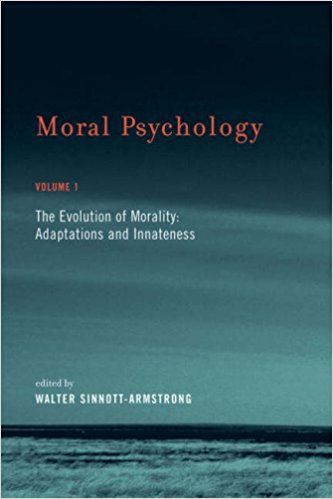
For much of the twentieth century, philosophy and science went their separate ways. In moral philosophy, fear of the so-called naturalistic fallacy kept moral philosophers from incorporating developments in biology and psychology. Since the 1990s, however, many philosophers have drawn on recent advances in cognitive psychology, brain science, and evolutionary psychology to inform their work. This collaborative trend is especially strong in moral philosophy, and these three volumes bring together some of the most innovative work by both philosophers and psychologists in this emerging interdisciplinary field.Contributors to Volume 1:William Casebeer (Air Force Academy), Leda Cosmides (University of California, Santa Barbara), Oliver Curry (London School of Economics), Michael Dietrich (Dartmouth College), Catherine Driscoll (North Carolina State University), Susan Dwyer (University of Maryland, Baltimore County), Owen Flanagan (Duke University), Gilbert Harman (Princeton University), Richard Joyce (Australian National University Research School of Social Science), Debra Lieberman (University of Hawaii), Ron Mallon (University of Utah), John Mikhail (Georgetown Law School), Geoffrey Miller (University of New Mexico), Jesse Prinz (University of North Carolina at Chapel Hill), Peter Railton (University of Michigan), Michael Ruse (Florida State University) Hagop Sarkissian (Duke University), Walter Sinnott-Armstrong (Dartmouth College), Chandra Sekhar Sripada (University of Michigan) Valerie Tiberius (University of Minnesota), John Tooby (University of California, Santa Barbara), Peter Tse (Dartmouth College) Kathleen Wallace (Hofstra University), Arthur Wolf (Stanford University), David Wong (Duke University).
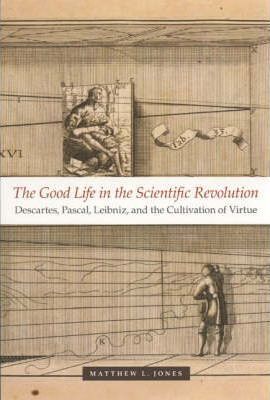
Amid the unrest, dislocation, and uncertainty of seventeenth-century Europe, readers seeking consolation and assurance turned to philosophical and scientific books that offered ways of conquering fears and training the mind—guidance for living a good life. The Good Life in the Scientific Revolution presents a triptych showing how three key early modern scientists, René Descartes, Blaise Pascal, and Gottfried Leibniz, envisioned their new work as useful for cultivating virtue and for pursuing a good life. Their scientific and philosophical innovations stemmed in part from their understanding of mathematics and science as cognitive and spiritual exercises that could create a truer mental and spiritual nobility. In portraying the rich contexts surrounding Descartes’ geometry, Pascal’s arithmetical triangle, and Leibniz’s calculus, Matthew L. Jones argues that this drive for moral therapeutics guided important developments of early modern philosophy and the Scientific Revolution.
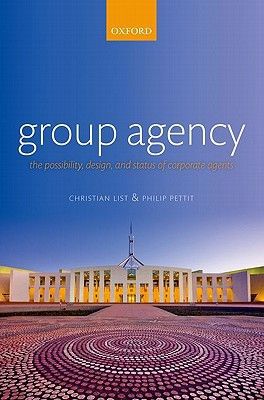
Are companies, churches, and states genuine agents? Or are they just collections of individuals that give a misleading impression of unity? This question is important, since the answer dictates how we should explain the behaviour of these entities and whether we should treat them as responsible and accountable on the model of individual agents. Group Agency offers a new approach to that question and is relevant, therefore, to a range of fields from philosophy to law, politics, and the social sciences. Christian List and Philip Pettit argue that there really are group or corporate agents, over and above the individual agents who compose them, and that a proper approach to the social sciences, law, morality, and politics must take account of this fact. Unlike some earlier defences of group agency, their account is entirely unmysterious in character and, despite not being technically difficult, is grounded in cutting-edge work in social choice theory, economics, and philosophy.
Crispin Wright’s Truth and Objectivity brought about a far-reaching reorientation of the metaphysical debates concerning realism and truth. The essays in this companion volume prefigure, elaborate, or defend the proposals put forward in that landmark work. The collection includes the Gareth Evans memorial lecture in which the program of Truth and Objectivity was first announced, as well as all of Wright’s published reactions to the extensive commentary his study provoked; it presents substantial new developments and applications of the pluralistic outlook on the realism debates proposed in Truth and Objectivity, and further pursues its distinctive minimalist conceptions of truth and of truth-aptitude. Among the papers are important discussions of coherence conceptions of truth, of Hilary Putnam’s most recent views on truth, and of the classical debate between correspondence, coherence, pragmatism, and deflationary conceptions of the notion. Others are concerned with Kripke’s famous argument against physicalist conceptions of sensation; the distinction between minimal truth-aptitude and cognitive command; a novel prospectus for a philosophy of vagueness; and a new proposal about the most resilient interpretation of relativism.
ما از اخلاق چه انتظاری داریم؟ این سوال شاید تاحدودی برای عموم مردم و یا متخصصان این رشته قابل پاسخ باشد؛ اینکه خوب بودن را به ما بیاموزد و در تنظیم روابط فردی م...

جشن کتاب تهران به ایستگاه سی و یکم رسیده است. حال و احوال نشر کتاب خوب نیست و باید فرهنگدوستان را به خرید و هدیه دادن کتاب ترغیب نمود. خانه اخلاقپژوهان جوان ب...

بنیاد کتابهای اخلاق اسلامی عمدتا پالایش جان از آلودگیها و آراستن آن به زیباییها است. اندیشه محوری این قبیل کتابها آن است که انسان فعلی آنی نیست که باید باشد...

-
0 Comments