Notice: تابع WP_Block_Type_Registry::register به طورنادرست فراخوانی شد. نامهای نوع بلوک نباید حروف بزرگ داشته باشند. لطفاً برای اطلاعات بیشتر، اشکال زدایی در وردپرس را مشاهده کنید. (این پیام در نگارش 5.0.0 افزوده شده است.) in /home/ethicsho/public_html/wp-includes/functions.php on line 5313
Warning: Use of undefined constant TDC_PATH_LEGACY - assumed 'TDC_PATH_LEGACY' (this will throw an Error in a future version of PHP) in /home/ethicsho/public_html/wp-content/plugins/td-composer/td-composer.php on line 109
Warning: Use of undefined constant TDSP_THEME_PATH - assumed 'TDSP_THEME_PATH' (this will throw an Error in a future version of PHP) in /home/ethicsho/public_html/wp-content/plugins/td-composer/td-composer.php on line 113 بایگانیهای B808.5 .A52 2001 - خانه اخلاق پژوهان جوان Notice: Trying to access array offset on value of type bool in /home/ethicsho/public_html/wp-content/plugins/wp-ulike/inc/general-functions.php on line 807
This book is an investigation into the descriptive task of moral philosophy. Nora Hèamèalèainen explores the challenge of providing rich and accurate pictures of the moral conditions, values, virtues, and norms under which people live and have lived, along with relevant knowledge about the human animal and human nature. While modern moral philosophy has focused its energies on normative and metaethical theory, the task of describing, uncovering, and inquiring into moral frameworks and moral practices has mainly been left to social scientists and historians. Nora Hèamèalèainen argues that this division of labour has detrimental consequences for moral philosophy and that a reorientation toward descriptive work is needed in moral philosophy. She traces resources for a descriptive philosophical ethics in the work of four prominent philosophers of the twentieth century: John Dewey, Ludwig Wittgenstein, Michel Foucault, and Charles Taylor, while also calling on thinkers inspired by them. Nora Hèamèalèainen is Associate Professor (docent) in philosophy at the University of Helsinki, Finland. She is the author ofLiterature and Moral Theory and has co-edited the volume Language, Ethics and Animal Life — Wittgenstein and Beyond (with Niklas Forsberg and Mikel Burley).
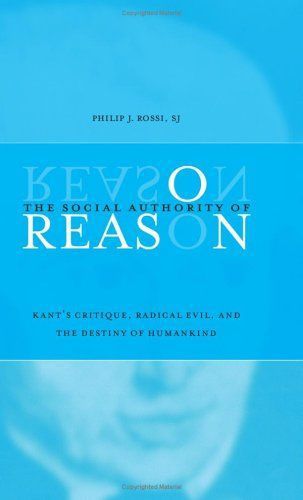
In “The Social Authority of Reason, Philip J. Rossi, SJ argues that the current cultural milieu of globalization is strikingly reflective of the human condition appraised by kant, in which mutual social interaction for human good is hamstrung by our contentious “unsociable sociability.” He situates the paradoxical nature of contemporary society–“its opportunities for deepening the bonds of our common human mutuality along with its potential for enlarging the fissures that arise from our human differences–“in the context of Kant’s notion of radical evil. As a corrective, Rossi proposes that we draw upon the social charcater of Kant’s critique of reason, which offers a communal trajectory for human moral effort and action. This trajectory still has power to open the path to what Kant called “the highest political good”–“lasting peace among nations.
Intelligent Virtue presents a distinctive new account of virtue and happiness as central ethical ideas. Annas argues that exercising a virtue involves practical reasoning of a kind which can illuminatingly be compared to the kind of reasoning we find in someone exercising a practical skill. Rather than asking at the start how virtues relate to rules, principles, maximizing, or a final end, we should look at the way in which the acquisition and exercise of virtue can be seen to be in many ways like the acquisition and exercise of more mundane activities, such as farming, building or playing the piano. This helps us to see virtue as part of an agent’s happiness or flourishing, and as constituting (wholly, or in part) that happiness. We are offered a better understanding of the relation between virtue as an ideal and virtue in everyday life, and the relation between being virtuous and doing the right thing.
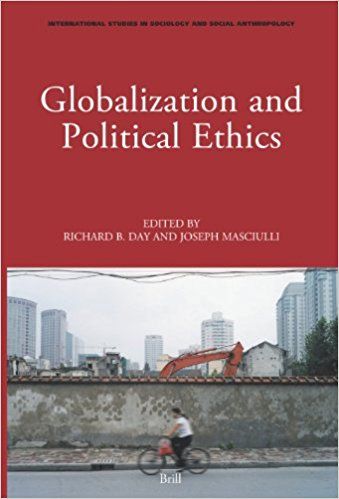
Rational exercise of our responsibility requires us to relate the globalization process to the ends and purposes that properly befit human life and human community. Economic ‘ends’ are merely the ‘means’ to ends of a higher order, which can only be specified in terms of moral duty and ethical purpose. The contributors to this book explore political-ethical issues of globalization, including terrorism, institutional change and distribution in the world economy, the role of the United Nations and international financial institutions, the regimes of international trade and technology transfer, the effects of regionalism in the European Union and the Association of Southeast Asian Nations, the failure of Russia, human rights enforcement in Africa, and the prospects for global governance. This book was originally published as Volume 4 no. 3-4 (2005) of Brill’s journal “Perspectives on Global Development and Technology,”
ما از اخلاق چه انتظاری داریم؟ این سوال شاید تاحدودی برای عموم مردم و یا متخصصان این رشته قابل پاسخ باشد؛ اینکه خوب بودن را به ما بیاموزد و در تنظیم روابط فردی م...

جشن کتاب تهران به ایستگاه سی و یکم رسیده است. حال و احوال نشر کتاب خوب نیست و باید فرهنگدوستان را به خرید و هدیه دادن کتاب ترغیب نمود. خانه اخلاقپژوهان جوان ب...

بنیاد کتابهای اخلاق اسلامی عمدتا پالایش جان از آلودگیها و آراستن آن به زیباییها است. اندیشه محوری این قبیل کتابها آن است که انسان فعلی آنی نیست که باید باشد...

-
0 Comments