Notice: تابع WP_Block_Type_Registry::register به طورنادرست فراخوانی شد. نامهای نوع بلوک نباید حروف بزرگ داشته باشند. لطفاً برای اطلاعات بیشتر، اشکال زدایی در وردپرس را مشاهده کنید. (این پیام در نگارش 5.0.0 افزوده شده است.) in /home/ethicsho/public_html/wp-includes/functions.php on line 5313
Warning: Use of undefined constant TDC_PATH_LEGACY - assumed 'TDC_PATH_LEGACY' (this will throw an Error in a future version of PHP) in /home/ethicsho/public_html/wp-content/plugins/td-composer/td-composer.php on line 109
Warning: Use of undefined constant TDSP_THEME_PATH - assumed 'TDSP_THEME_PATH' (this will throw an Error in a future version of PHP) in /home/ethicsho/public_html/wp-content/plugins/td-composer/td-composer.php on line 113 بایگانیهای B56 .F35 2005 - خانه اخلاق پژوهان جوان Notice: Trying to access array offset on value of type bool in /home/ethicsho/public_html/wp-content/plugins/wp-ulike/inc/general-functions.php on line 807
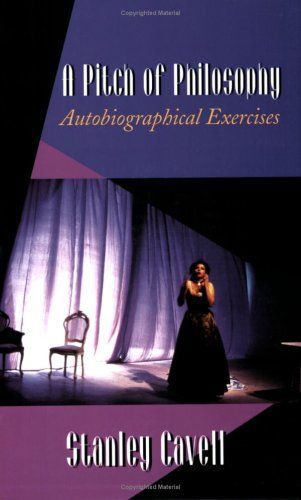
What is the pitch of philosophy? Something thrown, for us to catch? A lurch, meant to unsettle us? The relative position of a tone on a scale? A speech designed to persuade? This book is an invitation to the life of philosophy in the United States, as Emerson once lived it and as Stanley Cavell now lives it – in all its topographical ambiguity. Cavell talks about his vocation in connection with what he calls voice – the tone of philosophy – and his right to take that tone, and to describe an anecdotal journey toward the discovery of his own voice. Cavell asks how the voice of philosophy can be heard amid the commerce of everyday life. His autobiographical exercises begin at home with his parents, his father an accidental pawnbroker and accomplished raconteur, his mother a trained and talented musician. In the course of showing us his certain steps in the discovery of his trade, he conveys the sense of what it means to learn to walk on one’s own, with a Thoreauvian deliberateness. He pays suitableattention to a serious ally and antagonist to the task of philosophy as he understands it, namely, Jacques Derrida – yet Derrida has mounted a full-scale attack on “voice” and other concepts that Cavell has held open for much of a lifetime. The chapters are interwoven with intense family reminiscences in Cavell’s discovery of J. L. Austin, his understanding of Wittgenstein, his raising of Emerson to the philosophical canon, his fascination with film (images of women in a medium for women), the revelation that film and opera are the media of otherness for women. And the voice at the end: hearing in himself the voice of his mother, which is music. Complex, sentimental, witty, A Pitch ofPhilosophy is for anyone who cares to take on philosophy, under whatever name it goes.
Purchase of this book includes free trial access to www.million-books.com where you can read more than a million books for free. This is an OCR edition with typos. Excerpt from book: CHAPTER III. ON QUALITY OF PLEASURE. I Alluded in the last chapter to the two great unsettled questions, to what degree happiness is different for different people, and how far it is in each man’s own power for himself. Both these questions concern the subject of this chapter. If happiness is different for different people, how far ought it to be so ? And how far can we raise the character of our happiness ? There is perhaps a disposition in our age to accept A morality jTi i iT ofhappi- a morality of happiness as better, more like what we ness, espe- expect morality to be, than one of rule: such a hoi,,1 morality may take the form of a utilitarianism recog- rj;e nizing different kinds of pleasures, some worthier and is more c- more to be striven after than others. Religion too than’a mo- has not unfrequently shown itself more in harmony i1ety of with the moral philosophy which speaks much of happiness than with that which speaks much of law. And though it is true that when religion has spoken the language of bare utilitarianism, as in Paley, it has not much commended itself to real human feeling: still when it is presented to us not only as conformable to our desire, but also as what is to regulate our desire, uniting with its promises to make us happy a call upon us for effort after a worthy happiness, and elevation of our idea of happiness (as we are told on the one hand that the ways of religion are pleasantness and her paths peace, while on the other hand we pray that we may love that which God commands and desire that he promises); the morality which is thus proposed to us has charms in our view which do not belong to a morality of rule. But this But then it is to be observed that this more at- worthiness tractive form of utilitarianism involves …
“Aristotle’s Ethics develops a complex theory of the qualities which make for a good human being and for several decades there has been intense discussion about whether Aristotle’s theory of voluntariness, outlined in the Ethics, actually delineates what modern thinkers would recognize as a theory of moral responsibility. Javier Echeñique presents a novel account of Aristotle’s discussion of voluntariness in the Ethics, arguing – against the interpretation by Arthur Adkins and that inspired by Peter Strawson – that he developed an original and compelling theory of moral responsibility and that this theory has contributed in important ways to our understanding of coercion, ignorance and violence. His study will be valuable for a wide range of readers interested in Aristotle and in ancient ethics more broadly”–
This remarkable book is the most comprehensive study ever written of the history of moral philosophy in the seventeenth and eighteenth centuries. Its aim is to set Kant’s still influential ethics in its historical context by showing in detail what the central questions in moral philosophy were for him and how he arrived at his own distinctive ethical views. The book is organised into four main sections, each exploring moral philosophy by discussing the work of many influential philosophers of the seventeenth and eighteenth centuries. In an epilogue the author discusses Kant’s view of his own historicity, and of the aims of moral philosophy. In its range, in its analyses of many philosophers not discussed elsewhere, and in revealing the subtle interweaving of religious and political thought with moral philosophy, this is an unprecedented account of the evolution of Kant’s ethics.
ما از اخلاق چه انتظاری داریم؟ این سوال شاید تاحدودی برای عموم مردم و یا متخصصان این رشته قابل پاسخ باشد؛ اینکه خوب بودن را به ما بیاموزد و در تنظیم روابط فردی م...

جشن کتاب تهران به ایستگاه سی و یکم رسیده است. حال و احوال نشر کتاب خوب نیست و باید فرهنگدوستان را به خرید و هدیه دادن کتاب ترغیب نمود. خانه اخلاقپژوهان جوان ب...

بنیاد کتابهای اخلاق اسلامی عمدتا پالایش جان از آلودگیها و آراستن آن به زیباییها است. اندیشه محوری این قبیل کتابها آن است که انسان فعلی آنی نیست که باید باشد...

-
0 Comments