Notice: تابع WP_Block_Type_Registry::register به طورنادرست فراخوانی شد. نامهای نوع بلوک نباید حروف بزرگ داشته باشند. لطفاً برای اطلاعات بیشتر، اشکال زدایی در وردپرس را مشاهده کنید. (این پیام در نگارش 5.0.0 افزوده شده است.) in /home/ethicsho/public_html/wp-includes/functions.php on line 5313
Warning: Use of undefined constant TDC_PATH_LEGACY - assumed 'TDC_PATH_LEGACY' (this will throw an Error in a future version of PHP) in /home/ethicsho/public_html/wp-content/plugins/td-composer/td-composer.php on line 109
Warning: Use of undefined constant TDSP_THEME_PATH - assumed 'TDSP_THEME_PATH' (this will throw an Error in a future version of PHP) in /home/ethicsho/public_html/wp-content/plugins/td-composer/td-composer.php on line 113 بایگانیهای B2949.E8 .P47 2008 - خانه اخلاق پژوهان جوان Notice: Trying to access array offset on value of type bool in /home/ethicsho/public_html/wp-content/plugins/wp-ulike/inc/general-functions.php on line 807
The Phenomenology of Spirit was Hegel’s grandest experiment, changing our vision of the world and the very nature of philosophical enterprise. In this book, Solomon captures the bold and exhilarating spirit, presenting the Phenomenology as a thoroughly personal as well as philosophical work. He begins with a historical introduction, which lays the groundwork for a section-by-section analysis of the Phenomenology. Both the initiated and readers unacquainted with the intricacies of German idealism will find this to be an accessible and exciting introduction to this great philosopher’s monumental work.
What does it mean to lead a moral life? In her first extended study of moral philosophy, Judith Butler offers aprovocative outline for a new ethical practice–one responsive to the need for critical autonomy and grounded in a new sense of the human subject. Butler takes as her starting point one’s ability to answer the questions ocirc;What have I done?ouml; and ocirc;What ought I to do?ouml; She shows that these question can be answered only by asking a prior question, ocirc;Who is this aelig;I’ who is under an obligation to give an account of itself and to act in certain ways?ouml; Because I find that I cannot give an account of myself without accounting for the social conditions under which I emerge, ethical reflection requires a turn to social theory. In three powerfully crafted and lucidly written chapters, Butler demonstrates how difficult it is to give an account of oneself, and how this lack of self-transparency and narratibility is crucial to an ethical understanding of the human. In brilliant dialogue with Adorno, Levinas, Foucault, and other thinkers, she eloquently argues the limits, possibilities, and dangers of contemporary ethical thought. Butler offers a critique of the moral self, arguing that the transparent, rational, and continuous ethical subject is an impossible construct that seeks to deny the specificity of what it is to be human. We can know ourselves only incompletely, and only in relation to a broader social world that has always preceded us and already shaped us in ways we cannot grasp. If inevitably we are partially opaque to ourselves, how can giving an account of ourselves define the ethical act? And doesn’t an ethical system that holds us impossibly accountable for full self-knowledge and self-consistency inflict a kind of psychic violence, leading to a culture of self-beratement and cruelty? How does the turn to social theory offer us a chance to understand the specifically social character of our own unknowingness about ourselves? In this invaluable book, by recasting ethics as a project in which being ethical means becoming critical of norms under which we are asked to act, but which we can never fully choose, Butler illuminates what it means for us as ocirc;fallible creaturesouml; to create and share an ethics of vulnerability, humility, and ethical responsiveness.
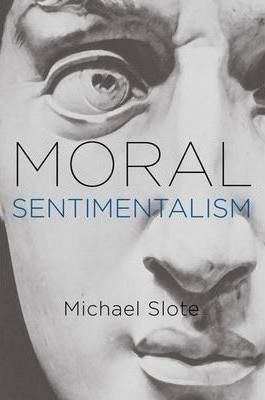
There has recently been a good deal of interest in moral sentimentalism, but most of that interest has been exclusively either in meta-ethical questions about the meaning of moral terms or in normative issues about benevolence and/or caring and their place in morality. In Moral Sentimentalism Michael Slote attempts to deal with both sorts of issues and to do so, primarily, in terms of the notion or phenomenon of empathy. Hume sought to do something like this over two centuries ago, though he didn’t have the term “empathy” and used “sympathy” instead. Slote therefore attempts to give moral sentimentalism a second wind. By relying so systematically on empathy in its account of normative morality and in what it has to say about the meaning of moral vocabulary, Slote offers a unified overall ethical picture that can then be tested against ethical rationalism. Rationalism has recently dominated the scene in ethics, but by showing how sentimentalism can make coherent and intuitive sense of such preferred rationalist notions as autonomy, respect, and justice-and by showing how a sentimentalism based in empathy can deal with ethically significant aspects of the moral life that rationalism tends to ignore or skimp on-Slote hopes a wider and more active debate between rationalism and sentimentalism can be set in motion. There are signs that sentimentalist modes of thought are gaining new footholds on the way ethics is done, and this new book is very hopeful about these possibilities.
ما از اخلاق چه انتظاری داریم؟ این سوال شاید تاحدودی برای عموم مردم و یا متخصصان این رشته قابل پاسخ باشد؛ اینکه خوب بودن را به ما بیاموزد و در تنظیم روابط فردی م...

جشن کتاب تهران به ایستگاه سی و یکم رسیده است. حال و احوال نشر کتاب خوب نیست و باید فرهنگدوستان را به خرید و هدیه دادن کتاب ترغیب نمود. خانه اخلاقپژوهان جوان ب...

بنیاد کتابهای اخلاق اسلامی عمدتا پالایش جان از آلودگیها و آراستن آن به زیباییها است. اندیشه محوری این قبیل کتابها آن است که انسان فعلی آنی نیست که باید باشد...

-
0 Comments