Notice: تابع WP_Block_Type_Registry::register به طورنادرست فراخوانی شد. نامهای نوع بلوک نباید حروف بزرگ داشته باشند. لطفاً برای اطلاعات بیشتر، اشکال زدایی در وردپرس را مشاهده کنید. (این پیام در نگارش 5.0.0 افزوده شده است.) in /home/ethicsho/public_html/wp-includes/functions.php on line 5313
Warning: Use of undefined constant TDC_PATH_LEGACY - assumed 'TDC_PATH_LEGACY' (this will throw an Error in a future version of PHP) in /home/ethicsho/public_html/wp-content/plugins/td-composer/td-composer.php on line 109
Warning: Use of undefined constant TDSP_THEME_PATH - assumed 'TDSP_THEME_PATH' (this will throw an Error in a future version of PHP) in /home/ethicsho/public_html/wp-content/plugins/td-composer/td-composer.php on line 113 بایگانیهای B1499.E8 .H84 2009 - خانه اخلاق پژوهان جوان Notice: Trying to access array offset on value of type bool in /home/ethicsho/public_html/wp-content/plugins/wp-ulike/inc/general-functions.php on line 807
Christine Korsgaard has become one of the leading interpreters of Kants moral philosophy. She is identified with a small group of philosophers who are intent on producing a version of Kants moral philosophy that is at once sensitive to its historical roots while revealing its particular relevance to contemporary problems. She rejects the traditional picture of Kants ethics as a cold vision of the moral life which emphasises duty at the expense of love and value. Rather, Kants work is seen as providing a resource for addressing not only the metaphysics of morals, but also for tackling practical questions about personal relations, politics, and everyday human interaction. This collection contains some of the finest current work on Kants ethics and will command the attention of all those involved in teaching and studying moral theory.
Virtue ethics has attracted a lot of attention over the past few decades, and more recently there has been considerable interest in virtue epistemology as an alternative to traditional approaches in that field. Ironically, although virtue epistemology got its inspiration from virtue ethics, this is the first book that brings virtue epistemologists and virtue ethicists together to contribute their particular expertise, and the first that is devoted to the topic of intellectual virtue. All new and right up to date, the papers collected here by Zagzebski and DePaul demonstrate the benefit of each branch of philosophy to the other. Intellectual Virtue will be required reading for anyone working in either field.
Advances in genetics research, largely, though not entirely, spawned by the Human Genome Project, have led to a broad array of new technologies that promise to revolutionize life as we have known it. Medicine and agriculture are already starting to utilize new technologies to greatly improve disease prevention and treatment and food production. Yet, these “improvements” often raise ethical questions that are not easy to untangle. Some have gone as far to as to argue that certain applications, such as embryonic stem cell research, threaten the very fiber of our moral compass. While the application of scientific advances to better mankind has always raised thorny ethical issues, the ethical impact of genetic advances arguably reaches a new height because the applicability of advances is exceptionally broad, deep, and potentially irreversible. To utilize such technologies could mean saving thousands of lives, but where and how do we draw the line? Here, Barash sheds light on the actual ethical concerns surrounding various types of genetic technologies, introducing readers to the competing issues at stake in the arguments about the scientific application of the new technologies available and those on the horizon. She begins by illustrating the history of genetic advances, their societal applications, and the ethical issues that have arisen from those applications. Using case studies and examples throughout, she walks readers through the various considerations involved in a variety of areas related to the application of genetic technologies currently available and possible in the future. Covering topics ranging from stem cell research to genetically modified food, genetic mapping to cloning, this book offers a thoughtful approach to the complex issues at play in the various fields of genetic technologies.
This is a revised edition of Walker’s well-known book in feminist ethics first published in 1997. Walker’s book proposes a view of morality and an approach to ethical theory which uses the critical insights of feminism and race theory to rethink the epistemological and moral position of the ethical theorist, and how moral theory is inescapably shaped by culture and history. The main gist of her book is that morality is embodied in “practices of responsibility” that express our identities, values, and connections to others in socially patterned ways. Thus ethical theory needs to be empirically informed and politically critical to avoid reiterating forms of socially entrenched bias. Responsible ethical theory should reveal and question the moral significance of social differences. The book engages with, and challenges, the work of contemporary analytic philosophers in ethics.
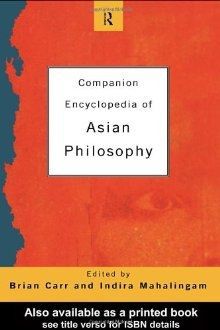
TheCompanion Encyclopedia of Asian Philosophyis a unique one-volume reference work which will make a broad range of richly varied philosophical, ethical and theological traditions accessible to a wide audience. TheEncyclopediais divided into 6 sections, each of which covers a specific tradition within Asian philosophy includingZoroastrianorPersian,Indian,Buddhist,Chinese,JapaneseandIslamic. Within each section the chapters cover such important areas as origins of the tradition, approaches to logic and language, positions on morals and society as well as histories of the lives of influential thinkers. In addition, the final chapter of each section provides unique coverage of current trends in each. The individual essays as well as the structure of this volume allow the reader to compare and contrast the philosophies of these cultures as well as understand the ways in which the cultures have shapedand been shaped by philosophical understanding. It is possible, for example, to relate the ways in which Buddhist philosophy has developed in India, Tibet, China, South-East Asia and Japan.
ما از اخلاق چه انتظاری داریم؟ این سوال شاید تاحدودی برای عموم مردم و یا متخصصان این رشته قابل پاسخ باشد؛ اینکه خوب بودن را به ما بیاموزد و در تنظیم روابط فردی م...

جشن کتاب تهران به ایستگاه سی و یکم رسیده است. حال و احوال نشر کتاب خوب نیست و باید فرهنگدوستان را به خرید و هدیه دادن کتاب ترغیب نمود. خانه اخلاقپژوهان جوان ب...

بنیاد کتابهای اخلاق اسلامی عمدتا پالایش جان از آلودگیها و آراستن آن به زیباییها است. اندیشه محوری این قبیل کتابها آن است که انسان فعلی آنی نیست که باید باشد...

-
0 Comments