Notice: تابع WP_Block_Type_Registry::register به طورنادرست فراخوانی شد. نامهای نوع بلوک نباید حروف بزرگ داشته باشند. لطفاً برای اطلاعات بیشتر، اشکال زدایی در وردپرس را مشاهده کنید. (این پیام در نگارش 5.0.0 افزوده شده است.) in /home/ethicsho/public_html/wp-includes/functions.php on line 5313
Warning: Use of undefined constant TDC_PATH_LEGACY - assumed 'TDC_PATH_LEGACY' (this will throw an Error in a future version of PHP) in /home/ethicsho/public_html/wp-content/plugins/td-composer/td-composer.php on line 109
Warning: Use of undefined constant TDSP_THEME_PATH - assumed 'TDSP_THEME_PATH' (this will throw an Error in a future version of PHP) in /home/ethicsho/public_html/wp-content/plugins/td-composer/td-composer.php on line 113 بایگانیهای B1348.E7 .W95 1991 - خانه اخلاق پژوهان جوان Notice: Trying to access array offset on value of type bool in /home/ethicsho/public_html/wp-content/plugins/wp-ulike/inc/general-functions.php on line 807
Alasdair MacIntyre argues that Freud’s conception of the unconscious is complicated by his tendency to use the term in two different ways. MacIntyre shows how Freud uses the term “unconscious” both as a straightforward description of psychological phenomena, and as an evaluative notion to explain the links between childhood events and adult behavior. This clarification helps to shed light on the many misunderstandings of psychoanalysis, and to separate out what is and what is not of lasting value in Freud’s account of the unconscious. This new edition includes a substantial new preface by the author, in which he discusses repression, determinism, transference, and “practical rationality,” and offers a rare comparison of Aristotle and Lacan on the concept of desire. MacIntyre takes the opportunity to reflect both on the reviews and criticisms of the first edition and also on his own philosophical stance.
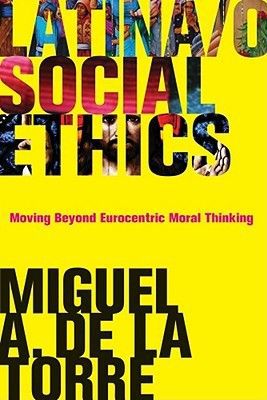
A groundbreaking corrective work, Latina/o Social Ethics strives to create a liberative ethical approach to the Hispanic experience by using its own tools and materials. First explaining why Eurocentric ethical paradigms are inadequate in their attempts to liberate oppressed communities, Miguel De La Torre looks with Hispanic eyes at three major ethicists of the twentieth century–Walter Rauschenbusch, Reinhold Niebuhr, and Stanley Hauerwas–and how ethics is presented in U.S. culture wars, from the Religious Right to the Religious Left. He deconstructs these ethical paradigms and demonstrates why all are detrimental to and irreconcilable with the Hispanic social location.With a clean slate, then, De La Torre moves to constructing a new Hispanic-centered ethical paradigm that is rooted in the Latino community way of being. Reviewing the field of Hispanic ethical thought, De La Torre pays special attention to specific concepts ripe with potential that have been developed over the past generation. In the final chapter, De La Torre offers his own constructive paradigm–an ethics para joder , which is rooted in the Latina/o experience, and by which, he argues, the Hispanic community can survive within U.S. culture.
“Two Books of the Elements of Universal Jurisprudence” was Pufendorf’s first work, published in 1660. Its appearance effectively inaugurated the modern natural-law movement in the German-speaking world. The work also established Pufendorf as a key figure and laid the foundations for his major works, which were to sweep across Europe and North America. ‘Elements of Universal Jurisprudence’ established Pufendorf’s political theory, which, when fully developed, became the most significant alternative to rights-based theories. Pufendorf rejected the concept of natural rights as liberties and the suggestion that political government is justified by its protection of such rights, arguing instead for a principled limit to the state’s role in human life. The Liberty Fund edition is based on the translation by William Abbott Oldfather prepared for the Classics of International Law series published by the Carnegie Endowment for International Peace.
ما از اخلاق چه انتظاری داریم؟ این سوال شاید تاحدودی برای عموم مردم و یا متخصصان این رشته قابل پاسخ باشد؛ اینکه خوب بودن را به ما بیاموزد و در تنظیم روابط فردی م...

جشن کتاب تهران به ایستگاه سی و یکم رسیده است. حال و احوال نشر کتاب خوب نیست و باید فرهنگدوستان را به خرید و هدیه دادن کتاب ترغیب نمود. خانه اخلاقپژوهان جوان ب...

بنیاد کتابهای اخلاق اسلامی عمدتا پالایش جان از آلودگیها و آراستن آن به زیباییها است. اندیشه محوری این قبیل کتابها آن است که انسان فعلی آنی نیست که باید باشد...

-
0 Comments