Notice: تابع WP_Block_Type_Registry::register به طورنادرست فراخوانی شد. نامهای نوع بلوک نباید حروف بزرگ داشته باشند. لطفاً برای اطلاعات بیشتر، اشکال زدایی در وردپرس را مشاهده کنید. (این پیام در نگارش 5.0.0 افزوده شده است.) in /home/ethicsho/public_html/wp-includes/functions.php on line 5313
Warning: Use of undefined constant TDC_PATH_LEGACY - assumed 'TDC_PATH_LEGACY' (this will throw an Error in a future version of PHP) in /home/ethicsho/public_html/wp-content/plugins/td-composer/td-composer.php on line 109
Warning: Use of undefined constant TDSP_THEME_PATH - assumed 'TDSP_THEME_PATH' (this will throw an Error in a future version of PHP) in /home/ethicsho/public_html/wp-content/plugins/td-composer/td-composer.php on line 113 بایگانیهای 9781782200697 - خانه اخلاق پژوهان جوان Notice: Trying to access array offset on value of type bool in /home/ethicsho/public_html/wp-content/plugins/wp-ulike/inc/general-functions.php on line 807
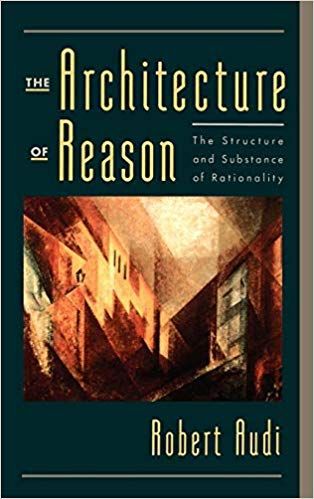
The literature on theoretical reason has been dominated by epistemological concerns, treatments of practical reason by ethical concerns. This book overcomes the limitations of dealing with each separately. It sets out a comprehensive theory of rationality applicable to both practical and theoretical reason. In both domains, Audi explains how experience grounds rationality, delineates the structure of central elements, and attacks the egocentric conception of rationality. He establishes the rationality of altruism and thereby supports major moral principles. The concluding part describes the pluralism and relativity his conception of rationality accommodates and, taking the unified account of theoretical and practical rationality in that light, constructs a theory of global rationality–the overall rationality of persons. Rich in narrative examples, intriguing analogies, and intuitively appealing arguments, this beautifully crafted book will spur advances in ethics and epistemology as well in philosophy of mind and action and the theory of rationality itself.
The dual-use dilemma arises in the context of research in the biological and other sciences as a consequence of the fact that one and the same piece of scientific research sometimes has the potential to be used for harmful as well as good purposes. Discoveries that may lead to important advances in science and medicine might therefore also facilitate development of biological weapons of mass destruction. Scientists should be aware of the ways in which their well-intentioned research could be misused by others – and they should sometimes avoid research projects when the potential for harmful misuse is great. Policy makers must make tough choices about the extent to which the dual-use nature of research might justify increased oversight, regulation, and perhaps even censorship of science. This book examines the kinds of life-science experiments that give rise to the dual-use dilemma and provides philosophical analysis of the ethical issues and policy options surrounding dual-use research. Though the dual-use dilemma is an ethical issue, the vast majority of literature on the topic thus far has been written by scientists and security experts: this is the first book-length treatment of the topic by professional ethicists. It also challenges, and offers an alternative perspective to, the hugely influential U.S. National Research Council position on the dual-use dilemma.
The Groundwork of the Metaphysics of Morals is Kant’s central contribution to moral philosophy, and has inspired controversy ever since it was first published in 1785. Kant champions the insights of ‘common human understanding’ against what he sees as the dangerous perversions of ethical theory. Morality is revealed to be a matter of human autonomy: Kant locates the source of the ‘categorical imperative’ within each and every human will. However, he also portrays everyday morality in a way that many readers find difficult to accept. The Groundwork is a short book, but its argument is dense, intricate and at times treacherous. This commentary explains Kant’s arguments paragraph by paragraph, and also contains an introduction, a synopsis of the argument, six short interpretative essays on key topics of the Groundwork, and a glossary of key terms. It will be an indispensable tool for anyone wishing to study the Groundwork in detail.
This narrative about two boys from different backgrounds touches on family, forgiveness, sport, and making peace with tragedy. Dan Snyder was not a sure thing in professional hockey, but defied expectations—playing for both the minor league’s Chicago Wolves and the NHL’s Atlanta Thrashers. Dany Heatley, on the other hand, had been tapped for success from the start as a college star and high draft pick. The two made an unlikely pair, but became friends. In September of 2003, the then 22-year-old Heatley lost control of his speeding Ferrari; Snyder was thrown from the vehicle and died six days later. The loss of their teammate, friend, and son sent those who knew Snyder looking for healing or revenge. As the legal story unfolds, so too does a story of forgiveness, rooted in the Canadian Mennonite tradition from which Snyder hailed. Snyder’s family, taking an approach to their loss dictated by their faith, chose to make peace with both Heatley and his parents. This story of forgiveness reveals a lesson in loss, hope, and peace in the face of tragedy.
Morals from Motives develops a virtue ethics inspired more by Hume and Hutcheson’s moral sentimentalism than by recently-influential Aristotelianism. It argues that a reconfigured and expanded “morality of caring” can offer a general account of right and wrong action as well as social justice. Expanding the frontiers of ethics, it goes on to show how a motive-based “pure” virtue theory can also help us to understand the nature of human well-being and practical reason.
ما از اخلاق چه انتظاری داریم؟ این سوال شاید تاحدودی برای عموم مردم و یا متخصصان این رشته قابل پاسخ باشد؛ اینکه خوب بودن را به ما بیاموزد و در تنظیم روابط فردی م...

جشن کتاب تهران به ایستگاه سی و یکم رسیده است. حال و احوال نشر کتاب خوب نیست و باید فرهنگدوستان را به خرید و هدیه دادن کتاب ترغیب نمود. خانه اخلاقپژوهان جوان ب...

بنیاد کتابهای اخلاق اسلامی عمدتا پالایش جان از آلودگیها و آراستن آن به زیباییها است. اندیشه محوری این قبیل کتابها آن است که انسان فعلی آنی نیست که باید باشد...

-
0 Comments