Notice: تابع WP_Block_Type_Registry::register به طورنادرست فراخوانی شد. نامهای نوع بلوک نباید حروف بزرگ داشته باشند. لطفاً برای اطلاعات بیشتر، اشکال زدایی در وردپرس را مشاهده کنید. (این پیام در نگارش 5.0.0 افزوده شده است.) in /home/ethicsho/public_html/wp-includes/functions.php on line 5313
Warning: Use of undefined constant TDC_PATH_LEGACY - assumed 'TDC_PATH_LEGACY' (this will throw an Error in a future version of PHP) in /home/ethicsho/public_html/wp-content/plugins/td-composer/td-composer.php on line 109
Warning: Use of undefined constant TDSP_THEME_PATH - assumed 'TDSP_THEME_PATH' (this will throw an Error in a future version of PHP) in /home/ethicsho/public_html/wp-content/plugins/td-composer/td-composer.php on line 113 بایگانیهای 9781572485907 - خانه اخلاق پژوهان جوان Notice: Trying to access array offset on value of type bool in /home/ethicsho/public_html/wp-content/plugins/wp-ulike/inc/general-functions.php on line 807
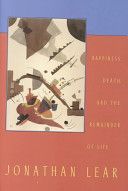
Separated by millennia, Aristotle and Sigmund Freud gave us disparate but compelling pictures of the human condition. But if, with Jonathan Lear, we scrutinize these thinkers’ attempts to explain human behavior in terms of a higher principle–whether happiness or death–the pictures fall apart. Aristotle attempted to ground ethical life in human striving for happiness, yet he didn’t understand what happiness is any better than we do. Happiness became an enigmatic, always unattainable, means of seducing humankind into living an ethical life. Freud fared no better when he tried to ground human striving, aggression, and destructiveness in the death drive, like Aristotle attributing purpose where none exists. Neither overarching principle can guide or govern “the remainder of life,” in which our inherently disruptive unconscious moves in breaks and swerves to affect who and how we are. Lear exposes this tendency to self-disruption for what it is: an opening, an opportunity for new possibilities. His insights have profound consequences not only for analysis but for our understanding of civilization and its discontent.
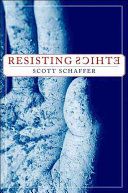
Resisting Ethics is a new contribution to an ongoing debate on how the world can be improved. Starting with the notion that resistance and ethics are theoretically and practically intertwined, Scott Schaffer develops a new socially oriented ethics based on the practical experience of resistance and ethics. Borrowing from and extending the ideas of Sartre, Merleau-Ponty, and Bourdieu, and using case studies of the Algerian Revolution and the Zapatista rebellion, Schaffer argues that existentialism can give us new insights into how we can and should act ethically in the world. Resisting Ethics is a wide-ranging work and represents a new kind of intervention into issues of social justice and resistance.
The Rationality of Theism is a controversial collection of brand new papers by thirteen outstanding philosophers and scholars. Its aim is to offer comprehensive theistic replies to the traditional arguments against the existence of God, offering a positive case for theism as well as rebuttals of recent influential criticisms of theism.
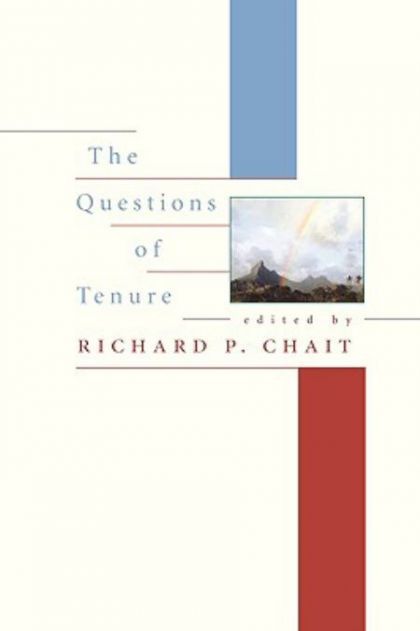
Tenure is the abortion issue of the academy, igniting arguments and inflaming near-religious passions. To some, tenure is essential to academic freedom and a magnet to recruit and retain top-flight faculty. To others, it is an impediment to professorial accountability and a constraint on institutional flexibility and finances. But beyond anecdote and opinion, what do we really know about how tenure works?In this unique book, Richard Chait and his colleagues offer the results of their research on key empirical questions. Are there circumstances under which faculty might voluntarily relinquish tenure? When might new faculty actually prefer non-tenure track positions? Does the absence of tenure mean the absence of shared governance? Why have some colleges abandoned tenure while others have adopted it? Answers to these and other questions come from careful studies of institutions that mirror the American academy: research universities and liberal arts colleges, including both highly selective and less prestigious schools.Lucid and straightforward, The Questions of Tenure offers vivid pictures of academic subcultures. Chait and his colleagues conclude that context counts so much that no single tenure system exists. Still, since no academic reward carries the cachet of tenure, few institutions will initiate significant changes without either powerful external pressures or persistent demands from new or disgruntled faculty.
ما از اخلاق چه انتظاری داریم؟ این سوال شاید تاحدودی برای عموم مردم و یا متخصصان این رشته قابل پاسخ باشد؛ اینکه خوب بودن را به ما بیاموزد و در تنظیم روابط فردی م...

جشن کتاب تهران به ایستگاه سی و یکم رسیده است. حال و احوال نشر کتاب خوب نیست و باید فرهنگدوستان را به خرید و هدیه دادن کتاب ترغیب نمود. خانه اخلاقپژوهان جوان ب...

بنیاد کتابهای اخلاق اسلامی عمدتا پالایش جان از آلودگیها و آراستن آن به زیباییها است. اندیشه محوری این قبیل کتابها آن است که انسان فعلی آنی نیست که باید باشد...

-
0 Comments