Notice: تابع WP_Block_Type_Registry::register به طورنادرست فراخوانی شد. نامهای نوع بلوک نباید حروف بزرگ داشته باشند. لطفاً برای اطلاعات بیشتر، اشکال زدایی در وردپرس را مشاهده کنید. (این پیام در نگارش 5.0.0 افزوده شده است.) in /home/ethicsho/public_html/wp-includes/functions.php on line 5313
Warning: Use of undefined constant TDC_PATH_LEGACY - assumed 'TDC_PATH_LEGACY' (this will throw an Error in a future version of PHP) in /home/ethicsho/public_html/wp-content/plugins/td-composer/td-composer.php on line 109
Warning: Use of undefined constant TDSP_THEME_PATH - assumed 'TDSP_THEME_PATH' (this will throw an Error in a future version of PHP) in /home/ethicsho/public_html/wp-content/plugins/td-composer/td-composer.php on line 113 بایگانیهای 9781402083761 - خانه اخلاق پژوهان جوان Notice: Trying to access array offset on value of type bool in /home/ethicsho/public_html/wp-content/plugins/wp-ulike/inc/general-functions.php on line 807
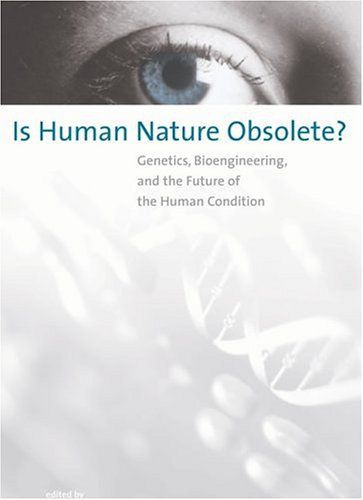
As our scientific and technical abilities expand at breathtaking speeds, concern that modern genetics and bioengineering are leading us to a posthuman future is growing. Is Human Nature Obsolete? poses the overarching question of what it is to be human against the background of these current advances in biotechnology. Its perspective is philosophical and interdisciplinary rather than technical; the focus is on questions of fundamental ontological importance rather than the specifics of medical or scientific practice.The authors—all distinguished scholars in their fields—take on questions about technology’s goals and values that are often ignored or sidelined in the face of rapid scientific advances and the highly specialized nature of technical knowledge. The essays included represent a rich variety of thought, ranging from finely nuanced philosophical and theological arguments to historical studies and cultural commentaries. Several explore the historical background of today’s biotechnology: Timothy Casey traces such developments as the emergence of cybernetic humanity from Cartesian dualism, and Diane Paul presents the history of “positive” versus coerced eugenics. Jean Bethke Elshtain discusses cloning as a “messianic project” to perfect the body and exclude natural diversity—giving as an example the elimination of Down Syndrome as an acceptable human type—while Harold Baillie calls for an examination of the metaphysical roots of personhood. Robert Proctor finds no evidence in paleontology for any “essence of humanity,” and Tom Shannon argues against materialist reductionism. Addressing social concerns, Lisa Sowle Cahill finds the possibility of a political solution to the problems raised by genetic engineering in Catholic teachings on social justice, and Langdon Winner looks critically at the “scientific enthusiasts of a posthuman future.” Taken as a whole, the book provides a humanistic overview of a subject too often considered only in its technological aspect.
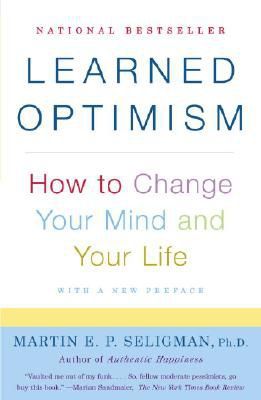
Known as the father of the new science of positive psychology, Martin E.P. Seligman draws on more than twenty years of clinical research to demonstrate how optimism enchances the quality of life, and how anyone can learn to practice it. Offering many simple techniques, Dr. Seligman explains how to break an “I—give-up” habit, develop a more constructive explanatory style for interpreting your behavior, and experience the benefits of a more positive interior dialogue. These skills can help break up depression, boost your immune system, better develop your potential, and make you happier.. With generous additional advice on how to encourage optimistic behavior at school, at work and in children, Learned Optimism is both profound and practical–and valuable for every phase of life.
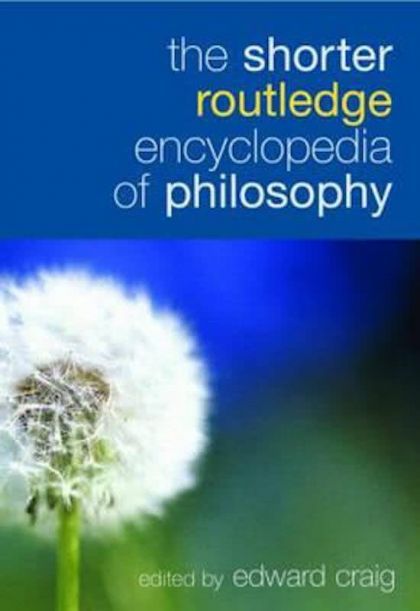
The Shorter REPpresents the very best of the acclaimed ten volumeRoutledge Encyclopedia of Philosophyin a single work. By selecting and presenting–in full–the most important entries for the beginning philosopher and truncating the rest of the entries to survey the breadth of the field,The Shorter REPwill be the only desk reference on philosophy that anyone will need. Comprising over 900 entries and covering the major philosophers and philosophical topics, The Shorter REP includes the following special features: *Over 130 comprehensive, in-depth entries as they appear in the ten volumeRoutledge Encyclopedia of Philosophy *Unrivalled coverage of major philosophers, themes, movements and periods making the volume indispensable for any student or general reader *Revised versions of many of the most important entries, including fresh suggestions for further reading *Over 20 brand new entries on important new topics *Entries by many leading philosopherssuch as Bernard Williams, Martha Nussbaum, Richard Rorty, Onora O’Neill, T.M.Scanlon and Anthony Appiah
An inquiry into the criteria and presuppositions which enable us to confront moral problems. It highlights Christian morality primarily in terms of persons in their freedom and mutual relationships rather than in juridical terms.
ما از اخلاق چه انتظاری داریم؟ این سوال شاید تاحدودی برای عموم مردم و یا متخصصان این رشته قابل پاسخ باشد؛ اینکه خوب بودن را به ما بیاموزد و در تنظیم روابط فردی م...

جشن کتاب تهران به ایستگاه سی و یکم رسیده است. حال و احوال نشر کتاب خوب نیست و باید فرهنگدوستان را به خرید و هدیه دادن کتاب ترغیب نمود. خانه اخلاقپژوهان جوان ب...

بنیاد کتابهای اخلاق اسلامی عمدتا پالایش جان از آلودگیها و آراستن آن به زیباییها است. اندیشه محوری این قبیل کتابها آن است که انسان فعلی آنی نیست که باید باشد...

-
0 Comments