Notice: تابع WP_Block_Type_Registry::register به طورنادرست فراخوانی شد. نامهای نوع بلوک نباید حروف بزرگ داشته باشند. لطفاً برای اطلاعات بیشتر، اشکال زدایی در وردپرس را مشاهده کنید. (این پیام در نگارش 5.0.0 افزوده شده است.) in /home/ethicsho/public_html/wp-includes/functions.php on line 5313
Warning: Use of undefined constant TDC_PATH_LEGACY - assumed 'TDC_PATH_LEGACY' (this will throw an Error in a future version of PHP) in /home/ethicsho/public_html/wp-content/plugins/td-composer/td-composer.php on line 109
Warning: Use of undefined constant TDSP_THEME_PATH - assumed 'TDSP_THEME_PATH' (this will throw an Error in a future version of PHP) in /home/ethicsho/public_html/wp-content/plugins/td-composer/td-composer.php on line 113 بایگانیهای 9780872202450 - خانه اخلاق پژوهان جوان Notice: Trying to access array offset on value of type bool in /home/ethicsho/public_html/wp-content/plugins/wp-ulike/inc/general-functions.php on line 807
Behind headlines on the conflict in Iraq and global terrorism, a much deeper battle is raging over children and the values they should adopt. Political and religious leaders including Blair and Bush have been joined the popular press in Enlightenment-bashing and bitter attacks on “liberal parenting,” calling for a return to authority and religious tradition. How do we raise good children? How do we make good citizens? In defiant yet acute fashion, Stephen Law urges us to re-evaluate the liberal tradition of thinking about morality. Tackling authoritarian rhetoric head-on, he argues that children should learn about right and wrong and respect for others, but that their education should be grounded in the hard-won values of the Enlightenment. Taking on neo-conservatives and religious and media commentators, The War for Children’s Minds is a candid and controversial call for a liberal, philosophically informed approach to raising children. Rejecting accusations that liberal parenting is aSixties hangover that entails an aimless “whatever” attitude to morality, Stephen Law exposes the weaknesses of arguments calling for a return to authoritarian styles of moral education. He clearly shows that thinking for oneself does not mean that all moral points of view are equally good, or that we must reject faith in order to think freely. A staunch defence of the humane, liberal life The War for Children’s Minds is a much-needed guide to an urgent moral conundrum.
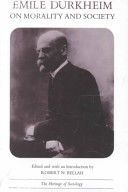
Emile Durkheim is best known in this country as a great sociologist and methodologist. Yet it was Durkheim’s reflections on morality and society that spoke most deeply of his vital concerns. In his informative introduction to this work, Robert N. Bellah describes Durkheim as moralist, philosopher, theologian, and prophet, as well as sociologist, and the selections in this volume are representative of these aspects of Durkheim’s many-faceted scholarship. The first two selections of the volume set the context for the development of Durkheim’s sociology of morality. Section I, “The French Tradition of Social Thought,” gives Durkheim’s picture of how his sociology is to be situated relative to the general French tradition. Section II, “Sociology and Social Action,” shows Durkheim grappling with moral and political issues in his society and indicates the immediate social context of his thinking. The remaining selections indicate some of the major substantive areas of Durkheim’s sociology of morality. Section III, taken from The Division of Labor in Society, demonstrates his basically evolutionary approach to the development of moral norms in society. Section IV, “The Learning of Morality,” gives examples of Durkheim’s work on socialization. Section V, “Social Creativity,” deals with the important question of how new moral norms arise in society.
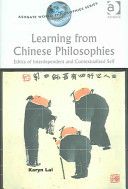
Learning from Chinese Philosophies engages Confucian and Daoist philosophies in creative interplay, developing a theory of interdependent selfhood in the two philosophical traditions. Karyn Lai draws on the unique insights of the two philosophies to address contemporary debates on ethics, community and government. Issues discussed include questions on selfhood, attachment, moral development, government, culture and tradition, and feminist queries regarding biases and dualism in ethics. Throughout the book, Lai demonstrates that Chinese philosophies embody novel and insightful ideas for addressing contemporary issues and problems.
ما از اخلاق چه انتظاری داریم؟ این سوال شاید تاحدودی برای عموم مردم و یا متخصصان این رشته قابل پاسخ باشد؛ اینکه خوب بودن را به ما بیاموزد و در تنظیم روابط فردی م...

جشن کتاب تهران به ایستگاه سی و یکم رسیده است. حال و احوال نشر کتاب خوب نیست و باید فرهنگدوستان را به خرید و هدیه دادن کتاب ترغیب نمود. خانه اخلاقپژوهان جوان ب...

بنیاد کتابهای اخلاق اسلامی عمدتا پالایش جان از آلودگیها و آراستن آن به زیباییها است. اندیشه محوری این قبیل کتابها آن است که انسان فعلی آنی نیست که باید باشد...

-
0 Comments