Notice: تابع WP_Block_Type_Registry::register به طورنادرست فراخوانی شد. نامهای نوع بلوک نباید حروف بزرگ داشته باشند. لطفاً برای اطلاعات بیشتر، اشکال زدایی در وردپرس را مشاهده کنید. (این پیام در نگارش 5.0.0 افزوده شده است.) in /home/ethicsho/public_html/wp-includes/functions.php on line 5313
Warning: Use of undefined constant TDC_PATH_LEGACY - assumed 'TDC_PATH_LEGACY' (this will throw an Error in a future version of PHP) in /home/ethicsho/public_html/wp-content/plugins/td-composer/td-composer.php on line 109
Warning: Use of undefined constant TDSP_THEME_PATH - assumed 'TDSP_THEME_PATH' (this will throw an Error in a future version of PHP) in /home/ethicsho/public_html/wp-content/plugins/td-composer/td-composer.php on line 113 بایگانیهای Clinical Trials - Law And Legislation - خانه اخلاق پژوهان جوان Notice: Trying to access array offset on value of type bool in /home/ethicsho/public_html/wp-content/plugins/wp-ulike/inc/general-functions.php on line 807
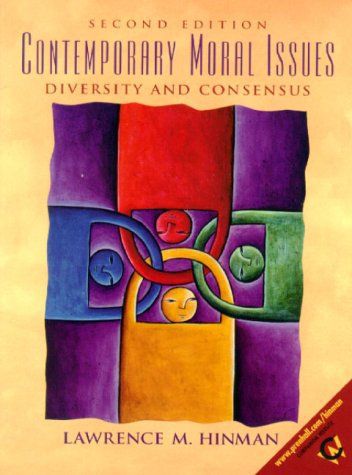
This anthology provides a comprehensive selection of readings on eleven contemporary social issues revolving around three general themes: Matters of Life and Death, Matters of Equality and Diversity, and Expanding the Circle (duties beyond borders, living together with animals, and environmental ethics). Each group of readings is accompanied by narrative selections that present the moral issues from a first person point of view; an extensive introduction surveys the problems and issues; and a bibliographical essay to relevant additional literature. Each selection is accompanied by pre- and post-reading questions. An ethical self-inventory–with pre-test and post-test–helps readers track changes in their own beliefs as they work through the readings, and a special section shows readers step-by-step how develop a personal position on ethical issues. A Pluralistic Approach to Moral Problems. How to Develop a Position on Ethical Issues. MATTERS OF LIFE AND DEATH: Abortion; Genetic Manipulation and Cloning; Euthanasia; Punishment and the Death Penalty. MATTERS OF EQUALITY AND DIVERSITY: Race and Ethnicity; Gender; Sexual Orientation; Poverty and Welfare; EXPANDING THE CIRCLE: Duties Beyond Borders; Living Together with Animals; Environmental Ethics. For anyone interested in Ethics, Social Ethics, and Contemporary Moral Problems.
While we would like to believe that forensic science professionals are intrinsically ethical by nature, the reality is that these individuals have moral compasses as varied as those of any individual you may know. They confront ethical dilemmas every day, some with clear-cut protocols and others that frequently have no definitive answers. Ethics and the Practice of Forensic Science explores the range of ethical issues facing those who work in the field and highlights the complicated nature of ethical decision-making in this complex arena.Ethics in the courtroom and the labWritten by one of the leading researchers in forensic ethics, the book provides data-driven examples of the behaviors ‘ both good and bad ‘ that shape the forensic profession. It provides real examples of ethical behavior combined with research to demonstrate how ethics works (and sometimes does not) in this richly interesting scientific field. The book begins by exploring philosophical approaches related to ethical decision-making. It examines the ethics of the criminal justice culture, ethical issues in the courtroom, and ethics in science and research. Next, the book shifts to a discussion of unethical behavior, and provides actual case studies spotlighting ethical breaches, including the O.J. Simpson case and other reported examples.Ethics codes in various organizationsThe book concludes with a discussion of the code of ethics. Appendices discuss research data on ethics in forensic science and provide ethics codes from various forensic science organizations. Offering a lively source of debate for professionals and academics, this volume provides a window on a topic that is frequently fraught with uncertainty.
Richard Sorabji presents a ground-breaking study of ancient Greek views of the emotions and their influence on subsequent theories and attitudes, pagan and Christian. The key questions are ones that concern everyone: what is emotion, and how does one cope with one’s own emotions and establish peace of mind? The central focus of the book is the Stoics, but Sorabji draws on a vast range of texts to give a rich historical survey of how Western thinking about this central aspect of human nature developed. The result is a magisterial work of scholarship which will be fascinating for anyone with an interest in the emotions from a historical or contemporary perspective.
When Michael Walzer’s Spheres of Justice was published ten years ago, the front page of The New York Times Book Review hailed the work as “an imaginative alternative to the current debate over distributive justice.” Now in Thick and Thin, Walzer revises and extends his arguments in Spheres of Justice, framing his ideas about justice, social criticism, and national identity in light of the new political world that has arisen in the past decade. Walzer focuses on two different but interrelated kinds of moral argument: maximalist and minimalist, thick and thin, local and universal.
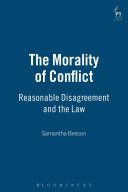
This book explores the relationship between the law and pervasive and persistent reasonable disagreement about justice. It reveals the central moral function and creative force of reasonable disagreement in and about the law and shows why and how lawyers and legal philosophers should take reasonable conflict more seriously. Even though the law should be regarded as the primary mode of settlement of our moral conflicts, it can, and should, also be the object and the forum of further moral conflicts. There is more to the rule of law than convergence and determinacy and it is important therefore to question the importance of agreement in law and politics. By addressing in detail issues pertaining to the nature and sources of disagreement, its extent and significance, as well as the procedural, institutional and substantive responses to disagreement in the law and their legitimacy, this book suggests the value of a comprehensive approach to thinking about conflict, which until recently has been analysed in a compartmentalized way. It aims to provide a fully-fledged political morality of conflict by drawing on the analysis of topical jurisprudential questions in the new light of disagreement. Developing such a global theory of disagreement in the law should be read in the context of the broader effort of reconstructing a complete account of democratic law-making in pluralistic societies. The book will be of value not only to legal philosophers and constitutional theorists, but also to political and democratic theorists, as well as to all those interested in public decision-making in conditions of conflict.
ما از اخلاق چه انتظاری داریم؟ این سوال شاید تاحدودی برای عموم مردم و یا متخصصان این رشته قابل پاسخ باشد؛ اینکه خوب بودن را به ما بیاموزد و در تنظیم روابط فردی م...

جشن کتاب تهران به ایستگاه سی و یکم رسیده است. حال و احوال نشر کتاب خوب نیست و باید فرهنگدوستان را به خرید و هدیه دادن کتاب ترغیب نمود. خانه اخلاقپژوهان جوان ب...

بنیاد کتابهای اخلاق اسلامی عمدتا پالایش جان از آلودگیها و آراستن آن به زیباییها است. اندیشه محوری این قبیل کتابها آن است که انسان فعلی آنی نیست که باید باشد...

-
0 Comments