Notice: تابع WP_Block_Type_Registry::register به طورنادرست فراخوانی شد. نامهای نوع بلوک نباید حروف بزرگ داشته باشند. لطفاً برای اطلاعات بیشتر، اشکال زدایی در وردپرس را مشاهده کنید. (این پیام در نگارش 5.0.0 افزوده شده است.) in /home/ethicsho/public_html/wp-includes/functions.php on line 5313
Warning: Use of undefined constant TDC_PATH_LEGACY - assumed 'TDC_PATH_LEGACY' (this will throw an Error in a future version of PHP) in /home/ethicsho/public_html/wp-content/plugins/td-composer/td-composer.php on line 109
Warning: Use of undefined constant TDSP_THEME_PATH - assumed 'TDSP_THEME_PATH' (this will throw an Error in a future version of PHP) in /home/ethicsho/public_html/wp-content/plugins/td-composer/td-composer.php on line 113 بایگانیهای 9780787675165 - خانه اخلاق پژوهان جوان Notice: Trying to access array offset on value of type bool in /home/ethicsho/public_html/wp-content/plugins/wp-ulike/inc/general-functions.php on line 807
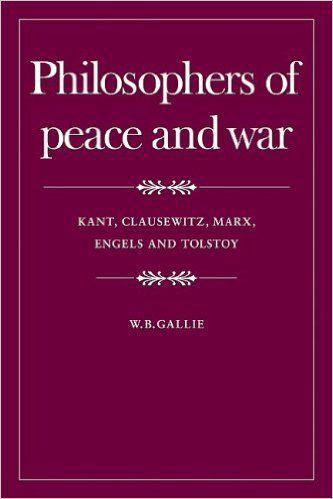
Intellectual eminence apart, what did Kant, Clausewitz, Marx and Engels, and Tolstoy have in common? Professor Gallic argues that they made contributions to ‘international theory’ – to the understanding of the character and causes of war and of the possibility of peace between nations – which were of unrivalled originality in their own times and remain of undiminished importance in ours. But these contributions have been either ignored or much misunderstood ; chiefly because, as with all intellectual efforts in unexplored fields, they were often imperfectly expressed, and were also overshadowed by their author’s more striking achievements. Professor Gallic has sorted out, compared and contrasted, criticised and re-phrased the teachings of his chosen authors on peace and war.
By contributing a few hundred dollars to a charity like UNICEF, a prosperous person can ensure that fewer poor children die, and that more will live reasonably long, worthwhile lives. Even when knowing this, however, most people send nothing, and almost all of the rest send little. What is the moral status of this behavior? To such common cases of letting die, our untutored response is that, while it is not very good, neither is the conduct wrong. What is the source of this lenient assessment? In this contentious new book, one of our leading philosophers argues that our intuitions about ethical cases are generated not by basic moral values, but by certain distracting psychological dispositions that all too often prevent us from reacting in accord with our commitments. Through a detailed look at how these tendencies operate, Unger shows that, on the good morality that we already accept, the fatally unhelpful behavior is monstrously wrong. By uncovering the eminently sensible ethics that we’ve already embraced fully, and by confronting us with empirical facts and with easily followed instructions for lessening serious suffering appropriately and effectively, Unger’s book points the way to a compassionate new moral philosophy.
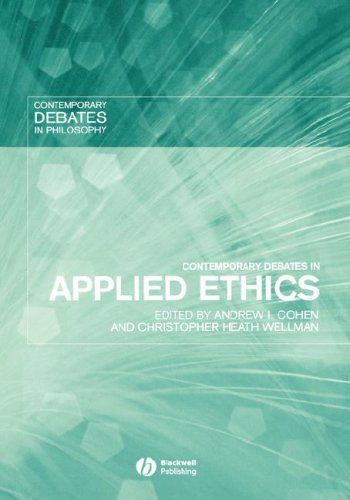
Contemporary Debates in Applied Ethics features pairs of newly commissioned essays by some of the leading theorists working in the field today. Brings together fresh debates on eleven of the most controversial issues in applied ethics Topics addressed include abortion, affirmative action, animals, capital punishment, cloning, euthanasia, immigration, pornography, privacy in civil society, values in nature, and world hunger. Lively debate format sharply defines the issues, and paves the way for further discussion. Will serve as an accessible introduction to the major topics in applied ethics, whilst also capturing the imagination of professional philosophers.
We have been taught that forgiveness is the only healthy, morally sound response to violation, and that it must be granted without conditions, even when the person who hurt us is unremorseful — even when that person is dead. In her long-awaited second book, the gifted therapist and bestselling author of After the Affair debunks these myths. Drawing on twenty-nine years as a clinical psychologist, Dr. Spring proposes a radically new, life-affirming alternative that lets us overcome the corrosive effects of hate and get on with our lives — without forgiving. She also offers a powerful and unconventional model for genuine forgiveness — one that asks as much of the offender as it asks of us. Forgiveness is no gratuitous gift, she argues. We can heal ourselves, but forgiveness must be earned. How Can I Forgive You? answers such crucial questions as: How do I forgive someone who can’t or won’t apologize for hurting me? How do I reconcile with an unrepentant offender and maintain my self-respect? If I can’t forgive, how do I put the injury behind me? Is forgiveness my job alone, requiring nothing in return? When is forgiveness cheap, and when is it genuine? What can the offender do to earn forgiveness? How can I encourage the offender to seek my forgiveness? What is self-forgiveness? How do we achieve it? This bold and healing book offers concrete, step-by-step instructions that help us to make peace with our partner, parent, sibling, child, in-law, or friend — and with ourselves. Penetrating and beautifully written, How Can I Forgive You? is bound to change forever the way we think about forgiveness and how we recover from intimate wounds.
ما از اخلاق چه انتظاری داریم؟ این سوال شاید تاحدودی برای عموم مردم و یا متخصصان این رشته قابل پاسخ باشد؛ اینکه خوب بودن را به ما بیاموزد و در تنظیم روابط فردی م...

جشن کتاب تهران به ایستگاه سی و یکم رسیده است. حال و احوال نشر کتاب خوب نیست و باید فرهنگدوستان را به خرید و هدیه دادن کتاب ترغیب نمود. خانه اخلاقپژوهان جوان ب...

بنیاد کتابهای اخلاق اسلامی عمدتا پالایش جان از آلودگیها و آراستن آن به زیباییها است. اندیشه محوری این قبیل کتابها آن است که انسان فعلی آنی نیست که باید باشد...

-
0 Comments