Notice: تابع WP_Block_Type_Registry::register به طورنادرست فراخوانی شد. نامهای نوع بلوک نباید حروف بزرگ داشته باشند. لطفاً برای اطلاعات بیشتر، اشکال زدایی در وردپرس را مشاهده کنید. (این پیام در نگارش 5.0.0 افزوده شده است.) in /home/ethicsho/public_html/wp-includes/functions.php on line 5313
Warning: Use of undefined constant TDC_PATH_LEGACY - assumed 'TDC_PATH_LEGACY' (this will throw an Error in a future version of PHP) in /home/ethicsho/public_html/wp-content/plugins/td-composer/td-composer.php on line 109
Warning: Use of undefined constant TDSP_THEME_PATH - assumed 'TDSP_THEME_PATH' (this will throw an Error in a future version of PHP) in /home/ethicsho/public_html/wp-content/plugins/td-composer/td-composer.php on line 113 بایگانیهای 9780754672708 - خانه اخلاق پژوهان جوان Notice: Trying to access array offset on value of type bool in /home/ethicsho/public_html/wp-content/plugins/wp-ulike/inc/general-functions.php on line 807
Explore central questions in moral philosophy with HOW SHOULD WE LIVE? With a focus on the question of why or how we should be moral in a time plagued by relativism, this philosophy text covers the three most seminal ethical theories: utilitarianism, deontology, and virtue-based ethics. End of chapter discussion questions and bibliography assist you in contemplating the most central issues encountered in the text and in pursuing additional research.
Art and Moralityis a collection of groundbreaking new papers on the theme of aesthetics and ethics, and the link between the two subjects. A group of world-class contributors tackle the important question that arise when one thinks about the moral dimensions of art and the aesthetic dimension of moral life. The volume is a significant contribution to the philosophical literature, opening up unexplored questions and shedding new light on more traditional debates in aesthetics. The topics explored include the relation of aesthetic to ethical judgment; the relation of artistic experience to moral consciousness; the moral status of fiction; the concepts of sentimentality and decadence; the moral dimension of critical practice, pictorial art and music; the moral significance of tragedy; and the connections between artistic and moral issues elaborated in the writings of central figures in modern philosophy such as Kant, Schopenhauer and Nietzsche.
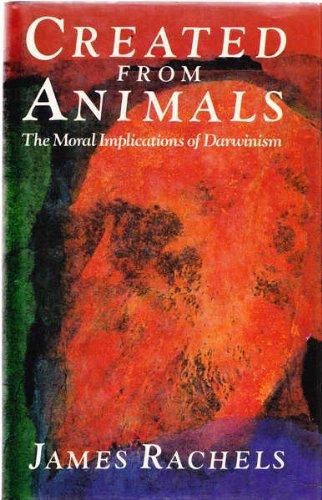
From Bishop Wilberforce in the 1860s to the advocates of “creation science” today, defenders of traditional mores have condemned Darwin’s theory of evolution as a threat to society’s values. Darwin’s defenders, like Stephen Jay Gould, have usually replied that there is no conflict between science and religion–that values and biological facts occupy separate realms. But as James Rachels points out in this thought-provoking study, Darwin himself would disagree with Gould. Darwin, who had once planned on being a clergyman, was convinced that natural selection overthrew our age-old religious beliefs. Created from Animals offers a provocative look at how Darwinian evolution undermines many tenets of traditional philosophy and religion. James Rachels begins by examining Darwin’s own life and work, presenting an astonishingly vivid and compressed biography. We see Darwin’s studies of the psychological links in evolution (such as emotions in dogs, and the “mental powers” of worms), and how he addressed the moral implications of his work, especially in his concern for the welfare of animals. Rachels goes on to present a lively and accessible survey of the controversies that followed in Darwin’s wake, ranging from Herbert Spencer’s Social Darwinism to Edward O. Wilson’s sociobiology, and discusses how the work of such influential intellects as Descartes, Hume, Kant, T.H. Huxley, Henri Bergson, B.F. Skinner, and Stephen Jay Gould has contributed to–or been overthrown by–evolutionary science. Western philosophy and religion, Rachels argues, have been shaken by the implications of Darwin’s work, most notably the controversial idea that humans are simply a more complex kind of animal. Rachels assesses a number of studies that suggest how closely humans are linked to other primates in behavior, and then goes on to show how this idea undercuts the work of many prominent philosophers. Kant’s famous argument that suicide reduces one to the level of an animal, for instance, is meaningless if humans are, in fact, animals. Indeed, humanity’s membership in the animal kingdom calls into question the classic notions of human dignity and the sacredness of human life. What we need now, Rachels contends, is a philosophy that does not discriminate between different species, one that addresses each being on an individual basis. With this sweeping survey of the arguments, the philosophers, and the deep implications surrounding Darwinism, Rachels lays the foundations for a new view of morality. Vibrantly written and provocatively argued, Created from Animals offers a new perspective on issues ranging from suicide to euthanasia to animal rights.
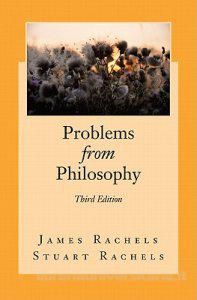
Problems from Philosophy is an introduction to philosophy which is organized around the great philosophical problems—the existence of God, the nature of the mind, human freedom, the limits of knowledge, and the truth about ethics. It begins by reflecting on the life of the first great philosopher, Socrates. Then it takes up the fundamental question of whether God exists. Next comes a discussion of death and the soul, which leads to a chapter about persons. The later chapters of the book are about whether objective knowledge is possible in science and ethics. Each chapter is self-contained and may be read independently of the others. Problems from Philosophy represents the final work of author and philosopher James Rachels. In it, he brings the same liveliness and clarity to the introduction of philosophy that he brings to his best-selling ethics text, The Elements of Moral Philosophy. The second and third edition have been revised by Rachels’ son Stuart, who carefully has carefully refined his father’s work to further strengthen its clarity and accessibility.
No matter what we do, however kind or generous our deeds may seem, a hidden motive of selfishness lurks–or so science has claimed for years. This book, whose publication promises to be a major scientific event, tells us differently. In Unto Others philosopher Elliott Sober and biologist David Sloan Wilson demonstrate once and for all that unselfish behavior is in fact an important feature of both biological and human nature. Their book provides a panoramic view of altruism throughout the animal kingdom–from self-sacrificing parasites to insects that subsume themselves in the superorganism of a colony to the human capacity for selflessness–even as it explains the evolutionary sense of such behavior. Explaining how altruistic behavior can evolve by natural selection, this book finally gives credence to the idea of group selection that was originally proposed by Darwin but denounced as heretical in the 1960s. With their account of this controversy, Sober and Wilson offer a detailed case study of scientific change as well as an indisputable argument for group selection as a legitimate theory in evolutionary biology. Unto Others also takes a novel evolutionary approach in explaining the ultimate psychological motives behind unselfish human behavior. Developing a theory of the proximate mechanisms that most likely evolved to motivate adaptive helping behavior, Sober and Wilson show how people and perhaps other species evolved the capacity to care for others as a goal in itself. A truly interdisciplinary work that blends biology, philosophy, psychology, and anthropology, this book will permanently change not just our view of selfless behavior but also our understanding of many issues in evolutionary biology and the social sciences.
ما از اخلاق چه انتظاری داریم؟ این سوال شاید تاحدودی برای عموم مردم و یا متخصصان این رشته قابل پاسخ باشد؛ اینکه خوب بودن را به ما بیاموزد و در تنظیم روابط فردی م...

جشن کتاب تهران به ایستگاه سی و یکم رسیده است. حال و احوال نشر کتاب خوب نیست و باید فرهنگدوستان را به خرید و هدیه دادن کتاب ترغیب نمود. خانه اخلاقپژوهان جوان ب...

بنیاد کتابهای اخلاق اسلامی عمدتا پالایش جان از آلودگیها و آراستن آن به زیباییها است. اندیشه محوری این قبیل کتابها آن است که انسان فعلی آنی نیست که باید باشد...

-
0 Comments