Notice: تابع WP_Block_Type_Registry::register به طورنادرست فراخوانی شد. نامهای نوع بلوک نباید حروف بزرگ داشته باشند. لطفاً برای اطلاعات بیشتر، اشکال زدایی در وردپرس را مشاهده کنید. (این پیام در نگارش 5.0.0 افزوده شده است.) in /home/ethicsho/public_html/wp-includes/functions.php on line 5313
Warning: Use of undefined constant TDC_PATH_LEGACY - assumed 'TDC_PATH_LEGACY' (this will throw an Error in a future version of PHP) in /home/ethicsho/public_html/wp-content/plugins/td-composer/td-composer.php on line 109
Warning: Use of undefined constant TDSP_THEME_PATH - assumed 'TDSP_THEME_PATH' (this will throw an Error in a future version of PHP) in /home/ethicsho/public_html/wp-content/plugins/td-composer/td-composer.php on line 113 بایگانیهای 9780739107492 - خانه اخلاق پژوهان جوان Notice: Trying to access array offset on value of type bool in /home/ethicsho/public_html/wp-content/plugins/wp-ulike/inc/general-functions.php on line 807
This volume brings together much of the strongest and most influential work undertaken in the field of virtue ethics over the last four decades. Divided into four sections, it includes articles critical of other traditions; early attempts to offer a positive vision of virtue ethics; some later criticisms of the revival of virtue ethics; and, finally, some recent, more theoretically ambitious essays in virtue ethics.
This collection of essays addresses some of the most important issues in philosophy, involving God, the mind, freedom, knowledge, and ethics. It can accompany James and Stuart Rachels’ introductory text, Problems from Philosophy, or it can stand alone with great effectiveness. The Truth About the World and Problems from Philosophy are James Rachels’ last contributions to philosophy, and each book has now been revised by his son, Stuart. In these two books, the respected author found a culminating expression for his love of philosophy.
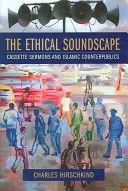
Charles Hirschkind’s unique study explores how a popular Islamic media form& -the cassette sermon& -has profoundly transformed the political geography of the Middle East over the last three decades. An essential aspect of what is now called the Islamic Revival, the cassette sermon has become omnipresent in most Middle Eastern cities, punctuating the daily routines of many men and women. Hirschkind shows how sermon tapes have provided one of the means by which Islamic ethical traditions have been recalibrated to a modern political and technological order& -to its noise and forms of pleasure and boredom, but also to its political incitements and call for citizen participation. Contrary to the belief that Islamic cassette sermons are a tool of militant indoctrination, Hirschkind argues that sermon tapes serve as an instrument of ethical self-improvement and as a vehicle for honing the sensibilities and affects of pious living. Focusing on Cairo’s popular neighborhoods, Hirschkind highlights the pivotal role these tapes now play in an expanding arena of Islamic argumentation and debate& -what he calls an “Islamic counterpublic.” This emerging arena connects Islamic traditions of ethical discipline to practices of deliberation about the common good, the duties of Muslims as national citizens, and the challenges faced by diverse Muslim communities around the globe. The Ethical Soundscapeis a brilliant analysis linking modern media practices of moral self-fashioning to the creation of increasingly powerful religious publics.
This book argues that moral theology has yet to embrace the recommendations of the Second Vatican Council concerning the ways in which moral theology is to be renewed. There is little or no consensus between theologians regarding the nature, content and uniqueness of Christian morality. After highlighting the strengths and weaknesses of the so-called autonomy and faith ethic schools of thought, Mealey argues that there is little dividing them and that, in some instances, both schools are simply defending one aspect of a hermeneutical dialectic.In an attempt to move away from the divisions between proponents of the faith-ethic and autonomy positions, Mealey enlists the help of the hermeneutical theory of Paul Ricoeur, arguing that the debate on the uniqueness of Christian morality can be mediated if scholars look to the possibilities opened up by Ricoeur’s hermeneutics of interpretation. Mealey also argues that the uniqueness of Christian morality is more adequately explained in terms of a specific identity (self) that is constantly subject to change and revision in light of many, often conflicting, moral sources. She advocates a move away from attempts to explain the uniqueness of Christian morality in terms of one specific, unchanging context, motivation, norm or divine command or value. By embracing the possibilities opened up by Ricoeurian hermeneutics, Mealey explains how concepts such as revelation, tradition, orthodoxy and moral conscience may be understood in a hermeneutical way without being deemed sectarian or unorthodox.
This book takes a fresh look at the most dynamic area of American law today, comprising the fields of copyright, patent, trademark, trade secrecy, publicity rights, and misappropriation. Topics range from copyright in private letters to defensive patenting of business methods, from moral rights in the visual arts to the banking of trademarks, from the impact of the court of patent appeals to the management of Mickey Mouse. The history and political science of intellectual property law, the challenge of digitization, the many statutes and judge-made doctrines, and the interplay with antitrust principles are all examined. The treatment is both positive (oriented toward understanding the law as it is) and normative (oriented to the reform of the law). Previous analyses have tended to overlook the paradox that expanding intellectual property rights can effectively reduce the amount of new intellectual property by raising the creators’ input costs. Those analyses have also failed to integrate the fields of intellectual property law. They have failed as well to integrate intellectual property law with the law of physical property, overlooking the many economic and legal-doctrinal parallels.This book demonstrates the fundamental economic rationality of intellectual property law, but is sympathetic to critics who believe that in recent decades Congress and the courts have gone too far in the creation and protection of intellectual property rights.
ما از اخلاق چه انتظاری داریم؟ این سوال شاید تاحدودی برای عموم مردم و یا متخصصان این رشته قابل پاسخ باشد؛ اینکه خوب بودن را به ما بیاموزد و در تنظیم روابط فردی م...

جشن کتاب تهران به ایستگاه سی و یکم رسیده است. حال و احوال نشر کتاب خوب نیست و باید فرهنگدوستان را به خرید و هدیه دادن کتاب ترغیب نمود. خانه اخلاقپژوهان جوان ب...

بنیاد کتابهای اخلاق اسلامی عمدتا پالایش جان از آلودگیها و آراستن آن به زیباییها است. اندیشه محوری این قبیل کتابها آن است که انسان فعلی آنی نیست که باید باشد...

-
0 Comments