Notice: تابع WP_Block_Type_Registry::register به طورنادرست فراخوانی شد. نامهای نوع بلوک نباید حروف بزرگ داشته باشند. لطفاً برای اطلاعات بیشتر، اشکال زدایی در وردپرس را مشاهده کنید. (این پیام در نگارش 5.0.0 افزوده شده است.) in /home/ethicsho/public_html/wp-includes/functions.php on line 5313
Warning: Use of undefined constant TDC_PATH_LEGACY - assumed 'TDC_PATH_LEGACY' (this will throw an Error in a future version of PHP) in /home/ethicsho/public_html/wp-content/plugins/td-composer/td-composer.php on line 109
Warning: Use of undefined constant TDSP_THEME_PATH - assumed 'TDSP_THEME_PATH' (this will throw an Error in a future version of PHP) in /home/ethicsho/public_html/wp-content/plugins/td-composer/td-composer.php on line 113 بایگانیهای 9780524034866 - خانه اخلاق پژوهان جوان Notice: Trying to access array offset on value of type bool in /home/ethicsho/public_html/wp-content/plugins/wp-ulike/inc/general-functions.php on line 807
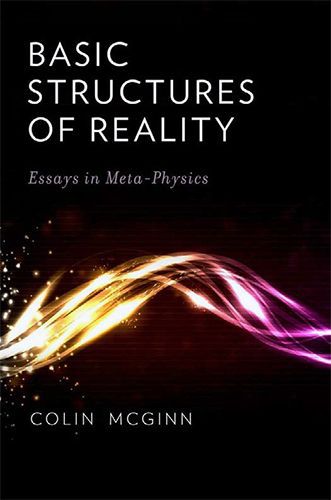
In Basic Structures of Reality, Colin McGinn deals with questions of metaphysics, epistemology, and philosophy of mind from the vantage point of physics. Combining general philosophy with physics, he covers such topics as the definition of matter, the nature of space, motion, gravity, electromagnetic fields, the character of physical knowledge, and consciousness and meaning. Throughout, McGinn maintains an historical perspective and seeks to determine how much we really know of the world described by physics. He defends a version of “structuralism”: the thesis that our knowledge is partial and merely abstract, leaving a large epistemological gap at the center of physics.
McGinn then connects this element of mystery to parallel mysteries in relation to the mind. Consciousness emerges as just one more mystery of physics. A theory of matter and space is developed, according to which the impenetrability of matter is explained as the deletion of volumes of space. McGinn proposes a philosophy of science that distinguishes physics from both psychology and biology, explores the ontology of energy, and considers the relevance of physics to seemingly remote fields such as the theory of meaning. In the form of a series of aphorisms, the author presents a metaphysical system that takes laws of nature as fundamental. With its broad scope and deep study of the fundamental questions at the heart of philosophy of physics, this book is not intended primarily for specialists, but for the general philosophical reader interested in how physics and philosophy intersect.
The result of two key social developments in recent years are examined here: the partial dismantling of the welfare state and the progress of genetics. Genetic insights are becoming increasingly valuable for risk assessment, and insurers would like to use these insights to help determine premiums. Combined with the fact that social welfare is being curtailed, this could potentially create an uninsured high-risk population. Along with considerations of autonomy and privacy, this is the basis for an ethical critique of insurer’s access to information. The result has often been regulation of such information; but the authors argues that due to adverse selection, regulation will not solve these problems, and this may jeopardize the survival of private personal insurance. Instead, we should look towards the resurrection of social insurance, a key component of the welfare state. This will interest academic researchers as well as professonials involved with genetics and insurance.
The ethics of literature, formalists have insisted, resides in the moral quality of a character, a story, perhaps the relation between author and reader. But in the wake of deconstruction and various forms of criticism focusing on difference, the ethical question has been freshly negotiated by literary studies, and to this approach Adam Newton brings a startling new thrust. His book makes a compelling case for understanding narrative as ethics. Assuming an intrinsic and necessary connection between the two, Newton explores the ethical consequences of telling stories and fictionalizing character, and the reciprocal claims binding teller, listener, witness, and reader in the process. He treats these relations as defining properties of prose fiction, of particular import in nineteenth- and twentieth-century texts.Newton’s fresh and nuanced readings cover a wide range of authors and periods, from Charles Dickens to Kazuo Ishiguro and Julian Barnes, from Herman Melville to Richard Wright, from Joseph Conrad and Henry James to Sherwood Anderson and Stephen Crane. An original work of theory as well as a deft critical performance, Narrative Ethics also stakes a claim for itself as moral inquiry. To that end, Newton braids together the ethical-philosophical projects of Emmanuel Levinas, Stanley Cavell, and Mikhail Bakhtin as a kind of chorus for his textual analyses–an elegant bridge between philosophy’s ear and literary criticism’s voice. His work will generate enormous interest among scholars and students of English and American literature, as well as specialists in narrative and literary theory, hermeneutics, and contemporary philosophy.
Most people, including philosophers, tend to classify human motives as falling into one of two categories: the egoistic or the altruistic, the self-interested or the moral. According to Susan Wolf, however, much of what motivates us does not comfortably fit into this scheme. Often we act neither for our own sake nor out of duty or an impersonal concern for the world. Rather, we act out of love for objects that we rightly perceive as worthy of love–and it is these actions that give meaning to our lives. Wolf makes a compelling case that, along with happiness and morality, this kind of meaningfulness constitutes a distinctive dimension of a good life. Written in a lively and engaging style, and full of provocative examples, Meaning in Life and Why It Matters is a profound and original reflection on a subject of permanent human concern.
ما از اخلاق چه انتظاری داریم؟ این سوال شاید تاحدودی برای عموم مردم و یا متخصصان این رشته قابل پاسخ باشد؛ اینکه خوب بودن را به ما بیاموزد و در تنظیم روابط فردی م...

جشن کتاب تهران به ایستگاه سی و یکم رسیده است. حال و احوال نشر کتاب خوب نیست و باید فرهنگدوستان را به خرید و هدیه دادن کتاب ترغیب نمود. خانه اخلاقپژوهان جوان ب...

بنیاد کتابهای اخلاق اسلامی عمدتا پالایش جان از آلودگیها و آراستن آن به زیباییها است. اندیشه محوری این قبیل کتابها آن است که انسان فعلی آنی نیست که باید باشد...

-
0 Comments