Notice: تابع WP_Block_Type_Registry::register به طورنادرست فراخوانی شد. نامهای نوع بلوک نباید حروف بزرگ داشته باشند. لطفاً برای اطلاعات بیشتر، اشکال زدایی در وردپرس را مشاهده کنید. (این پیام در نگارش 5.0.0 افزوده شده است.) in /home/ethicsho/public_html/wp-includes/functions.php on line 5313
Warning: Use of undefined constant TDC_PATH_LEGACY - assumed 'TDC_PATH_LEGACY' (this will throw an Error in a future version of PHP) in /home/ethicsho/public_html/wp-content/plugins/td-composer/td-composer.php on line 109
Warning: Use of undefined constant TDSP_THEME_PATH - assumed 'TDSP_THEME_PATH' (this will throw an Error in a future version of PHP) in /home/ethicsho/public_html/wp-content/plugins/td-composer/td-composer.php on line 113 بایگانیهای 9780521459785 - خانه اخلاق پژوهان جوان Notice: Trying to access array offset on value of type bool in /home/ethicsho/public_html/wp-content/plugins/wp-ulike/inc/general-functions.php on line 807
John Broome’s work has always combined sophisticated economic and philosophical expertise, and Ethics Out of Economics brings together some of his most important essays, augmented by a new introduction. This book examines some of the practical issues that lie between economics and ethics, and shows how utility theory can contribute to ethics, as many economic problems are also ethical problems. Professor Broome raises some fundamental questions about economic equality, preserving the environment, and the allocation of medical resources, and powerfully shows how economic methods can contribute to moral philosophy.
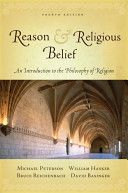
What is the status of belief in God? Must a rational case be made or can such belief be properly basic? Is it possible to reconcile the concept of a good God with evil and suffering? In light of great differences among religions, can only one religion be true? The most comprehensive work of its kind, Reason and Religious Belief, now in its fourth edition, explores these and other perennial questions in the philosophy of religion. Drawing from the best in both classical and contemporary discussions, the authors examine religious experience, faith and reason, the divine attributes, arguments for and against the existence of God, divine action (in various forms of theism), Reformed epistemology, religious language, religious diversity, religion and science, and much more. Retaining the engaging style and thorough coverage of previous editions, the fourth edition adds a critical new chapter on the ontological status of religion and the nature of religious claims. It also features revised treatments of omnipotence, miracles, and providence and updated suggestions for further reading. A sophisticated yet accessible introduction, Reason and Religious Belief, Fourth Edition, is ideally suited for use with the authors’ companion anthology, Philosophy of Religion: Selected Readings, Third Edition (OUP, 2006).
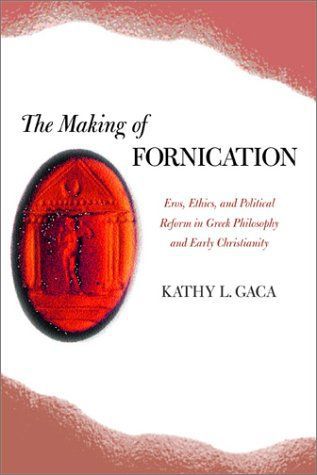
This provocative work provides a radical reassessment of the emergence and nature of Christian sexual morality, the dominant moral paradigm in Western society since late antiquity. While many scholars, including Michel Foucault, have found the basis of early Christian sexual restrictions in Greek ethics and political philosophy, Kathy L. Gaca demonstrates on compelling new grounds that it is misguided to regard Greek ethics and political theory—with their proposed reforms of eroticism, the family, and civic order—as the foundation of Christian sexual austerity. Rather, in this thoroughly informed and wide-ranging study, Gaca shows that early Christian goals to eradicate fornication were derived from the sexual rules and poetic norms of the Septuagint, or Greek Bible, and that early Christian writers adapted these rules and norms in ways that reveal fascinating insights into the distinctive and largely non-philosophical character of Christian sexual morality.Writing with an authoritative command of both Greek philosophy and early Christian writings, Gaca investigates Plato, the Stoics, the Pythagoreans, Philo of Alexandria, the apostle Paul, and the patristic Christians Clement of Alexandria, Tatian, and Epiphanes, freshly elucidating their ideas on sexual reform with precision, depth, and originality. Early Christian writers, she demonstrates, transformed all that they borrowed from Greek ethics and political philosophy to launch innovative programs against fornication that were inimical to Greek cultural mores, popular and philosophical alike. The Septuagint’s mandate to worship the Lord alone among all gods led to a Christian program to revolutionize Gentile sexual practices, only for early Christians to find this virtually impossible to carry out without going to extremes of sexual renunciation.Knowledgeable and wide-ranging, this work of intellectual history and ethics cogently demonstrates why early Christian sexual restrictions took such repressive ascetic forms, and casts sobering light on what Christian sexual morality has meant for religious pluralism in Western culture, especially among women as its bearers.
ما از اخلاق چه انتظاری داریم؟ این سوال شاید تاحدودی برای عموم مردم و یا متخصصان این رشته قابل پاسخ باشد؛ اینکه خوب بودن را به ما بیاموزد و در تنظیم روابط فردی م...

جشن کتاب تهران به ایستگاه سی و یکم رسیده است. حال و احوال نشر کتاب خوب نیست و باید فرهنگدوستان را به خرید و هدیه دادن کتاب ترغیب نمود. خانه اخلاقپژوهان جوان ب...

بنیاد کتابهای اخلاق اسلامی عمدتا پالایش جان از آلودگیها و آراستن آن به زیباییها است. اندیشه محوری این قبیل کتابها آن است که انسان فعلی آنی نیست که باید باشد...

-
0 Comments