Notice: تابع WP_Block_Type_Registry::register به طورنادرست فراخوانی شد. نامهای نوع بلوک نباید حروف بزرگ داشته باشند. لطفاً برای اطلاعات بیشتر، اشکال زدایی در وردپرس را مشاهده کنید. (این پیام در نگارش 5.0.0 افزوده شده است.) in /home/ethicsho/public_html/wp-includes/functions.php on line 5313
Warning: Use of undefined constant TDC_PATH_LEGACY - assumed 'TDC_PATH_LEGACY' (this will throw an Error in a future version of PHP) in /home/ethicsho/public_html/wp-content/plugins/td-composer/td-composer.php on line 109
Warning: Use of undefined constant TDSP_THEME_PATH - assumed 'TDSP_THEME_PATH' (this will throw an Error in a future version of PHP) in /home/ethicsho/public_html/wp-content/plugins/td-composer/td-composer.php on line 113 بایگانیهای Sex - Religious Aspects - خانه اخلاق پژوهان جوان Notice: Trying to access array offset on value of type bool in /home/ethicsho/public_html/wp-content/plugins/wp-ulike/inc/general-functions.php on line 807
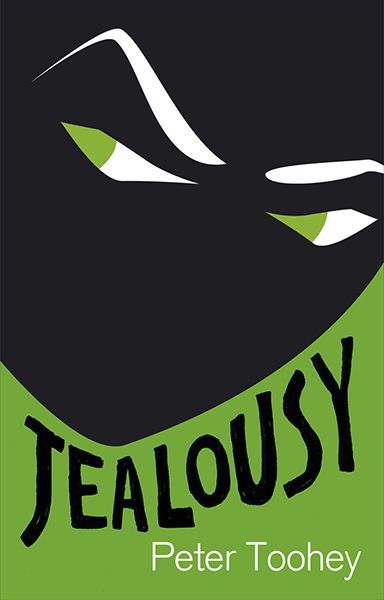
A witty and insightful investigation into the green-eyed monster’s role in our lives Compete, acquire, succeed, enjoy: the pressures of living in today’s materialistic world seem predicated upon jealousy–the feelings of rivalry and resentment for possession of whatever the other has. But while our newspapers abound with stories of the sometimes droll, sometimes deadly consequences of sexual jealousy, Peter Toohey argues in this charmingly provocative book that jealousy is much more than the destructive emotion it is commonly assumed to be. It helps as much as it harms. Examining the meaning, history, and value of jealousy, Toohey places the emotion at the core of modern culture, creativity, and civilization–not merely the sexual relationship. His eclectic approach weaves together psychology, art and literature, neuroscience, anthropology, and a host of other disciplines to offer fresh and intriguing contemporary perspectives on violence, the family, the workplace, animal behavior, and psychopathology. Ranging from the streets of London to Pacific islands, and from the classical world to today, this is an elegant, smart, and beautifully illustrated defense of a not-always-deadly sin.
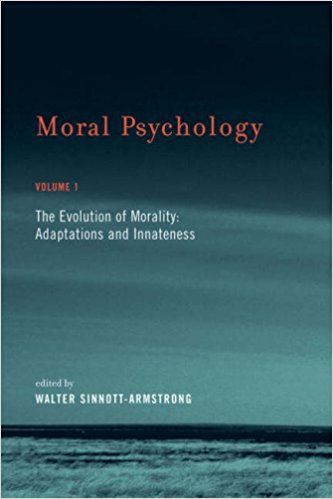
For much of the twentieth century, philosophy and science went their separate ways. In moral philosophy, fear of the so-called naturalistic fallacy kept moral philosophers from incorporating developments in biology and psychology. Since the 1990s, however, many philosophers have drawn on recent advances in cognitive psychology, brain science, and evolutionary psychology to inform their work. This collaborative trend is especially strong in moral philosophy, and these three volumes bring together some of the most innovative work by both philosophers and psychologists in this emerging interdisciplinary field.Contributors to Volume 1:William Casebeer (Air Force Academy), Leda Cosmides (University of California, Santa Barbara), Oliver Curry (London School of Economics), Michael Dietrich (Dartmouth College), Catherine Driscoll (North Carolina State University), Susan Dwyer (University of Maryland, Baltimore County), Owen Flanagan (Duke University), Gilbert Harman (Princeton University), Richard Joyce (Australian National University Research School of Social Science), Debra Lieberman (University of Hawaii), Ron Mallon (University of Utah), John Mikhail (Georgetown Law School), Geoffrey Miller (University of New Mexico), Jesse Prinz (University of North Carolina at Chapel Hill), Peter Railton (University of Michigan), Michael Ruse (Florida State University) Hagop Sarkissian (Duke University), Walter Sinnott-Armstrong (Dartmouth College), Chandra Sekhar Sripada (University of Michigan) Valerie Tiberius (University of Minnesota), John Tooby (University of California, Santa Barbara), Peter Tse (Dartmouth College) Kathleen Wallace (Hofstra University), Arthur Wolf (Stanford University), David Wong (Duke University).
What are the acceptable limits of scientific investigation and genetic engineering, the rights and wrongs of animal rights, euthanasia and civil disobedience? This book confronts these dilemmas, tracing arguments of moral thinkers, including Socrates, Plato, Aristotle, and brings us up to date with postmodern critics.
Recent scientific advances have placed many traditional philosophical concepts under great stress. In this pathbreaking book, the eminent philosopher Robert Nozick rethinks and transforms the concepts of truth, objectivity, necessity, contingency, consciousness, and ethics. Using an original method, he presents bold new philosophical theories that take account of scientific advances in physics, evolutionary biology, economics, and cognitive neuroscience, and casts current cultural controversies (such as whether all truth is relative and whether ethics is objective) in a wholly new light. Throughout, the book is open to, and engages in, the bold exploration of new philosophical possibilities.Philosophy will never look the same. Truth is embedded in space-time and is relative to it. However, truth is not socially relative among human beings (extraterrestrials are another matter). Objective facts are invariant under specified transformations; objective beliefs are arrived at by a process in which biasing factors do not play a significant role. Necessity’s domain is contracted (there are no important metaphysical necessities; water is not necessarily H2O) while the important and useful notion of degrees of contingency is elaborated. Gradations of consciousness (based upon “common registering”) yield increasing capacity to fit actions to the world. The originating function of ethics is cooperation to mutual benefit, and evolution has instilled within humans a “normative module”: the capacities to learn, internalize, follow norms, and make evaluations. Ethics has normative force because of the connection between ethics and conscious self-awareness. Nozick brings together the book’s novel theories to show the extent to which there are objective ethical truths.
ما از اخلاق چه انتظاری داریم؟ این سوال شاید تاحدودی برای عموم مردم و یا متخصصان این رشته قابل پاسخ باشد؛ اینکه خوب بودن را به ما بیاموزد و در تنظیم روابط فردی م...

جشن کتاب تهران به ایستگاه سی و یکم رسیده است. حال و احوال نشر کتاب خوب نیست و باید فرهنگدوستان را به خرید و هدیه دادن کتاب ترغیب نمود. خانه اخلاقپژوهان جوان ب...

بنیاد کتابهای اخلاق اسلامی عمدتا پالایش جان از آلودگیها و آراستن آن به زیباییها است. اندیشه محوری این قبیل کتابها آن است که انسان فعلی آنی نیست که باید باشد...

-
0 Comments