Notice: تابع WP_Block_Type_Registry::register به طورنادرست فراخوانی شد. نامهای نوع بلوک نباید حروف بزرگ داشته باشند. لطفاً برای اطلاعات بیشتر، اشکال زدایی در وردپرس را مشاهده کنید. (این پیام در نگارش 5.0.0 افزوده شده است.) in /home/ethicsho/public_html/wp-includes/functions.php on line 5313
Warning: Use of undefined constant TDC_PATH_LEGACY - assumed 'TDC_PATH_LEGACY' (this will throw an Error in a future version of PHP) in /home/ethicsho/public_html/wp-content/plugins/td-composer/td-composer.php on line 109
Warning: Use of undefined constant TDSP_THEME_PATH - assumed 'TDSP_THEME_PATH' (this will throw an Error in a future version of PHP) in /home/ethicsho/public_html/wp-content/plugins/td-composer/td-composer.php on line 113 بایگانیهای 9780415193221 - خانه اخلاق پژوهان جوان Notice: Trying to access array offset on value of type bool in /home/ethicsho/public_html/wp-content/plugins/wp-ulike/inc/general-functions.php on line 807
The Verge of Philosophyis both an exploration of the limits of philosophy and a memorial for John Sallis’s longtime friend and interlocutor Jacques Derrida. The centerpiece of the book is an extended examination of three sites in Derrida’s thought: his interpretation of Heidegger regarding the privileging of the question; his account of the Platonic figure of the good; and his interpretation of Plato’s discourse on the crucial notion of the chora, the originating space of the universe. Sallis’s reflections are given added weighteven poignancyby his discussion of his many public and private philosophical conversations with Derrida over the decades of their friendship. This volume thus simultaneously serves to mourn and remember a friend and to push forward the deeply searching discussions that lie at the very heart of that friendship. “All of John Sallis’s work is essential, but [this book] in particular is remarkable. . . . Sallis shows better than anyone I have ever read what it means to practice philosophy on the verge.”Walter Brogan, Villanova University
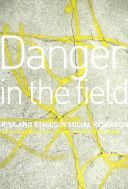
This book guides the making of ethical decisions in research. It supports thinking through ethical dilemmas that arise while research is being planned, conducted and reported. It offers checklists to facilitate ethical review and is illustrated by real case studies.
In the great tradition of moral argument about the nature of the economic market, Rebecca Blank and William McGurn join to debate the fundamental questionsequality and efficiency, productivity and social justice, individual achievement and personal rights in the workplace, the costs and benefits of corporate and entrepreneurial capitalism. And they do so grounded in both economic sophistication and religious commitment.Rebecca Blank is an economist by training and describes herself as culturally Protestant in the habits of mind and heart. She has also chaired the committee that wrote the statement on Christian faith and economic life adopted by the United Church of Christ. Addressing market failure, for her, requires that sometimes “freedom to choose” give way to other human values.William McGurn, a journalist and a Roman Catholic, uses his expertise in economics to reflect on the teachings of the church concerning the morality of the market. For McGurn, humans reach their fullest potential when they are free from the constraints of others. He writes that “our quarrel is not so much with Adam Smith or Milton Friedman but with the Providence that so clearly designed man to be his most prosperous at his most free.”This book grapples with the new imperatives of a global economy while working in the classic tradition of political economy which always treated seriously the questions of morality, justice, productivity, and freedom.
“Theories of distributive justice are most severely tested in the area of disability. In this book, Mark Stein argues that utilitarianism performs better than egalitarian theories in this area whereas egalitarian theories help the disabled either too little or too much, utilitarianism achieves the proper balance by placing resources where they will do the most good.” “Stein offers what may be the broadest critique of egalitarian theory from a utilitarian perspective. He addresses the work of egalitarian theorists John Rawls, Ronald Dworkin, Amartya Sen, Bruce Ackerman, Martha Nusshaum, Norman Daniels, Philippe Van Parijs, and others. Stein claims that egalitarians are often driven to borrow elements of utilitarianism in order to make their theories at all plausible.”–BOOK JACKET.
ما از اخلاق چه انتظاری داریم؟ این سوال شاید تاحدودی برای عموم مردم و یا متخصصان این رشته قابل پاسخ باشد؛ اینکه خوب بودن را به ما بیاموزد و در تنظیم روابط فردی م...

جشن کتاب تهران به ایستگاه سی و یکم رسیده است. حال و احوال نشر کتاب خوب نیست و باید فرهنگدوستان را به خرید و هدیه دادن کتاب ترغیب نمود. خانه اخلاقپژوهان جوان ب...

بنیاد کتابهای اخلاق اسلامی عمدتا پالایش جان از آلودگیها و آراستن آن به زیباییها است. اندیشه محوری این قبیل کتابها آن است که انسان فعلی آنی نیست که باید باشد...

-
0 Comments