Notice: تابع WP_Block_Type_Registry::register به طورنادرست فراخوانی شد. نامهای نوع بلوک نباید حروف بزرگ داشته باشند. لطفاً برای اطلاعات بیشتر، اشکال زدایی در وردپرس را مشاهده کنید. (این پیام در نگارش 5.0.0 افزوده شده است.) in /home/ethicsho/public_html/wp-includes/functions.php on line 5313
Warning: Use of undefined constant TDC_PATH_LEGACY - assumed 'TDC_PATH_LEGACY' (this will throw an Error in a future version of PHP) in /home/ethicsho/public_html/wp-content/plugins/td-composer/td-composer.php on line 109
Warning: Use of undefined constant TDSP_THEME_PATH - assumed 'TDSP_THEME_PATH' (this will throw an Error in a future version of PHP) in /home/ethicsho/public_html/wp-content/plugins/td-composer/td-composer.php on line 113 بایگانیهای 9780415062251 - خانه اخلاق پژوهان جوان Notice: Trying to access array offset on value of type bool in /home/ethicsho/public_html/wp-content/plugins/wp-ulike/inc/general-functions.php on line 807
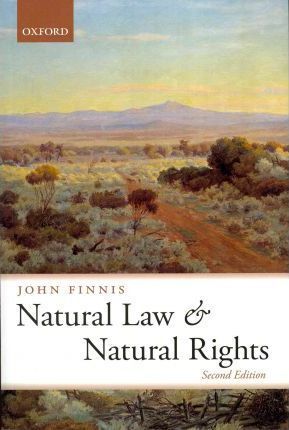
First published in 1980, Natural Law and Natural Rights is widely heralded as a seminal contribution to the philosophy of law, and an authoritative restatement of natural law doctrine. It has offered generations of students and other readers a thorough grounding in the central issues of legal, moral, and political philosophy from Finnis’s distinctive perspective. This new edition includes a substantial postscript by the author, in which he responds to thirty years of discussion, criticism and further work in the field to develop and refine the original theory.The book closely integrates the philosophy of law with ethics, social theory and political philosophy. The author develops a sustained and substantive argument; it is not a review of other people’s arguments but makes frequent illustrative and critical reference to classical, modern, and contemporary writers in ethics, social and political theory, and jurisprudence.The preliminary First Part reviews a century of analytical jurisprudence to illustrate the dependence of every descriptive social science upon evaluations by the theorist. A fully critical basis for such evaluations is a theory of natural law. Standard contemporary objections to natural law theory are reviewed and shown to rest on serious misunderstandings.The Second Part develops in ten carefully structured chapters an account of: basic human goods and basic requirements of practical reasonableness, community and ‘the common good’; justice; the logical structure of rights-talk; the bases of human rights, their specification and their limits; authority, and the formation of authoritative rules by non-authoritative persons and procedures; law, the Rule of Law, and the derivation of laws from the principles of practical reasonableness; the complex relation between legal and moral obligation; and the practical and theoretical problems created by unjust laws.A final Part develops a vigorous argument about the relation between ‘natural law’, ‘natural theology’ and ‘revelation’ – between moral concern and other ultimate questions.
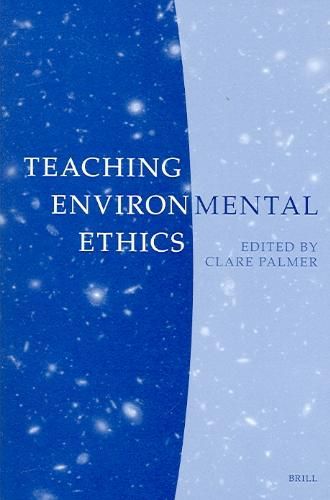
This collection explores a variety of questions, both of a theoretical and practical nature, raised by teaching environmental ethics. Questions considered move from asking whether teaching environmental ethics should include environmental advocacy, to practical issues about texts, syllabi and teaching techniques.
Modern ethical theory has experienced a resurgence of interest in the virtues. Long relegated to the ancient and medieval past, virtue theory is now considered by many to be a viable alternative to the otherwise dominant Kantian and Utilitarian ethical theories. Alasdair MacIntyre is a central figure in this movement, whose work forms an expanding yet consistent and influential project to address fundamental issues in ethical theory and American culture. However, many of his ideas were anticipated by John Dewey, who also has a great deal to say about the virtues in a moral life. This book offers, as it were, a critique of MacIntyre by Dewey that allows these two philosophers to converse about the nature and origins of the virtues and their importance for living a good life. Stephen Carden argues that Dewey has the more comprehensive view of the virtues and that a close comparison of their ideas reveals several significant weaknesses in MacIntyre’s position. >
ما از اخلاق چه انتظاری داریم؟ این سوال شاید تاحدودی برای عموم مردم و یا متخصصان این رشته قابل پاسخ باشد؛ اینکه خوب بودن را به ما بیاموزد و در تنظیم روابط فردی م...

جشن کتاب تهران به ایستگاه سی و یکم رسیده است. حال و احوال نشر کتاب خوب نیست و باید فرهنگدوستان را به خرید و هدیه دادن کتاب ترغیب نمود. خانه اخلاقپژوهان جوان ب...

بنیاد کتابهای اخلاق اسلامی عمدتا پالایش جان از آلودگیها و آراستن آن به زیباییها است. اندیشه محوری این قبیل کتابها آن است که انسان فعلی آنی نیست که باید باشد...

-
0 Comments