Notice: تابع WP_Block_Type_Registry::register به طورنادرست فراخوانی شد. نامهای نوع بلوک نباید حروف بزرگ داشته باشند. لطفاً برای اطلاعات بیشتر، اشکال زدایی در وردپرس را مشاهده کنید. (این پیام در نگارش 5.0.0 افزوده شده است.) in /home/ethicsho/public_html/wp-includes/functions.php on line 5313
Warning: Use of undefined constant TDC_PATH_LEGACY - assumed 'TDC_PATH_LEGACY' (this will throw an Error in a future version of PHP) in /home/ethicsho/public_html/wp-content/plugins/td-composer/td-composer.php on line 109
Warning: Use of undefined constant TDSP_THEME_PATH - assumed 'TDSP_THEME_PATH' (this will throw an Error in a future version of PHP) in /home/ethicsho/public_html/wp-content/plugins/td-composer/td-composer.php on line 113 بایگانیهای 9780262025133 - خانه اخلاق پژوهان جوان Notice: Trying to access array offset on value of type bool in /home/ethicsho/public_html/wp-content/plugins/wp-ulike/inc/general-functions.php on line 807
Awakening Warrior argues for a revolution in the ethics of warfare for the American War Machine – those political and military institutions that engage the world with physical force. Timothy L. Challans focuses on the systemic, institutional level of morality rather than bemoaning the moral shortcomings of individuals. He asks: What are the limits of individual moral agency? What kind of responsibility do individuals have when considering institutional moral error? How is it that neutral or benign moral actions performed by individuals can have such catastrophic morally negative effects from a systemic perspective? Drawing upon and extending the ethical theories of Kant, Dewey, and Rawls, Challans makes the case for an original set of moral principles to guide ethical action on the battlefield.
This challenging and provocative book argues against much contemporary orthodoxy in philosophy and the social sciences by showing why objectivity in the domain of ethics is really no different from the objectivity of scientific knowledge. In the course of the book Jean Hampton examines moral realism, the general nature of reason and norms, internalism and externalism, instrumental reasoning, and the expected utility model of practical reasoning. The book should prove to be a seminal work in the theory of rationality that will be read by a broad swathe of philosophers and social scientists.
Here at last is a coherent, unintimidating introduction to the challenging and fascinating landscape of Western philosophy. Written expressly for “anyone who believes there are big questions out there, but does not know how to approach them,” Think provides a sound framework for exploring the most basic themes of philosophy, and for understanding how major philosophers have tackled the questions that have pressed themselves most forcefully on human consciousness. Simon Blackburn, author of the best-selling Oxford Dictionary of Philosophy, begins by making a convincing case for the relevance of philosophy and goes on to give the reader a sense of how the great historical figures such as Plato, Hume, Kant, Descartes, and others have approached its central themes. In a lively and accessible style, Blackburn approaches the nature of human reflection and how we think, or can think, about knowledge, fate, ethics, identity, God, reason, and truth. Each chapter explains a major issue, and gives the reader a self-contained guide through the problems that the philosophers have studied. Because the text approaches these issues from the gound up, the untrained reader will emerge from its pages able to explore other philosophies with greater pleasure and understanding and be able to think–philosophically–for him or herself. Philosophy is often dismissed as a purely academic discipline with no relation to the “real” world non-philosophers are compelled to inhabit. Think dispels this myth and offers a springboard for all those who want to learn how the basic techniques of thinking shape our virtually every aspect of our existence.
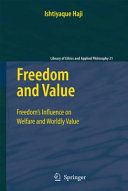
Freedom of the sort implicated in acting freely or with free will is important to the truth of different sorts of moral judgment, such as judgments of moral responsibility and those of moral obligation. Little thought, however, has been invested into whether appraisals of good or evil presuppose free will. This important topic has not commanded the attention it deserves owing to what is perhaps a prevalent assumption that freedom leaves judgments concerning good and evil largely unaffected. The central aim of this book is to dispute this assumption by arguing for the relevance of free will to the truth of two sorts of such judgment: welfare-ranking judgments or judgments of personal well-being (when is one’s life intrinsically good for the one who lives it?), and world-ranking judgments (when is a possible world intrinsically better than another?). The book also examines free will’s impact on the truth of such judgments for central issues in moral obligation and in the free will debate. This book should be of interest to those working on intrinsic value, personal well-being, moral obligation, and free will.
ما از اخلاق چه انتظاری داریم؟ این سوال شاید تاحدودی برای عموم مردم و یا متخصصان این رشته قابل پاسخ باشد؛ اینکه خوب بودن را به ما بیاموزد و در تنظیم روابط فردی م...

جشن کتاب تهران به ایستگاه سی و یکم رسیده است. حال و احوال نشر کتاب خوب نیست و باید فرهنگدوستان را به خرید و هدیه دادن کتاب ترغیب نمود. خانه اخلاقپژوهان جوان ب...

بنیاد کتابهای اخلاق اسلامی عمدتا پالایش جان از آلودگیها و آراستن آن به زیباییها است. اندیشه محوری این قبیل کتابها آن است که انسان فعلی آنی نیست که باید باشد...

-
0 Comments