Notice: تابع WP_Block_Type_Registry::register به طورنادرست فراخوانی شد. نامهای نوع بلوک نباید حروف بزرگ داشته باشند. لطفاً برای اطلاعات بیشتر، اشکال زدایی در وردپرس را مشاهده کنید. (این پیام در نگارش 5.0.0 افزوده شده است.) in /home/ethicsho/public_html/wp-includes/functions.php on line 5313
Warning: Use of undefined constant TDC_PATH_LEGACY - assumed 'TDC_PATH_LEGACY' (this will throw an Error in a future version of PHP) in /home/ethicsho/public_html/wp-content/plugins/td-composer/td-composer.php on line 109
Warning: Use of undefined constant TDSP_THEME_PATH - assumed 'TDSP_THEME_PATH' (this will throw an Error in a future version of PHP) in /home/ethicsho/public_html/wp-content/plugins/td-composer/td-composer.php on line 113 بایگانیهای 9780198246671 - خانه اخلاق پژوهان جوان Notice: Trying to access array offset on value of type bool in /home/ethicsho/public_html/wp-content/plugins/wp-ulike/inc/general-functions.php on line 807
Medical Law and Moral Rights discusses live issues arising in modern medical practice. Do patients undergoing intolerable irremediable suffering have a moral right to physician-assisted suicide? Ought they to have a comparable legal right? Do the moral duties of a mother to care for and not abuse her child also apply to her fetus? Ought fetuses to be given legal rights requiring pregnant women to submit to medical treatment without their consent? Ought single women, homosexual couples or persons carrying serious genetic defects to have a legal right to procreate? Ought a physician to perform an abortion requested for some frivolous reason? Ought physicians to be permitted to refuse to provide medically futile treatment demanded by their patients? An examination of relevant court cases shows how United States law answers these questions. The author then advocates improvements in the law to make it respect our moral rights more fully. To justify his conclusions, he proposes original conceptions of the human rights to life, procreational autonomy, privacy, equitable treatment and personal security. Thus, these essays test the usefulness of the theory of rights explained and defended in An Approach to Rights and elsewhere.
Inspired by Howard Gruber’s Evolving Systems Approach, these studies explore creativity in several domains. The idea that the creative person embodies a system of loosely coupled sub-systems – knowledge, purpose, and affect that work together, is viewed here in different chapters that explore this concept. These include autobiographies of incarcerated youth, curricula for moral and civic responsibility, changing attitudes of readers to text (romance novels), as well as case studies of highly creative individuals, such as George Bernard Shaw. Gruber’s approach provides concepts as well as methodological tools which the authors apply to diverse creative processes. This book is a valuable resource for undergraduate as well as graduate level students interested in creativity, development and education. In addition to the intrinsic interest of each chapter, the guiding theme of the book is the underlying theory of creativity, Gruber’s Evolving Systems Approach, and illustrates the unusual breadth and flexibility of that theory.
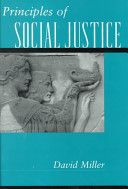
Social justice has been the animating ideal of democratic governments throughout the twentieth century. Even those who oppose it recognize its potency. Yet the meaning of social justice remains obscure, and existing theories put forward by political philosophers to explain it have failed to capture the way people in general think about issues of social justice. This book develops a new theory. David Miller argues that principles of justice must be understood contextually, with each principle finding its natural home in a different form of human association. Because modern societies are complex, the theory of justice must be complex, too. The three primary components in Miller’s scheme are the principles of desert, need, and equality.The book uses empirical research to demonstrate the central role played by these principles in popular conceptions of justice. It then offers a close analysis of each concept, defending principles of desert and need against a range of critical attacks, and exploring instances when justice requires equal distribution and when it does not. Finally, it argues that social justice understood in this way remains a viable political ideal even in a world characterized by economic globalization and political multiculturalism. Accessibly written, and drawing upon the resources of both political philosophy and the social sciences, this book will appeal to readers with interest in public policy as well as to students of politics, philosophy, and sociology.
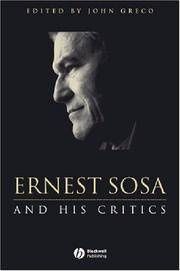
This is the first book devoted to the work of Ernest Sosa, one of the most influential contemporary epistemologists. Part of the acclaimed Philosophers and Their Critics series. The editor’s introduction serves as an introduction to Sosa’s epistemology. Contains critical essays by more than twenty of the most prominent epistemologists in the world, commenting on Sosa’s work. Concludes with Sosa’s own reply to his critics.
ما از اخلاق چه انتظاری داریم؟ این سوال شاید تاحدودی برای عموم مردم و یا متخصصان این رشته قابل پاسخ باشد؛ اینکه خوب بودن را به ما بیاموزد و در تنظیم روابط فردی م...

جشن کتاب تهران به ایستگاه سی و یکم رسیده است. حال و احوال نشر کتاب خوب نیست و باید فرهنگدوستان را به خرید و هدیه دادن کتاب ترغیب نمود. خانه اخلاقپژوهان جوان ب...

بنیاد کتابهای اخلاق اسلامی عمدتا پالایش جان از آلودگیها و آراستن آن به زیباییها است. اندیشه محوری این قبیل کتابها آن است که انسان فعلی آنی نیست که باید باشد...

-
0 Comments