Notice: تابع WP_Block_Type_Registry::register به طورنادرست فراخوانی شد. نامهای نوع بلوک نباید حروف بزرگ داشته باشند. لطفاً برای اطلاعات بیشتر، اشکال زدایی در وردپرس را مشاهده کنید. (این پیام در نگارش 5.0.0 افزوده شده است.) in /home/ethicsho/public_html/wp-includes/functions.php on line 5313
Warning: Use of undefined constant TDC_PATH_LEGACY - assumed 'TDC_PATH_LEGACY' (this will throw an Error in a future version of PHP) in /home/ethicsho/public_html/wp-content/plugins/td-composer/td-composer.php on line 109
Warning: Use of undefined constant TDSP_THEME_PATH - assumed 'TDSP_THEME_PATH' (this will throw an Error in a future version of PHP) in /home/ethicsho/public_html/wp-content/plugins/td-composer/td-composer.php on line 113 بایگانیهای 9780195141122 - خانه اخلاق پژوهان جوان Notice: Trying to access array offset on value of type bool in /home/ethicsho/public_html/wp-content/plugins/wp-ulike/inc/general-functions.php on line 807
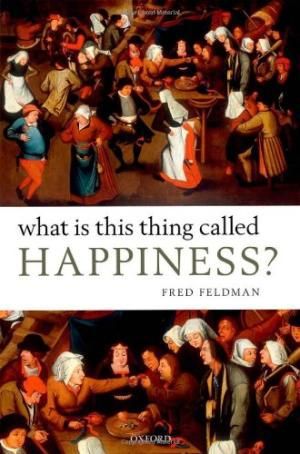
According to an ancient and still popular view — sometimes known as ‘eudaimonism’ — a person’s well-being, or quality of life, is ultimately determined by his or her level of happiness. According to this view, the happier a person is, the better off he is. The doctrine is controversial in part because the nature of happiness is controversial. In What Is This Thing Called Happiness? Fred Feldman presents a study of the nature and value of happiness. Part One contains critical discussions of the main philosophical and psychological theories of happiness. Feldman presents arguments designed to show that each of these theories is problematic. Part Two contains his presentation and defense of his own theory of happiness, which is a form of attitudinal hedonism. On this view, a person’s level of happiness may be identified with the extent to which he or she takes pleasure in things. Feldman shows that if we understand happiness as he proposes, it becomes reasonable to suppose that a person’s well-being is determined by his or her level of happiness. This view has important implications not only for moral philosophy, but also for the emerging field of hedonic psychology. Part Three contains discussions of some interactions between the proposed theory of happiness and empirical research into happiness.
“The Internet is often presented as an unsafe or untrustworthy space: where children are preyed upon by paedophiles, cannibals seek out victims, offline relationships are torn apart by online affairs and where individuals are addicted to gambling, love and cybersex.” “While many of these stories are grounded in truth, they do paint a rather sensationalised view of the Internet, the types of people who use it and the interactions that take place online. Simultaneously, researchers claim that the Internet allows individuals to express their true selves and to develop ‘hyperpersonal’ relationships characterised by high levels of intimacy and closeness. At the heart of these competing visions of the Internet as a social space are the issues of truth, lies and trust.” “This book offers a balanced view of the Internet by presenting empirical data conducted by social scientists, with a concentrated focus on psychological studies. It argues that the Internet’s anonymity, which can enable, for instance, high levels of self-disclosure in a relationship, is also responsible for many of its more negative outcomes such as deception and flaming. This is the first book to develop a coherent model of the truth-lies paradox, with specific reference to the critical role of trust.” “Truth, Lies and Trust on the Internet is a useful text for psychology students and academics interested in Internet behaviour, technology and online deviant behaviour and for related courses in sociology, media studies and information studies.”–BOOK JACKET.
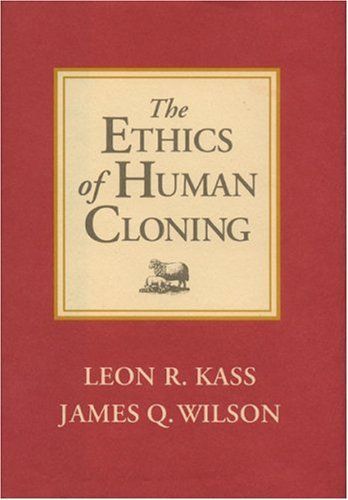
In this engaging book, Leon R. Kass, the noted teacher, scientist, and humanist, and James Q. Wilson, the preeminent political scientist to whom four U.S. presidents have turned for advice on crime, drug abuse, education, and other crises in American life, explore the ethics of human cloning, reproductive technology, and the teleology of human sexuality. Although in their lively dialogue both authors share a fundamental distrust of the notion of human cloning, they base their reticence on different views of the role of sexual reproduction and the role of the family. Professor Kass contends that in vitro fertilization and other assisted reproduction technologies that place the origin of human life in human hands have eroded the respect for the mystery of sexuality and human renewal. Professor Wilson, on the other hand, asserts that whether a human life is created naturally or artificially is immaterial as long as the child is raised by loving parents in a two-parent family and is not harmed by the means of its conception. This accessible volume promises to inform the public policy debate over the permissible conduct of genetic research and the permissible uses of its discoveries.
ما از اخلاق چه انتظاری داریم؟ این سوال شاید تاحدودی برای عموم مردم و یا متخصصان این رشته قابل پاسخ باشد؛ اینکه خوب بودن را به ما بیاموزد و در تنظیم روابط فردی م...

جشن کتاب تهران به ایستگاه سی و یکم رسیده است. حال و احوال نشر کتاب خوب نیست و باید فرهنگدوستان را به خرید و هدیه دادن کتاب ترغیب نمود. خانه اخلاقپژوهان جوان ب...

بنیاد کتابهای اخلاق اسلامی عمدتا پالایش جان از آلودگیها و آراستن آن به زیباییها است. اندیشه محوری این قبیل کتابها آن است که انسان فعلی آنی نیست که باید باشد...

-
0 Comments