Notice: تابع WP_Block_Type_Registry::register به طورنادرست فراخوانی شد. نامهای نوع بلوک نباید حروف بزرگ داشته باشند. لطفاً برای اطلاعات بیشتر، اشکال زدایی در وردپرس را مشاهده کنید. (این پیام در نگارش 5.0.0 افزوده شده است.) in /home/ethicsho/public_html/wp-includes/functions.php on line 5313
Warning: Use of undefined constant TDC_PATH_LEGACY - assumed 'TDC_PATH_LEGACY' (this will throw an Error in a future version of PHP) in /home/ethicsho/public_html/wp-content/plugins/td-composer/td-composer.php on line 109
Warning: Use of undefined constant TDSP_THEME_PATH - assumed 'TDSP_THEME_PATH' (this will throw an Error in a future version of PHP) in /home/ethicsho/public_html/wp-content/plugins/td-composer/td-composer.php on line 113 بایگانیهای 9780195110364 - خانه اخلاق پژوهان جوان Notice: Trying to access array offset on value of type bool in /home/ethicsho/public_html/wp-content/plugins/wp-ulike/inc/general-functions.php on line 807
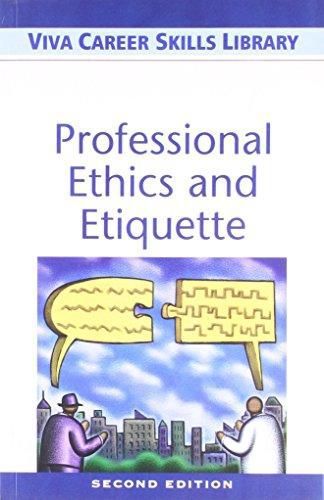
In a competitive and dynamic job market, having the right workplace skills is essential to securing a successful career. From finding a job and learning your way around a new work environment to scheduling projects and working effectively with colleagues, workers must know how to be effective, organized, and professional in the modern workplace. Each volume in the Career Skills Library details key competencies identified by the Department of Labor as essential to solid job performance. Through case studies, exercises, quizzes, and additional resources, these books will help readers learn and master the personal and professional skills essential for any career. Book jacket.
Simone de Beauvoir was a philosopher and writer of notable range and influence whose work is central to feminist theory, French existentialism, and contemporary moral and social philosophy. The essays in this volume examine the major aspects of her thought. They explore her views on the role of biology, sexuality and sexual difference, and evil; the influence on her work of Heidegger, Sartre, Merleau-Ponty, Husserl, and others; and the philosophical significance of her memoirs and fiction.
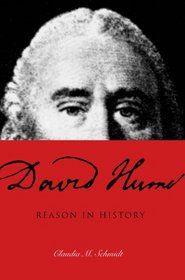
In his seminal Philosophy of David Hume (1941), Norman Kemp Smith called for a study of Hume “in all his manifold activities: as philosopher, as political theorist, as economist, as historian, and as man of letters, ” indicating that “Hume’s philosophy, as the attitude of mind which found for itself these various forms of expression, will then have been presented, adequately and in due perspective, for the first time.” Claudia Schmidt seeks to address this long-standing need in Hume scholarship. Against the charges that Hume holds no consistent philosophical position, offers no constructive account of rationality, and sees no positive relation between philosophy and other areas of inquiry, Schmidt argues for the overall coherence of Hume’s thought as a study of “reason in history.” She develops this interpretation by tracing Hume’s constructive account of human cognition and its historical dimension as a unifying theme across the full range of his writings. Hume, she shows, provides a positive account of the ways in which our concepts, beliefs, emotions, and standards of judgment in different areas of inquiry are shaped by experience, both in the personal history of the individual and in the life of a community. This book is valuable at many levels: for students, as an introduction to Hume’s writings and issues in their interpretation; for Hume specialists, as a unified and intriguing interpretation of his thought; for philosophers generally, as a synthesis of recent developments in Hume scholarship; and for scholars in other disciplines, as a guide to Hume’s contributions to their own fields.
Powerful emotion and pursuit of self-interest have many times led people to break the law with the belief that they are doing so with sound moral reasons. This study is a comprehensive philosophical and legal analysis of the gray area in which the foundations of law and morality clash. This objective book views these oblique circumstances from two perspectives: that of the person who faces a possible conflict between the claims of morality and law and must choose whether or not to obey the penal code; and that of the people who make and uphold laws and must decide whether to treat someone with a moral claim to disobey differently from ordinary lawbreakers. In examining the extent of the obligations owed by citizens to their government, Greenawalt concentrates on the possible existence of a single source of obligation that reaches all citizens and all laws. He also discusses techniques of amelioration of punishment for conscientious lawbreakers, asking how far legal systems should go to accomodate individuals who break the law for reason of conscience. Drawing from numerous examples of conflicts between law and morality, Greenawalt illustrates in detail the positions and predicaments of potential lawbreakers and lawmakers alike.
ما از اخلاق چه انتظاری داریم؟ این سوال شاید تاحدودی برای عموم مردم و یا متخصصان این رشته قابل پاسخ باشد؛ اینکه خوب بودن را به ما بیاموزد و در تنظیم روابط فردی م...

جشن کتاب تهران به ایستگاه سی و یکم رسیده است. حال و احوال نشر کتاب خوب نیست و باید فرهنگدوستان را به خرید و هدیه دادن کتاب ترغیب نمود. خانه اخلاقپژوهان جوان ب...

بنیاد کتابهای اخلاق اسلامی عمدتا پالایش جان از آلودگیها و آراستن آن به زیباییها است. اندیشه محوری این قبیل کتابها آن است که انسان فعلی آنی نیست که باید باشد...

-
0 Comments