Notice: تابع WP_Block_Type_Registry::register به طورنادرست فراخوانی شد. نامهای نوع بلوک نباید حروف بزرگ داشته باشند. لطفاً برای اطلاعات بیشتر، اشکال زدایی در وردپرس را مشاهده کنید. (این پیام در نگارش 5.0.0 افزوده شده است.) in /home/ethicsho/public_html/wp-includes/functions.php on line 5313
Warning: Use of undefined constant TDC_PATH_LEGACY - assumed 'TDC_PATH_LEGACY' (this will throw an Error in a future version of PHP) in /home/ethicsho/public_html/wp-content/plugins/td-composer/td-composer.php on line 109
Warning: Use of undefined constant TDSP_THEME_PATH - assumed 'TDSP_THEME_PATH' (this will throw an Error in a future version of PHP) in /home/ethicsho/public_html/wp-content/plugins/td-composer/td-composer.php on line 113 بایگانیهای 9780191683947 - خانه اخلاق پژوهان جوان Notice: Trying to access array offset on value of type bool in /home/ethicsho/public_html/wp-content/plugins/wp-ulike/inc/general-functions.php on line 807
Containing material from hundreds of highly distinguished contributors representing the world’s top universities and institutions, the second edition has a truly global perspective. It contains more than 2,100 entries — including more than 450 new articles. Among the many topics covered are African, Islamic, Jewish, Russian, Chinese, and Buddhist philosophies; bioethics and biomedical ethics; art and aesthetics; epistemology; metaphysics; peace and war; social and political philosophy; the Holocaust; feminist thought; and much more. Additionally, the second edition also features 1,000 biographical entries on major figures in philosophical thought throughout history.
Do national boundaries have fundamental moral significance, or do we have moral obligations to foreigners that are equal to our obligations to our compatriots? The latter position is known as cosmopolitanism, and this volume brings together a number of distinguished political philosophers and theorists to explore cosmopolitanism and the positive arguments that can be made for it. Their essays provide a comprehensive overview of the current state of the debate as well as the alternative visions of cosmopolitanism that will interest a wide range of readers in philosophy, political theory, and law.
Sentimental Rules is an ambitious and highly interdisciplinary work, which proposes and defends a new theory about the nature and evolution of moral judgment. In it, philosopher Shaun Nichols develops the theory that emotions play a critical role in both the psychological and the cultural underpinnings of basic moral judgment. Nichols argues that our norms prohibiting the harming of others are fundamentally associated with our emotional responses to those harms, and that such “sentimental rules” enjoy an advantage in cultural evolution, which partly explains the success of certain moral norms. This has sweeping and exciting implications for philosophical ethics. Nichols builds on an explosion of recent intriguing experimental work in psychology on our capacity for moral judgment and shows how this empirical work has broad import for enduring philosophical problems. The result is an account that illuminates fundamental questions about the character of moral emotions and the role of sentiment and reason in how we make our moral judgments. This work should appeal widely across philosophy and the other disciplines that comprise cognitive science.
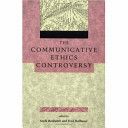
This timely reader in moral philosophy addresses a controversy that strongly affected recent European reflections on the relevance of ethics for theories of democratic institutions and democratic legitimacy. The debate centers around the idea of a communicative ethics as articulated by Jurgen Habermas and Karl-Otto Apel, and it is representative both of recent attempts to bridge the gap between Continental and Anglo-American philosophy and of the turn to language that has characterized much of recent philosophy.The Communicative Ethics Controversy illustrates philosophical dialogue in action, moving from theses to counterarguments to rejoinders. Theoretical statements by Habermas, Apel, and two of their leading students, Dietrich Bohler and Robert Alexy, are followed by a series of five arguments by their leading critics, who represent viewpoints ranging from Kantian idealism to Wittgensteinian ordinary-language theory. Fred Dallmayr’s introduction and Seyla Benhabib’s incisive conclusion place the debate in perspective, bringing it up to date and relating it to the Anglo-American context.Seyla Benhabib is Associate Professor of Philosophy and Women’s Studies at the State University of New York, Stony Brook. Fred Dallmayr is Packey Dee Professor of Government at the University of Notre Dame.Contributors: Robert Alexy. Karl-Otto Apel. Seyla Benhabib. Dietrich Bohler. Jurgen Habermas. Otfried Hoffe. KarlHeinz Ilting. Hermann Lubbe. Herbert Schnadelbach. Albrecht Wellmer.
ما از اخلاق چه انتظاری داریم؟ این سوال شاید تاحدودی برای عموم مردم و یا متخصصان این رشته قابل پاسخ باشد؛ اینکه خوب بودن را به ما بیاموزد و در تنظیم روابط فردی م...

جشن کتاب تهران به ایستگاه سی و یکم رسیده است. حال و احوال نشر کتاب خوب نیست و باید فرهنگدوستان را به خرید و هدیه دادن کتاب ترغیب نمود. خانه اخلاقپژوهان جوان ب...

بنیاد کتابهای اخلاق اسلامی عمدتا پالایش جان از آلودگیها و آراستن آن به زیباییها است. اندیشه محوری این قبیل کتابها آن است که انسان فعلی آنی نیست که باید باشد...

-
0 Comments