Notice: تابع WP_Block_Type_Registry::register به طورنادرست فراخوانی شد. نامهای نوع بلوک نباید حروف بزرگ داشته باشند. لطفاً برای اطلاعات بیشتر، اشکال زدایی در وردپرس را مشاهده کنید. (این پیام در نگارش 5.0.0 افزوده شده است.) in /home/ethicsho/public_html/wp-includes/functions.php on line 5313
Warning: Use of undefined constant TDC_PATH_LEGACY - assumed 'TDC_PATH_LEGACY' (this will throw an Error in a future version of PHP) in /home/ethicsho/public_html/wp-content/plugins/td-composer/td-composer.php on line 109
Warning: Use of undefined constant TDSP_THEME_PATH - assumed 'TDSP_THEME_PATH' (this will throw an Error in a future version of PHP) in /home/ethicsho/public_html/wp-content/plugins/td-composer/td-composer.php on line 113 بایگانیهای 9780123741257 - خانه اخلاق پژوهان جوان Notice: Trying to access array offset on value of type bool in /home/ethicsho/public_html/wp-content/plugins/wp-ulike/inc/general-functions.php on line 807
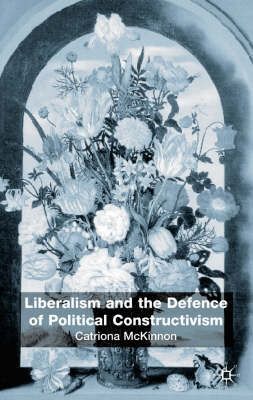
Liberal political justification is often accused of preaching to the converted: the values of such justification, it is claimed, are acceptable as values only to those already convinced by arguments in the secular, humanist Enlightenment tradition of political justification. This is the most taxing problem facing contemporary liberal theories of political justification. Catriona McKinnon suggests an interpretation of the ‘political constructivism’ approach to this problem offered by John Rawls. This interpretation argues that by placing the value of self-respect and its social conditions at the heart of the political constructivist approach to liberal justification, such justification can deliver on its promise to show why liberal principles of toleration and public reason are acceptable even to non-liberal people. A self-respect based constructivist approach to contemporary liberal justification restores to the liberal tradition the radical potential which it has always historically possessed.
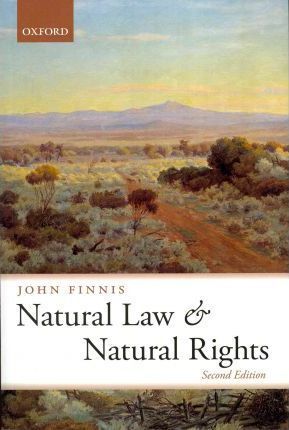
First published in 1980, Natural Law and Natural Rights is widely heralded as a seminal contribution to the philosophy of law, and an authoritative restatement of natural law doctrine. It has offered generations of students and other readers a thorough grounding in the central issues of legal, moral, and political philosophy from Finnis’s distinctive perspective. This new edition includes a substantial postscript by the author, in which he responds to thirty years of discussion, criticism and further work in the field to develop and refine the original theory.The book closely integrates the philosophy of law with ethics, social theory and political philosophy. The author develops a sustained and substantive argument; it is not a review of other people’s arguments but makes frequent illustrative and critical reference to classical, modern, and contemporary writers in ethics, social and political theory, and jurisprudence.The preliminary First Part reviews a century of analytical jurisprudence to illustrate the dependence of every descriptive social science upon evaluations by the theorist. A fully critical basis for such evaluations is a theory of natural law. Standard contemporary objections to natural law theory are reviewed and shown to rest on serious misunderstandings.The Second Part develops in ten carefully structured chapters an account of: basic human goods and basic requirements of practical reasonableness, community and ‘the common good’; justice; the logical structure of rights-talk; the bases of human rights, their specification and their limits; authority, and the formation of authoritative rules by non-authoritative persons and procedures; law, the Rule of Law, and the derivation of laws from the principles of practical reasonableness; the complex relation between legal and moral obligation; and the practical and theoretical problems created by unjust laws.A final Part develops a vigorous argument about the relation between ‘natural law’, ‘natural theology’ and ‘revelation’ – between moral concern and other ultimate questions.
In a series of three essays, the author identifies nobility of spirit in the life and work of Spinoza and of Thomas Mann; explores the quest for the good society in our own times; and addresses the pursuit of truth and freedom that engaged figures as disparate as Socrates and Leone Ginzburg, a Jewish-Italian intellectual murdered by Nazis.
ما از اخلاق چه انتظاری داریم؟ این سوال شاید تاحدودی برای عموم مردم و یا متخصصان این رشته قابل پاسخ باشد؛ اینکه خوب بودن را به ما بیاموزد و در تنظیم روابط فردی م...

جشن کتاب تهران به ایستگاه سی و یکم رسیده است. حال و احوال نشر کتاب خوب نیست و باید فرهنگدوستان را به خرید و هدیه دادن کتاب ترغیب نمود. خانه اخلاقپژوهان جوان ب...

بنیاد کتابهای اخلاق اسلامی عمدتا پالایش جان از آلودگیها و آراستن آن به زیباییها است. اندیشه محوری این قبیل کتابها آن است که انسان فعلی آنی نیست که باید باشد...

-
0 Comments