Notice: تابع WP_Block_Type_Registry::register به طورنادرست فراخوانی شد. نامهای نوع بلوک نباید حروف بزرگ داشته باشند. لطفاً برای اطلاعات بیشتر، اشکال زدایی در وردپرس را مشاهده کنید. (این پیام در نگارش 5.0.0 افزوده شده است.) in /home/ethicsho/public_html/wp-includes/functions.php on line 5313
Warning: Use of undefined constant TDC_PATH_LEGACY - assumed 'TDC_PATH_LEGACY' (this will throw an Error in a future version of PHP) in /home/ethicsho/public_html/wp-content/plugins/td-composer/td-composer.php on line 109
Warning: Use of undefined constant TDSP_THEME_PATH - assumed 'TDSP_THEME_PATH' (this will throw an Error in a future version of PHP) in /home/ethicsho/public_html/wp-content/plugins/td-composer/td-composer.php on line 113 بایگانیهای 978-1-8470-6145-4 - خانه اخلاق پژوهان جوان Notice: Trying to access array offset on value of type bool in /home/ethicsho/public_html/wp-content/plugins/wp-ulike/inc/general-functions.php on line 807
Why did a group of teenagers watch a friend die instead of putting their own reputations at risk? Why did a top White House official decide to come clean and accept a prison sentence during Watergate? Why did a finance executive turn down millions out of respect for her employer? Why are some willing to risk their futures to uphold principles? What gives us the strength to stand up for what we believe? As these questions suggest, the topic of moral courage is front and center in today’s culture. Enron, Arthur Andersen, the U.S. Olympic Committee, abusive priests, cheating students, domestic violence — all these remind us that taking ethical stands should be a higher priority in our culture. Why, when people discern wrongdoing, are they sometimes unready, unable, or unwilling to act? In a book rich with examples, Rushworth Kidder reveals that moral courage is the bridge between talking ethics and doing ethics. Defining it as a readiness to endure danger for the sake of principle, he explains that the courage to act is found at the intersection of three elements: action based on core values, awareness of the risks, and a willingness to endure necessary hardship. By exploring how moral courage spurs us to strive for core values, he demonstrates the benefits of ethical action to the individual and to society — and the severe consequences that can result from remaining morally dormant. Moral Courage puts indispensable concepts and tools into our hands, equipping us to respond to the increasingly complicated moral challenges we face at work, at home, and in our communities. It enables us to make clear, confident decisions by exploring some litmus-test questions: Is the benefit worth the risk? Am I motivated by my desire to uphold my beliefs or just to impose them on others? Will my actions create collateral damage among those with no stake in the outcome? While physical courage may no longer be a necessary survival skill or an essential rite of passage out of childhood, few would dispute the growing need for moral courage as the true gauge of maturity. Treating this subject not as an esoteric branch of philosophy but as a practical necessity for modern life, Kidder deftly leads us to a clear understanding of what moral courage is, what it does, and how to get it.
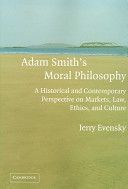
Adam Smith is the best known among economists for his book, The Wealth of Nations, often viewed as the keystone of modern economic thought. Others, often heterodox economists and social philosophers, on the contrary, focus on Smith’s Theory of Moral Sentiments, and explore his moral theory. This work treats these dimensions of Smith’s work as elements in a seamless moral philosophical vision, demonstrating the integrated nature of these works and Smith’s other writings. Although many practitioners today see the study of Smith as an antiquarian exercise, this book weaves Smith into a constructive critique of modern ecnomic analysis (engaging along the way the work of Nobel Laureates Gary Becker, Amarty Sen, Douglass North, and James Buchanan) and builds bridges between that discourse and the other social sciences.
Gull chicks beg for food from their parents. Peacocks spread their tails to attract potential mates. Meerkats alert family members of the approach of predators. But are these–and other animals–sometimes dishonest? That’s what William Searcy and Stephen Nowicki ask inThe Evolution of Animal Communication. They take on the fascinating yet perplexing question of the dependability of animal signaling systems. The book probes such phenomena as the begging of nesting birds, alarm calls in squirrels and primates, carotenoid coloration in fish and birds, the calls of frogs and toads, and weapon displays in crustaceans. Do these signals convey accurate information about the signaler, its future behavior, or its environment? Or do they mislead receivers in a way that benefits the signaler? For example, is the begging chick really hungry as its cries indicate or is it lobbying to get more food than its brothers and sisters? Searcy and Nowicki take on these and other questions by developing clear definitions of key issues, by reviewing the most relevant empirical data and game theory models available, and by asking how well theory matches data. They find that animal communication is largely reliable–but that this basic reliability also allows the clever deceiver to flourish. Well researched and clearly written, their book provides new insight into animal communication, behavior, and evolution.
ما از اخلاق چه انتظاری داریم؟ این سوال شاید تاحدودی برای عموم مردم و یا متخصصان این رشته قابل پاسخ باشد؛ اینکه خوب بودن را به ما بیاموزد و در تنظیم روابط فردی م...

جشن کتاب تهران به ایستگاه سی و یکم رسیده است. حال و احوال نشر کتاب خوب نیست و باید فرهنگدوستان را به خرید و هدیه دادن کتاب ترغیب نمود. خانه اخلاقپژوهان جوان ب...

بنیاد کتابهای اخلاق اسلامی عمدتا پالایش جان از آلودگیها و آراستن آن به زیباییها است. اندیشه محوری این قبیل کتابها آن است که انسان فعلی آنی نیست که باید باشد...

-
0 Comments