Notice: تابع WP_Block_Type_Registry::register به طورنادرست فراخوانی شد. نامهای نوع بلوک نباید حروف بزرگ داشته باشند. لطفاً برای اطلاعات بیشتر، اشکال زدایی در وردپرس را مشاهده کنید. (این پیام در نگارش 5.0.0 افزوده شده است.) in /home/ethicsho/public_html/wp-includes/functions.php on line 5313
Warning: Use of undefined constant TDC_PATH_LEGACY - assumed 'TDC_PATH_LEGACY' (this will throw an Error in a future version of PHP) in /home/ethicsho/public_html/wp-content/plugins/td-composer/td-composer.php on line 109
Warning: Use of undefined constant TDSP_THEME_PATH - assumed 'TDSP_THEME_PATH' (this will throw an Error in a future version of PHP) in /home/ethicsho/public_html/wp-content/plugins/td-composer/td-composer.php on line 113 بایگانیهای 978-0521777445 - خانه اخلاق پژوهان جوان Notice: Trying to access array offset on value of type bool in /home/ethicsho/public_html/wp-content/plugins/wp-ulike/inc/general-functions.php on line 807
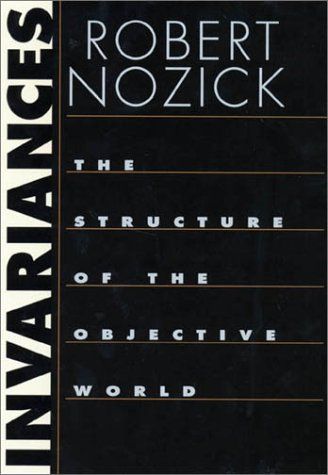
Excerpts from Robert Nozick’s “Invariances” Necessary truths are invariant across all possible worlds, contingent ones across only some. No wonder necessity lures philosophers. It is the flame, the philosopher the moth. Our intuitions that certain statements are necessary do not powerfully support this claim when natural selection would produce strong intuitions of their self-evidence, even were these statements (only) contingently true. Contemporary philosophers who give great weight to intuitions need to offer some account of why such intuitions are reliable and are to be trusted. Of course, if the purpose of such philosophy is merely to codify and systematize the intuitions that (for whatever reason) are held, then a philosophy built upon intuitions will need no further basis. And it will have no further validity. You might think that an insight into metaphysical impossibility could save the physicists much useless work by thereby excluding something as physically possible. Things seem to have worked in the opposite direction, though. Driven by a need to explain strange data, physicists formulate theories that countenance what previously was held to be metaphysically impossible. . . The physical tail wags the metaphysical dog. Why is there an objective world? Within evolutionary cosmology scientific laws might be viewed as the heritable structure of a universe, akin to what in biology would be an organism’s genetic endowment. . . Suppose that the reproductive process of a universe produces transformed offspring universes that differ from their parent. The greater the transformations that a law is invariant under, and the wider their number, the greater is that law’s heritability. The vast majority of the universes that exist through the processes of evolutionary cosmology, therefore, will exhibit laws that are invariant under a wide range of significant transformations. Such invariance, we have seen, is exactly what constitutes objectiveness. Evolutionary cosmology gives us objective worlds.
In THE CRITIQUE OF JUDGMENT (1790), Immanuel Kant (1724-1804) seeks to establish the a priori principles underlying the faculty of judgement, just as he did in his previous critiques of pure and practical reason. The first part deals with the subject of our aesthetic sensibility; we respond to certain natural phenomena as beautiful, says Kant, when we recognise in nature a harmonious order that satisfies the mind’s own need for order. The second half of the critique concentrates on the apparent teleology in nature’s design of organisms. Kant argues that our minds are inclined to see purpose and order in nature and this is the main principle underlying all of our judgements. Although this might imply a super sensible Designer, Kant insists that we cannot prove a supernatural dimension or the existence of God. Such considerations are beyond reason and are solely the province of faith.
Empathy plays a central role in the history and contemporary study of ethics, interpersonal understanding, and the emotions, yet until now has been relatively underexplored. The Routledge Handbook of Philosophy of Empathy is an outstanding reference source to the key topics, problems and debates in this exciting field and is the first collection of its kind. Comprising over thirty chapters by a team of international contributors, the Handbook is divided into six parts: * Core issues *History of empathy *Empathy and understanding *Empathy and morals *Empathy in art and aesthetics *Empathy and individual differences. Within these sections central topics and problems are examined, including: empathy and imagination; neuroscience; David Hume and Adam Smith; understanding; evolution; altruism; moral responsibility; art, aesthetics, and literature; gender; empathy and related disciplines such as anthropology. Essential reading for students and researchers in philosophy, particularly ethics and philosophy of mind and psychology, the Handbook will also be of interest to those in related fields, such as anthropology and social psychology.
Many countries around the world block or filter Internet content, denying access to information—often about politics, but also relating to sexuality, culture, or religion—that they deem too sensitive for ordinary citizens. Access Denied documents and analyzes Internet filtering practices in over three dozen countries, offering the first rigorously conducted study of this accelerating trend.Internet filtering takes place in at least forty states worldwide including many countries in Asia and the Middle East and North Africa. Related Internet content control mechanisms are also in place in Canada, the United States and a cluster of countries in Europe. Drawing on a just-completed survey of global Internet filtering undertaken by the OpenNet Initiative (a collaboration of the Berkman Center for Internet and Society at Harvard Law School, the Citizen Lab at the University of Toronto, the Oxford Internet Institute at Oxford University, and the University of Cambridge) and relying on work by regional experts and an extensive network of researchers, Access Denied examines the political, legal, social, and cultural contexts of Internet filtering in these states from a variety of perspectives. Chapters discuss the mechanisms and politics of Internet filtering, the strengths and limitations of the technology that powers it, the relevance of international law, ethical considerations for corporations that supply states with the tools for blocking and filtering, and the implications of Internet filtering for activist communities that increasingly rely on Internet technologies for communicating their missions.Reports on Internet content regulation in forty different countries follow, with each country profile outlining the types of content blocked by category and documenting key findings.Contributors: Ross Anderson, Malcolm Birdling, Ronald Deibert, Robert Faris, Vesselina Haralampieva, Steven Murdoch, Helmi Noman, John Palfrey, Rafal Rohozinski, Mary Rundle, Nart Villeneuve, Stephanie Wang, and Jonathan Zittrain
ما از اخلاق چه انتظاری داریم؟ این سوال شاید تاحدودی برای عموم مردم و یا متخصصان این رشته قابل پاسخ باشد؛ اینکه خوب بودن را به ما بیاموزد و در تنظیم روابط فردی م...

جشن کتاب تهران به ایستگاه سی و یکم رسیده است. حال و احوال نشر کتاب خوب نیست و باید فرهنگدوستان را به خرید و هدیه دادن کتاب ترغیب نمود. خانه اخلاقپژوهان جوان ب...

بنیاد کتابهای اخلاق اسلامی عمدتا پالایش جان از آلودگیها و آراستن آن به زیباییها است. اندیشه محوری این قبیل کتابها آن است که انسان فعلی آنی نیست که باید باشد...

-
0 Comments