Notice: تابع WP_Block_Type_Registry::register به طورنادرست فراخوانی شد. نامهای نوع بلوک نباید حروف بزرگ داشته باشند. لطفاً برای اطلاعات بیشتر، اشکال زدایی در وردپرس را مشاهده کنید. (این پیام در نگارش 5.0.0 افزوده شده است.) in /home/ethicsho/public_html/wp-includes/functions.php on line 5313
Warning: Use of undefined constant TDC_PATH_LEGACY - assumed 'TDC_PATH_LEGACY' (this will throw an Error in a future version of PHP) in /home/ethicsho/public_html/wp-content/plugins/td-composer/td-composer.php on line 109
Warning: Use of undefined constant TDSP_THEME_PATH - assumed 'TDSP_THEME_PATH' (this will throw an Error in a future version of PHP) in /home/ethicsho/public_html/wp-content/plugins/td-composer/td-composer.php on line 113 بایگانیهای 978–0–415–29936–7 - خانه اخلاق پژوهان جوان Notice: Trying to access array offset on value of type bool in /home/ethicsho/public_html/wp-content/plugins/wp-ulike/inc/general-functions.php on line 807
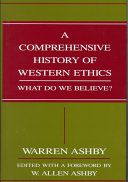
Our intellectual history spans more than 2,000 years, yet, surprisingly, we have had no adequate history of Western ethics. A Comprehensive History of Western Ethics fills this void by providing an engaging, thorough, and inclusive history that encompasses both classical and modern perspectives. Author Warren Ashby speaks both to students of history and ethics and to a needy public interested in but often perplexed by moral values in contemporary life — people who are looking for clearer personal and social bearings on what it means to be a person in today’s society. Ashby embraces all who are concerned with expanding human rights, finding new ways to think about moral experience, and discovering an ethical perspective appropriate for their lives. By exploring past ethical problems, we can prepare for the future’s challenges.Included with the commentary on the writings of great thinkers, are in-depth discussions of Greek, biblical, and Stoic ethics; Augustine, Aquinas, and medieval views; the Renaissance, the Reformation, and ethics in the age of science; as well as the Enlightenment, Romanticism, and the last Western century.
Christine Swanton offers a new, comprehensive theory of virtue ethics which addresses the major concerns of modern ethical theory from a character-based perspective. Discussion of many problems in moral theory, such as moral constraints, rightness of action, the good life, the demandingness ofethics, the role of the subjective, and the practicality of ethics, has been dominated by Kantian and Consequentialist theories, with their own distinctive conceptual apparatus. Virtue Ethics shows how a different framework can shed new light on these intractable issues. Swanton’s approach is distinctive in departing in siginificant ways from classical versions of virtue ethics derived primarily from Aristotle. Employing insights from Nietzsche and other sources, she argues against both eudaimonistic virtue ethics and traditional virtue ethical conceptions ofrightness. In developing a pluralistic view, she shows how different ‘modes of moral acknowledgement’ such as love, respect, appreciation, and creativity, are embedded in the very fabric of virtue, the moral life, and the good life.
“This important book…is really the first of its kind….There is no doubt that [it] will become a standard work in the literature for some years to come….[and] it will be required reading for anyone working in the fields of ancient ethics and psychology.”–The Philosophical Review
“The best work in English on the moral psychology of the early Stoics….Detailed and scholarly….An important book for serious studients of Stoic ethics and philosophy of action.”–Religious Studies Review
“This is a detailed and masterly account of early Stoic psychology and its relation to Stoic ethics…a major contribution which will be indispensable for serious students.” –The Classical Review
Don Browning’s important work critically appropriates the distinctive insights of religious ethics and contemporary psychology to inform and reform both. Here he elaborates the moral context for pastoral care by formulating five levels of practical moral thinking, illustrates them in two case studies involving homosexuality, and integrates the levels into a method of theological practice. It is a helpful but not dominating ethical framework for pastoral care and counseling useful to students, pastors, and congregations alike. “Browning, in this book, continues efforts to teach religious ethics to those working as counselors…. It presents a clear argument and method for laying practical and workable foundations of religious ethics in pastoral work.” -Clergy Journal “[Browning] points out that much of our pastoral care is undergirded by unexamined or only partially examined moral and ethical thinking…. In our efforts to avoid moralism, we have moved more and more toward a stance of ethical neutrality which has done a disservice to the people who look to us for help. Pastoral care and counseling need to be grounded in a practical moral theology or theological ethics.” -Christian Century “Browning provides ample resources for pastors to begin a discipline of critical moral reflection, especially in their role as counselors…. His borrowings from moral philosophers and theological ethics are explicated in the context of case studies and should prove helpful for anyone engaged in the practice of ministry.” -Religious Studies Review Don S. Browning is Alexander Campbell Professor Emeritus of Ethics and the Social Sciences, Divinity School, University of Chicago. His work at the intersection of theological ethics and social sciences has led to such pioneering and influential works as Religious Thought and the Modern Psychologies and A Fundamental Practical Theology.
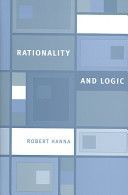
In Rationality and Logic, Robert Hanna argues that logic is intrinsically psychological and that human psychology is intrinsically logical. He claims that logic is cognitively constructed by rational animals (including humans) and that rational animals are essentially logical animals. In order to do so, he defends the broadly Kantian thesis that all (and only) rational animals possess an innate cognitive “logic faculty.” Hanna’s claims challenge the conventional philosophical wisdom that sees logic as a fully formal or “topic-neutral” science irreconcilably separate from the species- or individual-specific focus of empirical psychology. Logic and psychology went their separate ways after attacks by Frege and Husserl on logical psychologism—the explanatory reduction of logic to empirical psychology. Hanna argues, however, that—despite the fact that logical psychologism is false—there is an essential link between logic and psychology. Rational human animals constitute the basic class of cognizers or thinkers studied by cognitive psychology; given the connection between rationality and logic that Hanna claims, it follows that the nature of logic is significantly revealed to us by cognitive psychology. Hanna’s proposed “logical cognitivism” has two important consequences: the recognition by logically oriented philosophers that psychologists are their colleagues in the metadiscipline of cognitive science; and radical changes in cognitive science itself. Cognitive science, Hanna argues, is not at bottom a natural science; it is both an objective or truth-oriented science and a normative human science, as is logic itself.
ما از اخلاق چه انتظاری داریم؟ این سوال شاید تاحدودی برای عموم مردم و یا متخصصان این رشته قابل پاسخ باشد؛ اینکه خوب بودن را به ما بیاموزد و در تنظیم روابط فردی م...

جشن کتاب تهران به ایستگاه سی و یکم رسیده است. حال و احوال نشر کتاب خوب نیست و باید فرهنگدوستان را به خرید و هدیه دادن کتاب ترغیب نمود. خانه اخلاقپژوهان جوان ب...

بنیاد کتابهای اخلاق اسلامی عمدتا پالایش جان از آلودگیها و آراستن آن به زیباییها است. اندیشه محوری این قبیل کتابها آن است که انسان فعلی آنی نیست که باید باشد...

-
0 Comments